Key facts
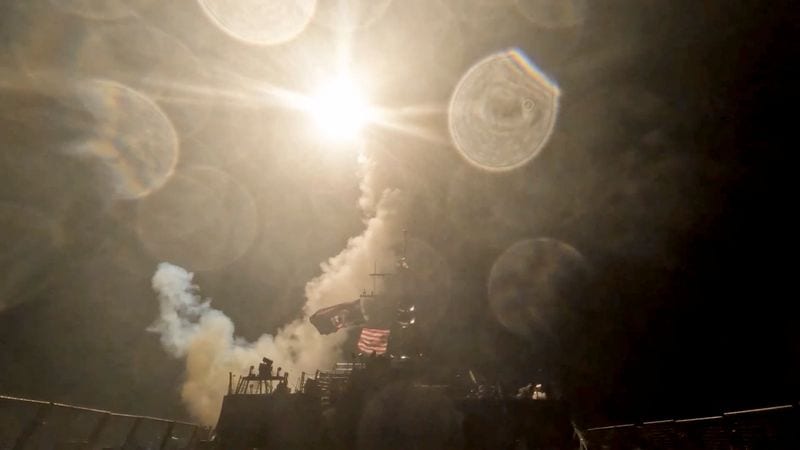
- U.S. forces completed strikes on IRGC targets in Iran, including air defense and radar systems.
- President Donald Trump stated the U.S. strikes were justified and warned Iran against retaliation.
- Iran reported projectiles hitting Chabahar and Konarak, and new explosions in Bandar Abbas, Qeshm, and Lavan Islands.
- Five people were killed and 50 wounded in an attack near Sirik, Iran.
- Iran's IRGC vowed severe punishment and a larger response to U.S. attacks.
- The exchange of fire marked the most significant combat between the U.S. and Iran in weeks.
The U.S. military announced it has completed a wave of strikes against Islamic Revolutionary Guard Corps (IRGC) targets in Iran, including air defense sites, radar systems, maritime assets, mine-laying capabilities, and communications sites. These actions escalate recent fighting over the Strait of Hormuz, following a period of withheld fire. President Donald Trump stated the strikes were 'justified' and warned Tehran against retaliation.
Iran reported projectiles hit Chabahar and Konarak, cities east of the Strait of Hormuz, and new explosions were heard in Bandar Abbas, Qeshm Island, and Lavan Island. Iran also claimed it struck U.S. assets in Jordan and Iraq, though U.S. officials reported no casualties in Jordan. Jordan's air defense systems intercepted 13 ballistic missiles that entered its airspace.
The exchange of fire marked the first serious combat since July, ending a period of relative calm. Iran's IRGC vowed severe punishment and a "several times larger" response to the U.S. attacks. Five people were killed and 50 wounded in an attack near Sirik, Iran, according to the Iranian Red Crescent.