Key facts
- The U.S. House of Representatives has enough votes to approve legislation to keep federal agencies operating beyond October 1.
- The House passed a continuing resolution on Tuesday to extend government funding through December 4.
- The measure now heads to the Senate for consideration.
- Democrats, led by House Minority Leader Hakeem Jeffries, opposed the bill, characterizing it as a unilateral Republican effort.
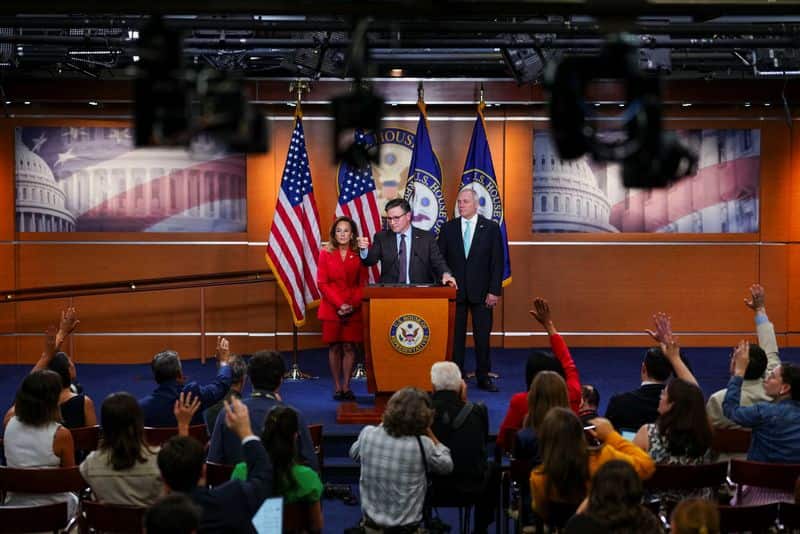
- House Speaker Mike Johnson stated that opposition to the bill would mean "owning the chaos" of a potential shutdown.
The U.S. House of Representatives has secured enough votes to pass a stopgap funding bill, aiming to prevent a government shutdown when current funds expire on October 1. The House voted 220-205 to approve a continuing resolution that would extend government funding through December 4, pushing the deadline past the November midterm elections.
House Republican leaders moved to pass the bill months ahead of the deadline, seeking to avoid repeating the fiscal year's two prior shutdowns and mitigate potential negative voter sentiment before the elections. Speaker Mike Johnson framed the vote as a challenge to Democrats, stating that those who voted against it would be responsible for any subsequent chaos. House Minority Leader Hakeem Jeffries, along with other Democratic leaders, opposed the measure, calling it a "premature and desperate attempt by Republicans to abdicate their responsibility to govern."
The bill now proceeds to the Senate, where its fate remains uncertain. Senate Majority Leader John Thune indicated the Senate might pursue its own bipartisan version of the funding measure. The 119th Congress has previously experienced significant government shutdowns, including a 43-day lapse in late 2025 and a 76-day partial shutdown affecting the Department of Homeland Security in early 2026, which had substantial economic impacts, including a projected reduction in GDP growth.