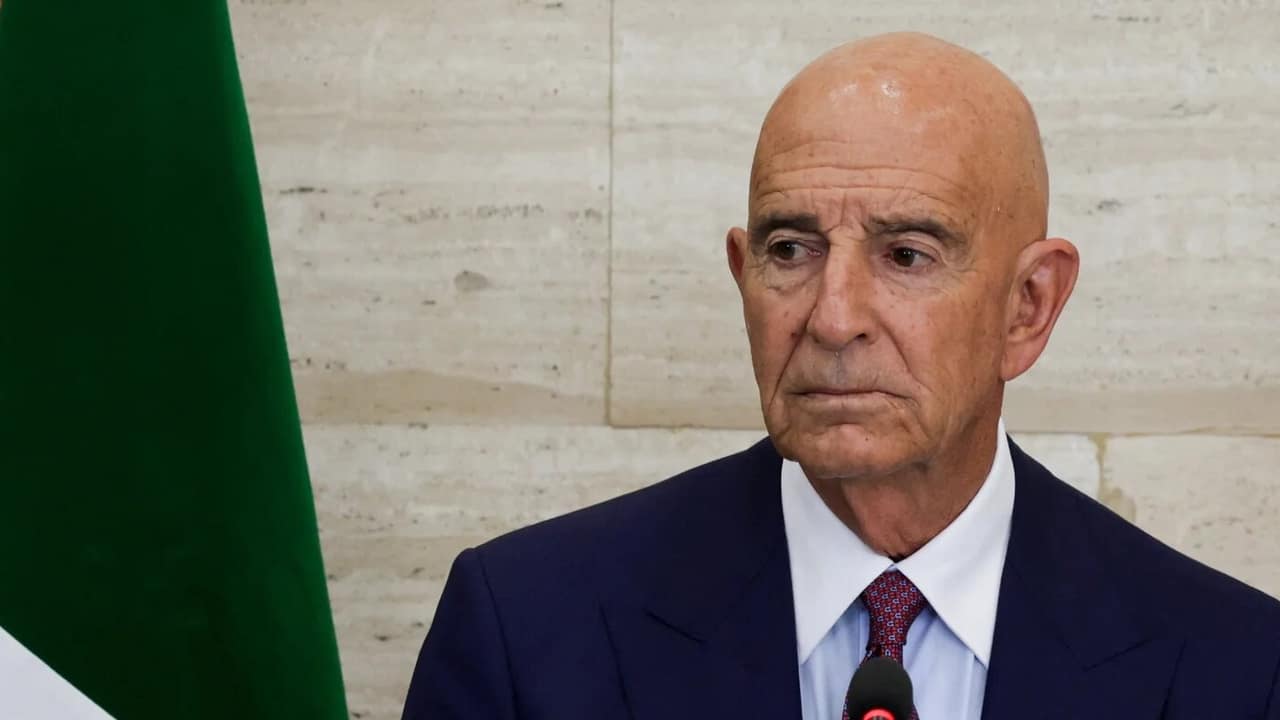
US ambassador to Turkey Tom Barrack stated that Israel's occupation of Syria's Golan Heights violates UN resolutions and international law, contradicting President Donald Trump's 2019 recognition of Israeli sovereignty over the territory. Barrack also discussed potential Israeli motivations for strikes in Syria.

The remarks by the US ambassador to Turkey challenge the official US policy on the Golan Heights and highlight international divisions over the territory's status, potentially impacting regional diplomacy and US foreign relations.
US ambassador to Turkey Tom Barrack has stated that Israel's occupation of Syria's Golan Heights persists in defiance of United Nations resolutions and the international legal order. These comments place Barrack at odds with the official US stance, as President Donald Trump recognized Israeli sovereignty over the territory in 2019. The Golan Heights, a strategic plateau captured by Israel in the 1967 Middle East war, was later annexed by Israel, a move not recognized internationally. UN Resolution 242 mandates Israeli withdrawal from the Golan and other occupied territories.
In a broader interview, Barrack also addressed concerns about Israel potentially annexing Lebanese territory, suggesting such a move is unlikely due to waning US support and growing opposition from younger Democrats. He indicated that President Trump has aimed for moderation and that upcoming Israeli elections might alter the political landscape. Barrack reiterated that Israel continues to occupy the Golan against international consensus, stating, "So how long do these (Israeli) incursions (into Lebanon) go on until the temperature comes down." He emphasized that a resolution is difficult without decision-makers like Iran and Hezbollah.
Barrack further speculated on the reasons behind recent Israeli air strikes on Syria's Abu al-Duhur airbase, describing them as "serious and worrying." He proposed several theories, including Israel acting on intelligence about Turkish military movements, detecting previously missed movements, intercepting discussions about Turkish training expansion, or even deliberately provoking Turkey. He also suggested a possibility of internal Israeli disarray, with different branches of government operating on separate assessments, warning that "unintended consequence of a mistake could be really consequential."