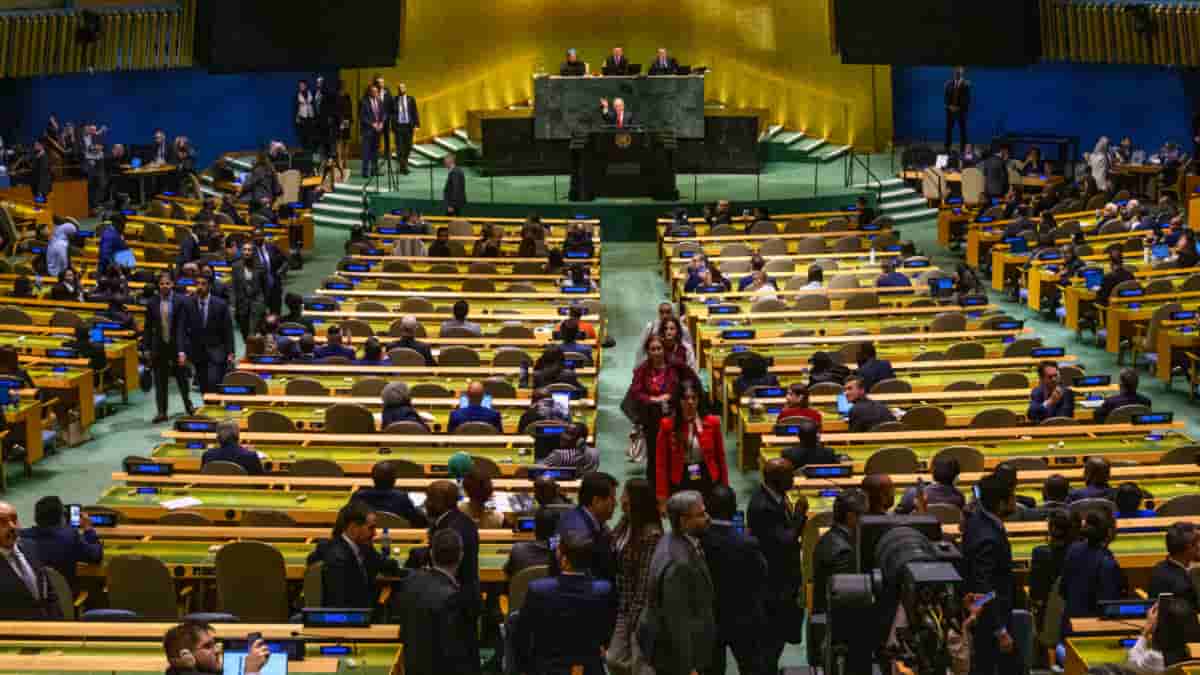
The fourth day of the UN General Assembly was largely dominated by discussions surrounding the US-Israeli war on Iran and the ongoing Israel-Palestine conflict. Somali President Mohamed Hassan Sheikh Mohamud stated that his nation was experiencing hardship due to the war on Iran, citing increased energy and food prices as direct consequences.
Kuwait's Crown Prince Sabah Al Khaled addressed the UN Security Council, condemning what he described as "illegal Iranian aggression." Kuwait, hosting numerous US troops and military bases, was significantly impacted by Iranian retaliation, with attacks targeting US facilities, Kuwait airport, and energy infrastructure.
Israeli Prime Minister Benjamin Netanyahu delivered a strong speech at the UN General Assembly, directing criticism towards figures including New York City Mayor Zohran Mamdani, Turkish President Recep Tayyip Erdogan, and leaders from Western Europe, in an apparent effort to counter Israel's increasing international isolation. Simultaneously, hundreds of protesters gathered outside the UN headquarters, voicing support for Palestinian statehood and expressing disappointment over the continued attacks on Gaza.
In parallel, Yemen's Vice President Abdullah Abdulkader al-Alimi-Bawzer addressed the UN General Assembly, condemning the Houthis and appealing for international assistance to combat the group. He noted that the Yemeni government had supported a peace initiative backed by Saudi Arabia and Oman, but the Houthis had rejected it and escalated their actions in the Red Sea and Bab el-Mandeb, which he characterized as serving an Iranian agenda.