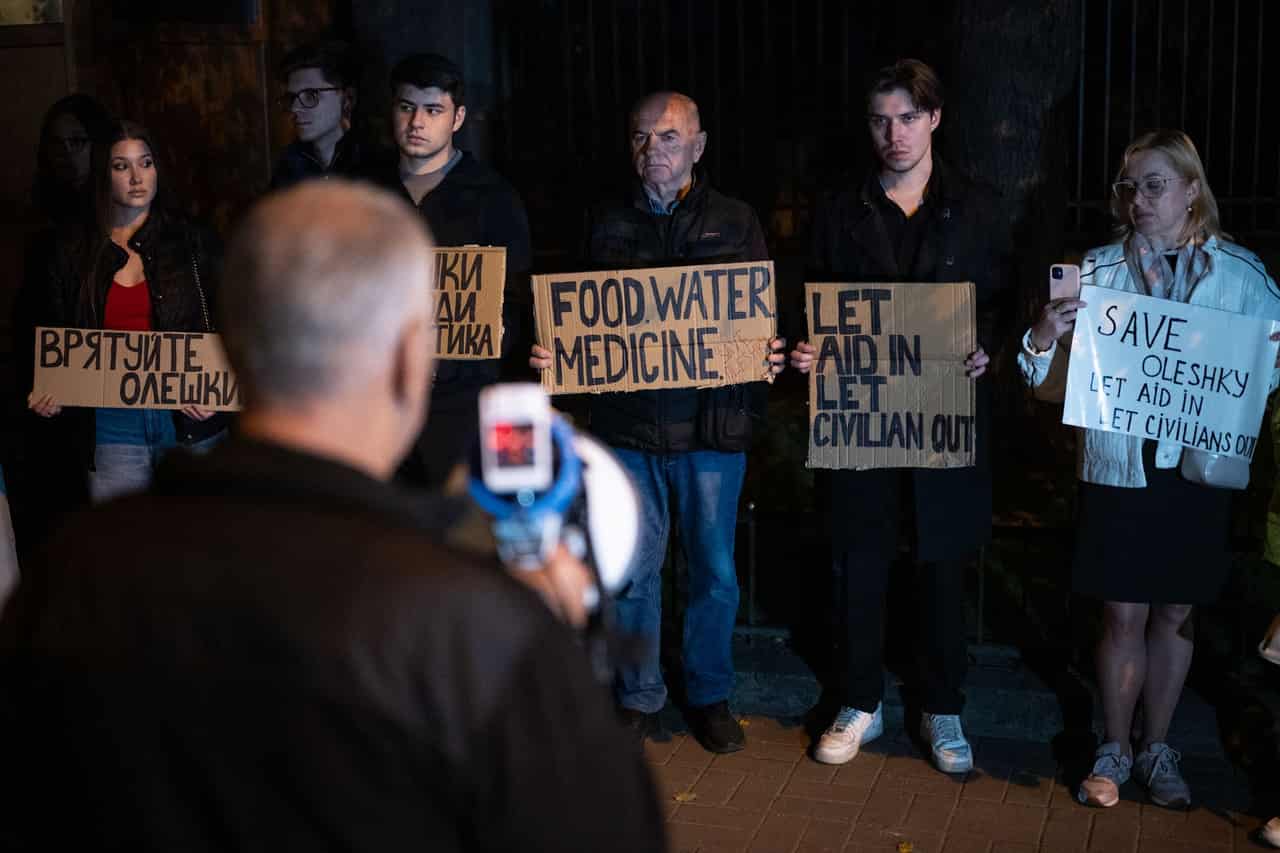
Key facts
- Residents of Russian-occupied Oleshky face severe shortages of food, water, and electricity.
- A localized ceasefire was mediated by U.S. First Lady Melania Trump to allow civilian evacuation and aid delivery.
- Russian-installed authorities in Crimea imposed power and water restrictions after a drone attack on energy infrastructure.
- A 77-year-old Crimean activist was sentenced to 18 years in prison for an alleged plot against a Russian-installed official.
- At least 34 Ukrainians, including 23 children, were brought back from occupied territories in the past week.
Residents of Russian-occupied Oleshky in Ukraine's Kherson Oblast face dire conditions, with a woman who recently fled warning that many may not survive the coming winter due to severe shortages of food, fuel, and electricity. Roads are mined and drone attacks are constant, making safe evacuation extremely difficult. Hopes for a potential evacuation and humanitarian aid delivery have been bolstered by a localized ceasefire mediated by U.S. First Lady Melania Trump, confirmed by Ukrainian human rights ombudsman Dmytro Lubinets on Oct. 23. President Volodymyr Zelensky stated on Oct. 24 that Ukraine would uphold its end of the "extremely difficult" operation. Meanwhile, Russian-installed authorities in occupied Crimea imposed power and water restrictions on Oct. 24 following a reported Ukrainian drone attack on energy infrastructure. In a separate development, a 77-year-old Crimean activist, Volodymyr Ananiev, was sentenced to 18 years in prison by a Russian court for an alleged plot against the Russian proxy governor.