Key facts
- The UK economy is forecast to grow this year, with Deutsche Bank estimating 1.1% growth.
- GDP growth slowed to 0.4% in the three months to June, but monthly growth in June was 0.3%.
- Consumer spending rose 0.3% and business investment jumped 1.7% in the three months to June.
- Rising energy bills and higher borrowing costs are expected to weigh on economic activity.
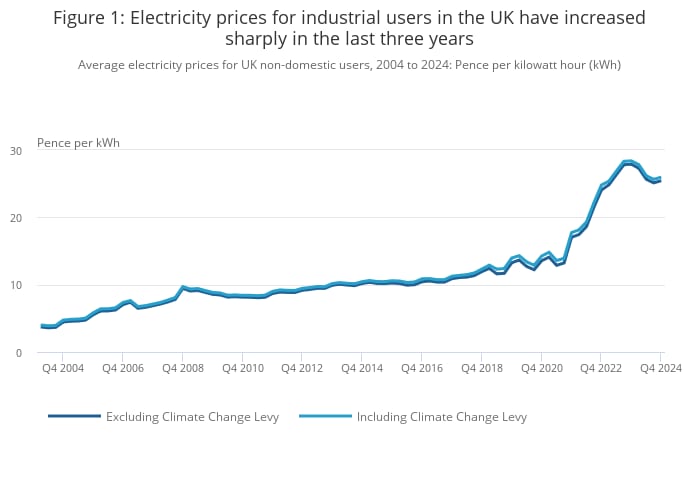
- UK electricity prices for non-domestic users are 75% higher than at the start of 2021.
- Average gas prices for UK non-domestic users are more than double those at the beginning of 2021.
The UK economy is showing surprising resilience, outperforming other G7 nations in the first half of 2026, according to the Office for National Statistics. GDP growth slowed to 0.4% in the three months to June, but this followed a strong 0.6% in the first quarter, with monthly growth in June at 0.3% beating expectations. Consumer spending increased by 0.3% and business investment jumped by 1.7%, with analysts suggesting the build-out of computing power for artificial intelligence may have contributed.
Despite these positive figures, the outlook for sustained growth is uncertain. Rising global oil prices, stemming from the Iran war, continue to pressure energy costs. While UK consumers were insulated from summer energy bill increases by lower demand and the Ofgem price cap, this protection ended in July when the cap rose by 13%. Experts warn this could push millions into fuel poverty, despite government measures like VAT cuts on electricity bills.
Energy-intensive manufacturing industries, such as paper and petrochemicals, have seen output fall by one-third since early 2021 due to high gas and electricity prices. Electricity prices for UK non-domestic users remain 75% higher than at the start of 2021, and gas prices are more than double. These factors, combined with geopolitical tensions and the need for increased defense spending, present challenges for the new chancellor, John Healey, as he prepares his budget.