Key facts
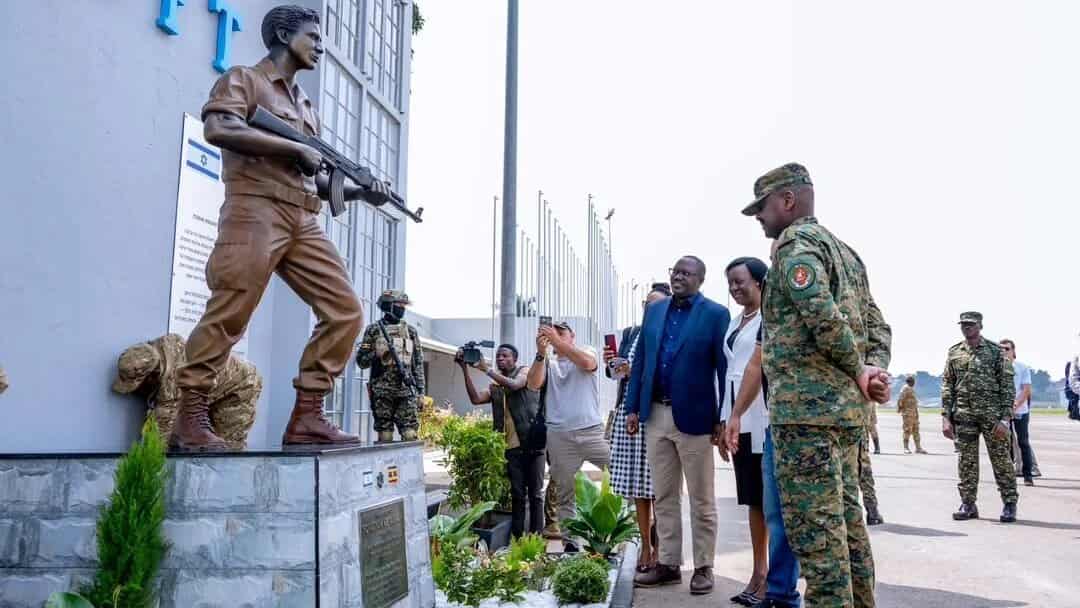
- A statue of Yonatan Netanyahu, brother of Israeli Prime Minister Benjamin Netanyahu, was unveiled in Uganda.
- Yonatan Netanyahu died during the 1976 Entebbe hostage rescue operation.
- The statue was commissioned by Ugandan army chief Muhoozi Kainerugaba to commemorate the 50th anniversary of the Entebbe raid.
- The unveiling has drawn criticism for potentially diminishing African sovereignty.
- Uganda's parliament approved the deployment of troops to Gaza as part of the International Stabilisation Force.
A bronze statue of Yonatan Netanyahu, the brother of Israeli Prime Minister Benjamin Netanyahu, has been unveiled in Uganda at the Old Entebbe Terminal. Yonatan Netanyahu was killed during the 1976 Israeli raid to rescue hostages held at the airport by Palestinian and German hijackers. The statue was commissioned by Ugandan army chief Muhoozi Kainerugaba, the eldest son of President Yoweri Museveni, to mark the 50th anniversary of the Entebbe raid.
General Kainerugaba stated at the ceremony that the monument honors "courage in the face of danger, unwavering commitment to protecting innocent lives, and steadfast devotion to duty." He added that monuments "preserve memory, teach history, and inspire future generations."
The unveiling comes shortly before Uganda's parliament approved the deployment of Ugandan troops to Gaza as part of a controversial International Stabilisation Force. The statue has drawn criticism from some Ugandans, including former minister Asuman Kiyingi, who described the symbolism as "troubling." Kiyingi argued that the monument glorifies a foreign military force while diminishing African sovereignty, and fails to recognize Ugandan soldiers who died defending the airport.
The Entebbe raid itself was a pivotal event in Israeli history and significantly influenced Benjamin Netanyahu's political career. Historically, relations between Israel and Uganda were close, with Israel playing a role in Uganda's development after independence. However, ties deteriorated significantly by 1976, with Idi Amin's government supporting the hijackers.