Key facts
- Turkey's parliament passed a law to facilitate the return and reintegration of PKK militants.
- The legislation aims to end the decades-old insurgency which has killed thousands.
- The law provides a framework for the PKK's disbandment and suspension of some prison sentences.
- Former PKK members not convicted of violent crimes are eligible for pardons and release.
- The PKK must first lay down its weapons and demonstrate adherence to the agreement.
Turkey's parliament has passed a historic law aimed at resolving the conflict with the Kurdistan Workers' Party (PKK), potentially ending nearly four decades of fighting. The legislation, introduced by President Recep Tayyip Erdogan's government and its coalition partner, the Nationalist Movement Party (MHP), offers partial clemency to PKK members who did not commit violent crimes. This marks a significant shift, particularly given the MHP's historical opposition to the PKK.
The law allows for the release of prisoners convicted of nonviolent offenses and the repatriation of former members. The PKK must first lay down its weapons and demonstrate adherence to the agreement, with Turkish intelligence monitoring the disarmament process. Potential sentences based solely on PKK membership would be dropped, and imprisoned leader Abdullah Ocalan may see improved living conditions on Imrali Island.
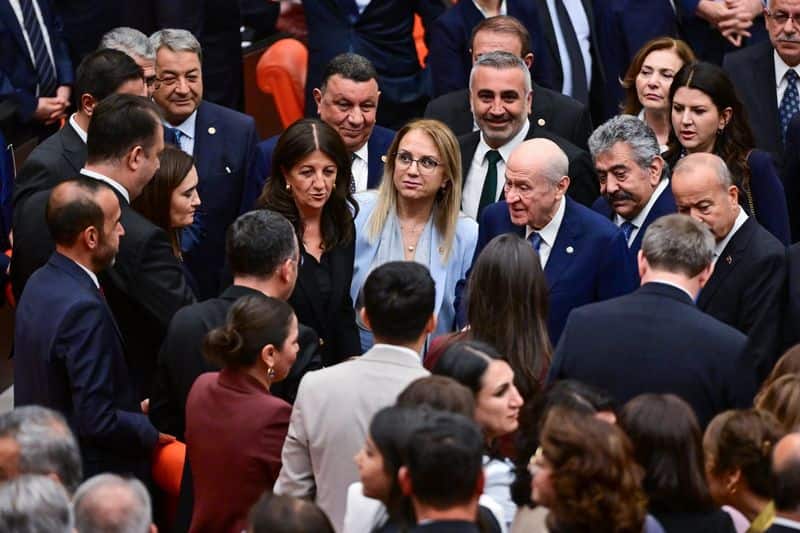
The passage of the law was notable for the broad parliamentary support it garnered, with backing from the ruling AKP and MHP, as well as the secularist CHP, smaller right-wing and Islamist parties, and even some left-wing groups. CHP Chairman Ozgur Ozel stated his party would prioritize peace despite government actions against opposition mayors.
However, the law has divided the nation. While mothers of PKK recruits expressed hope for their sons' return, veterans voiced anger. Concerns also exist about the potential for this peace initiative to enable President Erdogan to seek another term if early elections are called, with support from pro-Kurdish parties.