Key facts
- President Trump ordered the Pentagon to substantially reduce joint US-South Korea military exercises.
- The decision was announced on social media.
- Reasons cited include costs, inappropriate signals to North Korea, and South Korea's refusal to join U.S. efforts to denuclearize Iran.
- Defense Secretary Pete Hegseth was directed to scale back the Ulchi Freedom Shield exercise.
- Lawmakers criticized the move as shortsighted and potentially beneficial to Russia.
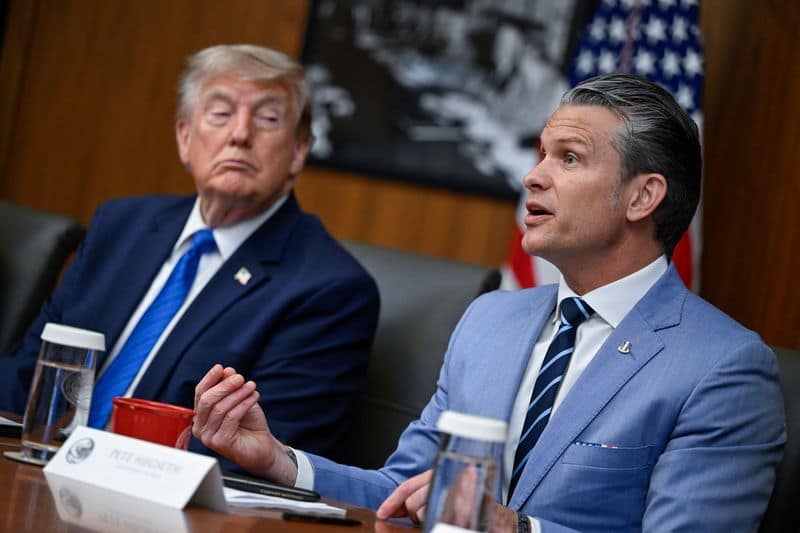
President Trump has ordered the Pentagon to substantially reduce joint military exercises with South Korea, citing the drills' costs, the signals they send to North Korea, and Seoul's refusal to join U.S. efforts to denuclearize Iran. The decision, announced on social media, directed Defense Secretary Pete Hegseth to scale back the Ulchi Freedom Shield exercise, scheduled from August 17 to 27 and involving approximately 18,000 South Korean troops.
Trump framed the move as a courtesy to North Korean leader Kim Jong-Un, with whom he claims to have a 'very good relationship,' despite ongoing missile testing and an expanding nuclear arsenal by Pyongyang. He stated the drills 'send a signal that is totally inappropriate and hostile' to North Korea, which he described as 'unthreatening and respectful.'
This decision has drawn sharp criticism from lawmakers. Senator Jack Reed called it 'another inane, haphazard decision,' while Senator Mark Kelly warned that hollowing out the exercises is 'shortsighted and a mistake,' emphasizing the drills' importance for alliance functionality in a crisis. Senator Andy Kim expressed concern that the move suggests a disregard for the critical US-South Korea alliance. Additionally, Senator Thom Tillis suggested the reduction in exercises would inadvertently benefit Russia by freeing up North Korean troops.
The alliance between the U.S. and South Korea dates back to the 1953 Mutual Defense Treaty, with approximately 28,500 American troops currently stationed in South Korea. Trump's administration's own 2026 Annual Threat Assessment described North Korea as an 'increasingly confident regime' with weapons that threaten the U.S., South Korea, and Japan.
Trump also linked the decision to South Korea's refusal to join the U.S. military campaign against Iran, acknowledging the two issues were 'somewhat unrelated' but still punishing Seoul. South Korea has expressed concern over the reduction in drills, viewing it as a potential goodwill gesture to North Korea and hoping it could lead to U.S.-North Korea talks.