Key facts
- U.S. President Donald Trump announced Sunday that Russia and Ukraine have agreed to an energy truce.
U.S. President Donald Trump announced Sunday that Russia and Ukraine have agreed to an energy truce, a development that coincides with India's intensified efforts to broker a broader peace arrangement. Ukraine's Foreign Minister Andrii Sybiha described India's proposal as the most comprehensive among several, signaling New Delhi's willingness to play a significant role in de-escalating the conflict.
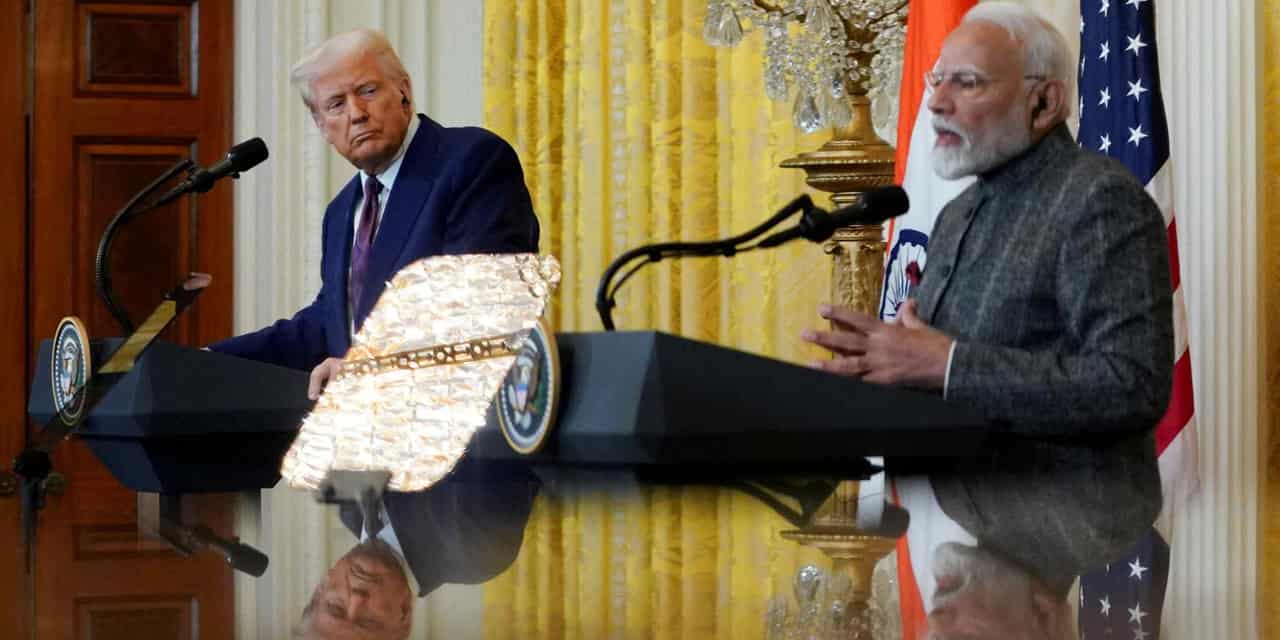
The ongoing conflict between Russia and Ukraine continues to disrupt global energy and food supplies, with any potential truce or peace arrangement having significant implications for commodity markets and geopolitical stability. India's proactive role in proposing a comprehensive peace plan highlights its growing diplomatic influence and its strategic interest in securing maritime trade routes.
U.S. President Donald Trump announced Sunday that Russia and Ukraine have agreed to an energy truce, a development that coincides with India's intensified efforts to broker a broader peace arrangement between the warring parties. The announcement comes as the conflict enters its fifth year, marked by escalating attacks on energy and port infrastructure.
Ukraine's Foreign Minister Andrii Sybiha revealed on Friday that Kyiv has received proposals from India, Turkiye, Egypt, and the United States to mediate talks with Russia. Sybiha specifically highlighted India's proposal as the most comprehensive, noting New Delhi's signaling of a willingness to play a role for the first time. While none of the current proposals aim to end the war entirely, they seek narrower truces focused on energy facilities, ports, or commercial shipping in the Black Sea.
India's plan, not yet made public, has been reported by Indian media citing unnamed sources. According to the Hindustan Times, it consists of three parts: a mutual halt to strikes on energy facilities and ports, the continuation of grain and energy supplies through Black Sea ports, and the protection of commercial shipping. The first part aligns with Kyiv's demands for a complete energy truce, including port infrastructure. The second part builds on the Black Sea Grain Initiative, previously mediated by Turkiye and the UN. The third part addresses the safety of merchant ships and crews, a critical concern for India due to reported casualties among its sailors on Black Sea routes.
Ukrainian officials indicated that India's proposal integrates elements from the Turkish, Egyptian, and U.S. initiatives. Some accounts suggest it also addresses a possible ceasefire along the front lines, though this was not universally confirmed. The proposal likely took shape during Indian External Affairs Minister Subrahmanyam Jaishankar's visit to Ukraine last month and subsequent meetings.
Details of the Turkish and Egyptian proposals are scarce, with both countries reportedly focusing on suspending attacks on commercial shipping to keep Black Sea grain supplies moving. Turkiye, having previously co-mediated the 2022 grain deal, is organizing new Black Sea talks. Egypt's interest stems from its reliance on Ukraine for a significant portion of its grain supplies.
U.S. President Donald Trump's envoys reportedly secured an agreement in principle for a trilateral meeting with Ukraine and Russia, possibly in Abu Dhabi, following visits to Kyiv and Moscow in early September. However, this trilateral meeting has since been postponed.
Pick the topics you care about. Get only what matters, on your cadence.