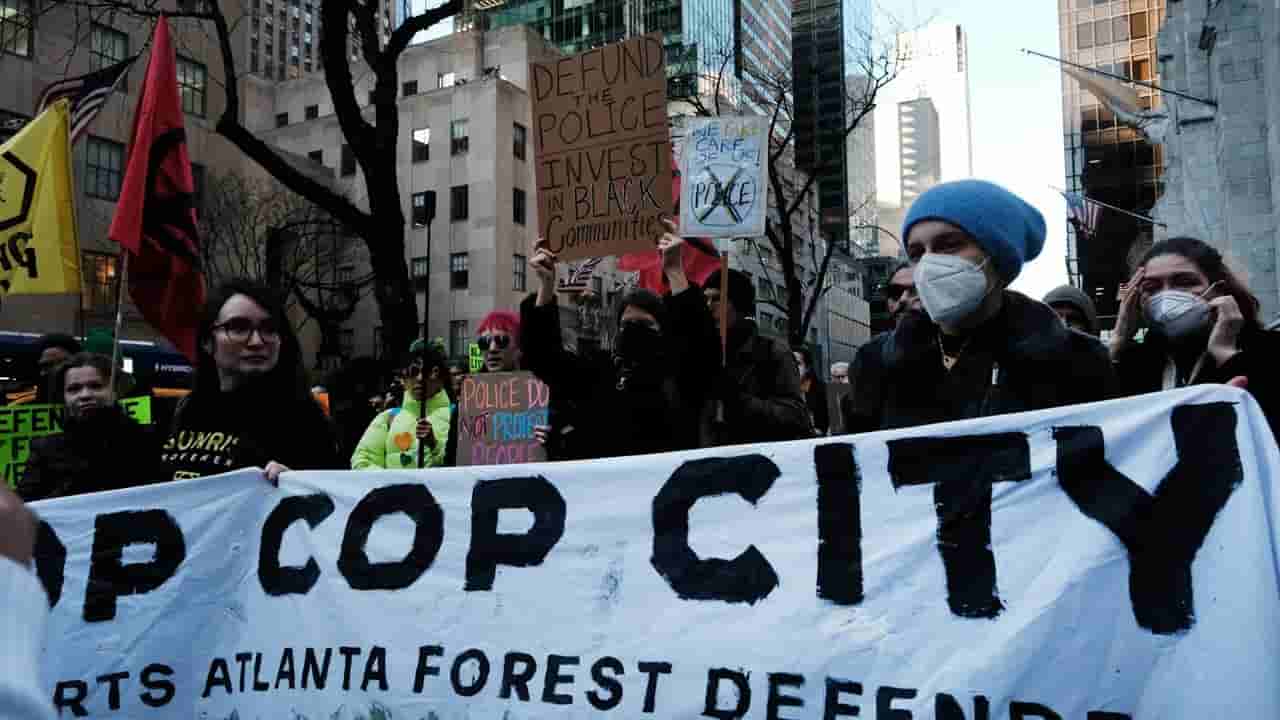
The US government is increasingly applying terrorism labels to a wide range of domestic targets, including protesters and those opposing government policies. This expansion, building on the post-9/11 'war on terror' framework, is seen as a tool to suppress dissent and expand state power.

The expansion of terrorism labels to cover domestic dissent and political opposition risks chilling free speech and protest, potentially leading to the investigation and prosecution of individuals for expressing views critical of government policies or economic conditions.
The US government is increasingly weaponizing the 'war on terror' framework to target domestic dissent, applying terrorism labels to a broad range of individuals and groups who oppose government policies or hegemony. This expansion, rooted in post-9/11 surveillance and discriminatory practices, is seen as a means to suppress opposition and extend state power.
The Trump administration's National Security Presidential Memorandum 7 (NSPM-7), released in September 2025, identified expressions such as 'anti-Christianity,' 'anti-Americanism,' and 'anti-capitalism' as potential indicators of domestic terrorism. This broadens the scope of potential targets beyond those previously associated with international terrorism, including protesters against government agencies like Immigration and Customs Enforcement (ICE) and those expressing grievances over economic disparities.
Historical precedent for using such labels to justify surveillance dates back to the 1970s, when the CIA adopted terrorism and subversive labels to rebrand domestic spying programs aimed at political dissidents. The current administration's counterterrorism strategy continues this legacy, mobilizing resources against unilaterally identified political targets. The vagueness of terms like 'radicalisation' and 'extremism' facilitates this expansion, building on the normalized, racialized application of these frameworks upon Muslim communities over the past two decades.
A chilling example of this expansion is the Prairieland case, where defendants protesting ICE detention centers were indicted for 'providing material support to terrorists.' Convicted in March and sentenced in June, eight individuals received prison terms ranging from 30 to 100 years, with one sentenced to 30 years for moving a box of zines prosecutors claimed could recruit sympathizers. This follows the precedent set by the 2011 conviction of Tarek Mehanna for translating documents, an act protected by the First Amendment.