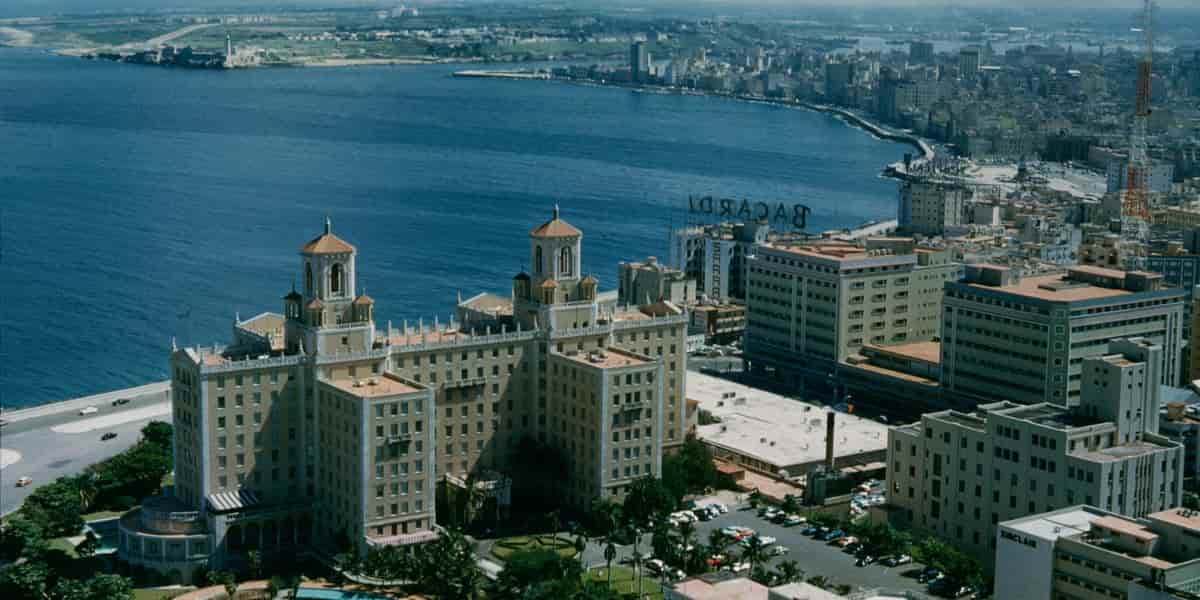
Key facts
- Cuba transformed from a 1950s tourist destination to a country facing shortages and blackouts after Fidel Castro's 1959 revolution.
- The US has maintained a trade embargo on Cuba since 1962, limiting trade except for food, medicine, and humanitarian exports.
- An executive order signed in January 2026 aims to impose tariffs on countries supplying oil to Cuba.
- Recent reforms are being implemented to attract foreign investment and encourage private businesses.
- Despite economic hardship, vintage cars and historic architecture from the mid-20th century are still present in Cuba.
Cuba has undergone a profound transformation since Fidel Castro's rise to power in 1959, evolving from a vibrant 1950s tourist destination into a nation grappling with severe economic challenges, including shortages of essential goods and recurring blackouts. The revolution and subsequent US trade embargo, in place since 1962, have led to decades of economic isolation, deterring foreign trade and investment.
Despite the dramatic changes, remnants of Cuba's mid-century past are still visible. Historic buildings, though often deteriorated, dot the landscape, and vintage American cars continue to define the streetscape. Tourists still visit for the island's beaches, hospitality, and nightlife, drawn by a nostalgic image that contrasts sharply with the daily struggles of most Cubans.
Recent developments indicate a potential shift, with reforms aimed at opening Cuba to more private businesses and attracting investment. However, the authoritarian state's central role in the economy presents ongoing challenges. In a move to further pressure the government, US President Donald Trump signed an executive order on January 29, 2026, establishing a process for additional tariffs on imports from countries that supply oil to Cuba, following the US capture of Venezuelan President Nicolás Maduro and the blocking of Venezuelan oil shipments.
Life for Cubans today is marked by scarcity of food, water, fuel, and medicine, alongside persistent power outages. The country remains a one-party state, currently led by President Miguel Díaz-Canel, who also serves as the top official of the Communist Party.