Key facts
- Electrified vehicles now account for more than 80% of Thailand's passenger car sales.
Thailand's passenger car market saw a significant shift in August, with electric and hybrid vehicle sales surging while conventional internal-combustion-engine vehicles declined. This trend is reshaping the country's automotive production landscape.
The shift in Thailand's automotive market towards EVs and hybrids indicates a broader global trend impacting manufacturing hubs. This transition affects supply chains, investment decisions, and the competitive landscape for both domestic and international automakers operating in the region.
Thailand's automotive market is undergoing a significant transition, with electric and hybrid vehicles increasingly dominating sales and production, according to data from the Federation of Thai Industries (FTI). In August, electrified vehicles accounted for over 80% of passenger car sales, a trend that has been building throughout the year.
In March, total vehicle production increased by 2.69% year-on-year to 133,413 units, driven by both domestic demand and exports. Production for export rose by 6.53% year-on-year, with passenger car exports for export increasing by 19.91%, despite a slight overall decline in completely built-up vehicle exports due to issues in the Middle East. Exports to Australia, Africa, and Europe showed growth.
The shift in production reflects global demand for cleaner vehicles. Hybrid electric passenger vehicle (HEV) production grew by 12.69% in March, while internal combustion engine passenger car production fell by 22.08%. This indicates a structural change in Thailand's vehicle manufacturing towards more energy-efficient models.
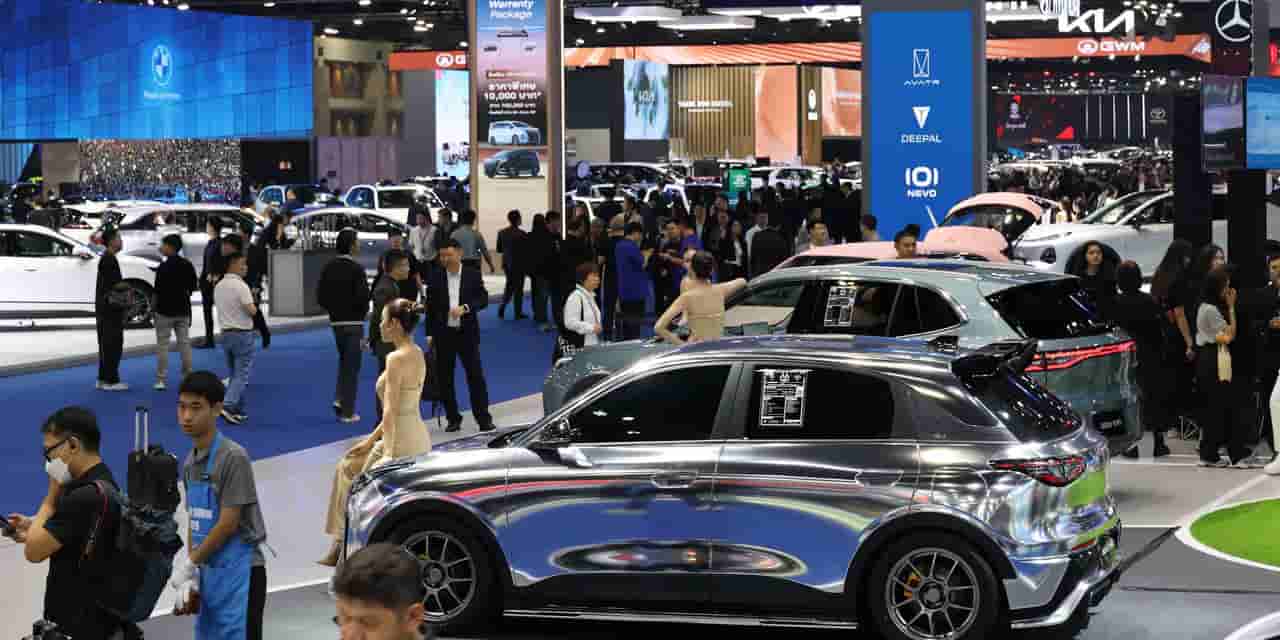
Domestic sales in March reached 59,865 units, a 7.29% increase from the previous year, largely due to vehicles booked at the Bangkok International Motor Show, where electric vehicles comprised over 50% of reservations. Passenger battery electric vehicle sales were up 47.62% to 12,074 units, and passenger hybrid electric vehicle sales rose 23.81% to 14,895 units. Electric pick-up truck sales also saw a sharp increase, though from a small base.
However, the pick-up truck segment continues to face pressure, with domestic sales declining by 6.36% due to stricter lending conditions and stable but insufficient buyer incomes. The FTI has urged the new government to expedite economic policy and budget planning for 2027 to boost investor confidence and stimulate industries with large supply chains.
Pick the topics you care about. Get only what matters, on your cadence.