Key facts
- Thailand's domestic vehicle sales rose 20% in July, marking the strongest increase since January.
- Vehicle production grew for the first time since March.
- Electric vehicles (EVs) are a primary driver of the market's recovery, making up 15.4% of sales in 2024.
- Government incentives, including subsidies and tax cuts, are in place from 2024 to 2027 to boost EV adoption and local production.
- Foreign investment, particularly from Chinese automakers, has exceeded $1.4 billion, supporting the sector's growth and Thailand's role in the global auto supply chain.
Thailand's automotive sector is demonstrating a significant recovery, with July sales surging 20% and production growing for the first time since March. This rebound is largely propelled by a booming electric vehicle (EV) segment, which constituted 15.4% of total vehicle sales in 2024 and is projected to reach 1.1 million units by the end of 2025.
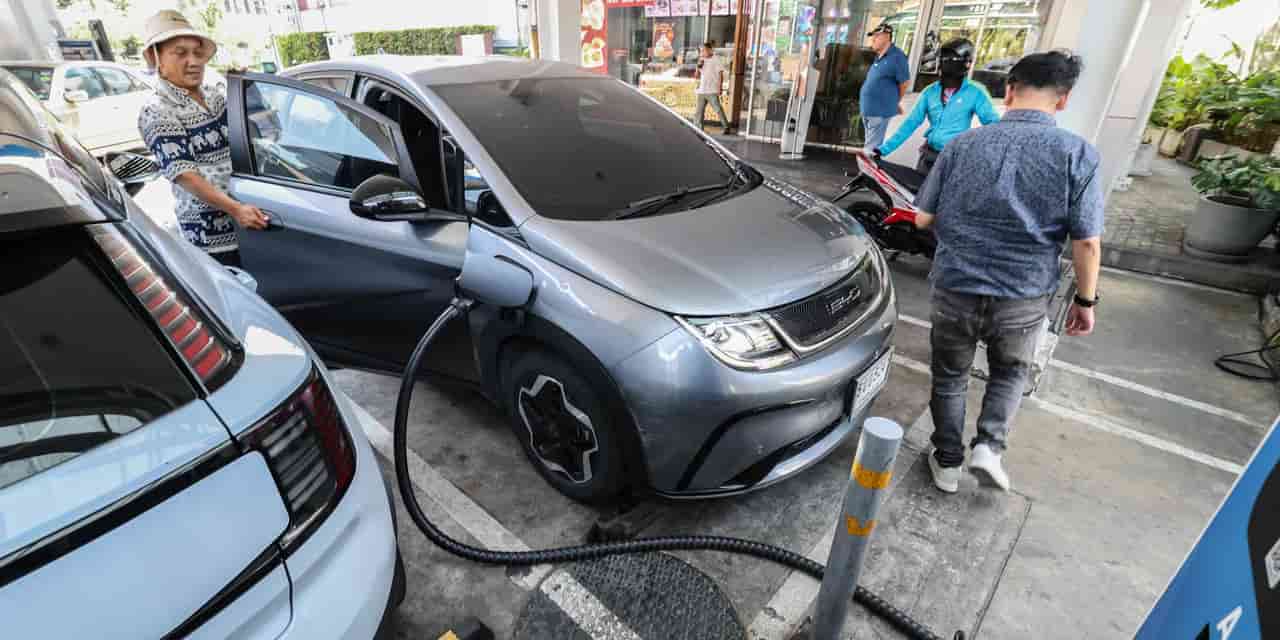
The government's strategic push for electrification, including subsidies of up to 100,000 baht and excise tax reductions, is a key factor driving demand. Automakers are incentivized to establish local production facilities, a move that has attracted over $1.4 billion in foreign investment, particularly from Chinese manufacturers like BYD, which holds a 35% share of the EV market. BYD's popular Atto 3 and Dolphin models are contributing to this growth.
Thailand aims to position itself as Southeast Asia's EV leader, targeting 30% of annual car production to be EVs by 2030. This ambition is supported by new battery production facilities, such as Gotion High-Tech's $1 billion plant, and government initiatives like the Eastern Economic Corridor (EEC). Traditional automakers like Toyota and Honda are also adapting their Thai operations for electric models.
Longer-term projections indicate vehicle production could reach 2.98 million units annually by 2028, with EVs playing an increasingly dominant role. This transformation signifies a reinvention of Thailand's automotive identity, aligning with global trends toward sustainable transportation.