Key facts
- Lake al-Muzayrib in southern Syria has completely dried up.
- The lake was once a vital resource for local agriculture and fishermen.
- Prolonged drought and excessive well-drilling have led to a collapse in water resources in Daraa.
- Springs feeding Lake al-Muzayrib have gone from 1,000 liters per second in the 1990s to zero.
- 14 out of 16 dams in Daraa province are partially or totally dry.
- Water storage in Daraa's dams in 2025 was less than four million cubic meters.
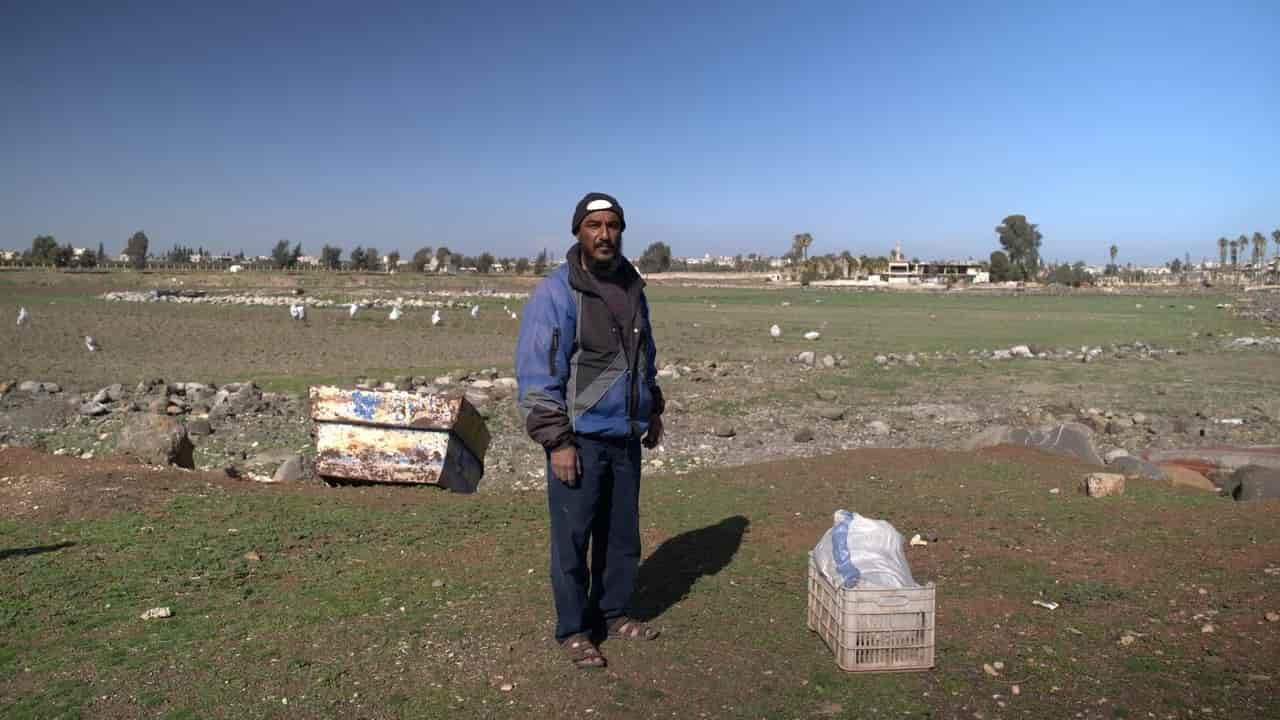
Lake al-Muzayrib in southern Syria, once a significant natural body of water and a crucial resource for the region's agriculture and fishermen, has completely dried up. The collapse of water resources in Daraa province is attributed to prolonged periods of drought exacerbated by mismanagement, including excessive and unregulated well-drilling.
Abdul-Munaf al-Masri, who worked as a fisherman on the lake from 1993 until a few years ago, described the sight of the barren lakebed as saddening. The springs that once fed the lake at a rate of up to 1,000 liters per second have dwindled to zero, according to the Daraa Water Resources Directorate. By the end of 2024, the lake had entirely disappeared, forcing Masri and other fishermen to find alternative livelihoods.
Hani al-Abdullah, the province's director of water resources, stated that 14 out of 16 dams in Daraa have experienced partial or total drying. The total water stored in the province's dams in 2025 was less than four million cubic meters, a significant drop from 65 million cubic meters five years prior.
Agriculture, the backbone of Daraa's economy, is also severely threatened. Farmers like Abu Mahmoud have resorted to digging unlicensed wells to save their crops, a practice that has become widespread due to a vacuum of governmental authority during the conflict. However, even these wells eventually dry up. The price of water has become a heavy burden, with 1,000 liters costing around $5, a substantial amount for residents earning an average monthly salary of $75 to $150. Authorities are attempting to combat unregulated groundwater extraction through monitoring, repairing irrigation networks, drilling regulated wells, and trucking in water, alongside confiscating drilling equipment and imposing fines.