All NewsEducationTV
Equities & FundsCrypto & Digital AssetsAI & TechnologyBusiness & CorporateUS Politics & PolicyGeopolitics & Global RiskMacro, Rates & FXCommodities & EnergyEuropean Politics & MarketsAsia-PacificReal Estate & Property
All NewsHome
← Back to European Politics & Markets

Swiss voters to decide on tighter neutrality, NATO cooperation ban

Created at 26 Aug · 5:37 AM1 source↑ Market-relevant
IN SHORT

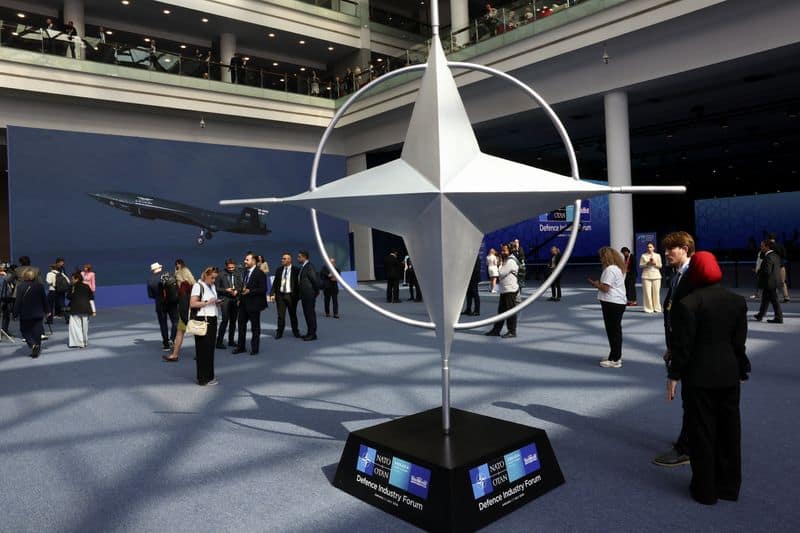
Swiss voters will decide in a September referendum whether to adopt a more restrictive form of neutrality that would prevent the country from imposing economic sanctions or cooperating with NATO. The proposal, backed by the right-wing Swiss People's Party, faces opposition from the government and most other political parties.

Key Numbers

62%against the proposal in one poll
36%in favor of the proposal in one poll
200 yearssince Switzerland has not had a war
1815year Swiss neutrality was recognised
1848year neutrality became part of Swiss constitution
1907year Hague Convention defining neutrality
September 27date of the referendum

Who's Involved

John Revill
Reuters reporter
Fabio Wasserfallen
Pollster
Christoph Blocher
Veteran politician and supporter of the right-wing Swiss People's Party
Maria Zakharova
Russian foreign ministry spokeswoman
Ignazio Cassis
Swiss Foreign Minister
Franz Perrez
Head of international law at the Swiss foreign ministry
Laurent Goetschel
Political scientist at Basel University
Swiss voters to decide on tighter neutrality, NATO cooperation ban

↳ Why This Matters

The outcome of the referendum could significantly alter Switzerland's foreign policy and its relationship with European neighbors and NATO, potentially impacting its role in international security and its economic alignment.

Key facts

  • Swiss voters will decide in a September 27 referendum on a proposal for a more restrictive form of neutrality.
  • The proposal would prevent Switzerland from imposing economic sanctions or cooperating with NATO.
  • The Swiss government and most political parties oppose the measure, arguing it would harm national security.
  • Supporters of the proposal, including the right-wing Swiss People's Party, argue current neutrality is being eroded.
  • Opinion polls suggest the proposal will be rejected by voters.

Swiss voters are set to decide in a referendum on September 27 whether to adopt a more restrictive interpretation of the country's long-standing neutrality. The proposal, championed by the right-wing Swiss People's Party (SVP), would constitutionally mandate that Switzerland cannot join or cooperate with any military or defense alliance, unless attacked, and would prohibit joining sanctions unless approved by the United Nations.

Supporters, including veteran politician Christoph Blocher, argue that Switzerland's neutrality has been eroded by its decision to impose sanctions on Russia following the 2022 invasion of Ukraine. They fear that without a stricter definition, Switzerland could be seen as a party to conflicts and become isolated from its European neighbors. Russia's foreign ministry has also weighed in, with spokeswoman Maria Zakharova criticizing Switzerland's alignment with EU sanctions.

However, the Swiss government and most other political parties oppose the initiative. Foreign Minister Ignazio Cassis stated that the proposal would harm national security, prevent essential training with NATO, and limit Switzerland to mere verbal condemnations. Government legal experts maintain that the current definition of neutrality, guided by the 1907 Hague Convention, is well-understood and successful, and that implementing the proposed measures would not enhance neutrality. Political scientist Laurent Goetschel suggested that while neutrality is important, its application should remain at the government's discretion rather than being fixed in the constitution.

Opinion polls currently indicate that voters will reject the proposal, with one recent survey showing 62% against and 36% in favor. However, campaigners for change are outspending supporters of the status quo, raising concerns that the gap could narrow before the vote.

Frequently asked questions

The referendum is scheduled to take place on September 27.

The proposal would prevent Switzerland from joining or cooperating with military or defense alliances unless attacked, and from joining sanctions unless approved by the UN.

The proposal is backed by the right-wing Swiss People's Party (SVP) and some veteran politicians like Christoph Blocher.

The Swiss government, most political parties apart from the SVP, and officials like Foreign Minister Ignazio Cassis oppose the proposal.

Recent polls indicate that voters will reject the proposal, with a majority against it.

What Happens Next

01Referendum on the proposed neutrality changes to take place on September 27.

How It Developed

Swiss voters will decide in a referendum on September 27 whether to approve a more restrictive form of neutrality.
The proposed neutrality would block Switzerland from imposing economic sanctions or cooperating with NATO.
Posters advocating for rejection of the proposal have appeared across Switzerland.
Opinion surveys indicate voters will reject the proposal, with one poll showing 62% against.
Christoph Blocher, a politician backing the campaign, stated that Switzerland's neutrality is being undermined by its sanctions on Russia.
Russia's foreign ministry, through spokeswoman Maria Zakharova, criticized Switzerland for aligning its sanctions with the EU.
The campaign seeks to constitutionally stipulate that Switzerland cannot join or cooperate with military or defense alliances unless attacked, and refrain from joining sanctions unless approved by the
The Swiss government and most political parties oppose the proposal, citing harm to national security and NATO training.

Sources

T1
Swiss to vote on whether to tighten neutrality, end peacetime cooperation with NATOReuters

Related Stories

Sweden's ruling coalition narrows gap with opposition ahead of election
25 Aug · 3:57 PM
Guinea-Bissau to vote on new constitution expanding presidential powers
25 Aug · 3:09 PM
EU urges Ukraine rule-of-law reforms after parliamentary setbacks
25 Aug · 11:16 AM
Hungary files criminal complaint over $965M COVID-19 ventilator deal
25 Aug · 7:12 AM
UK Tax Rises Possible as Burnham Faces Fiscal Crunch
25 Aug · 9:46 PM