Key facts
- The Supreme Court dismissed Congress leader Meenakshi Natarajan's plea against the rejection of her Rajya Sabha nomination papers.
- Natarajan alleged that 'seat chori' (seat theft) has occurred and vowed to fight the decision.
- The court noted that election petitions are the appropriate legal recourse for such challenges.
- Three BJP candidates were declared elected unopposed from Madhya Pradesh following the nomination rejections.
- Natarajan's nomination was rejected for allegedly concealing information about a court complaint in Telangana.
The Supreme Court has dismissed a plea filed by Congress leader Meenakshi Natarajan challenging the rejection of her nomination papers for the Rajya Sabha elections from Madhya Pradesh. A bench comprising Justices Prashant Kumar Mishra and Atul S Chandurkar stated that such challenges are typically to be addressed through election petitions, not direct intervention under Article 32/226 of the Constitution, as it could lead to inconsistent application of remedies.
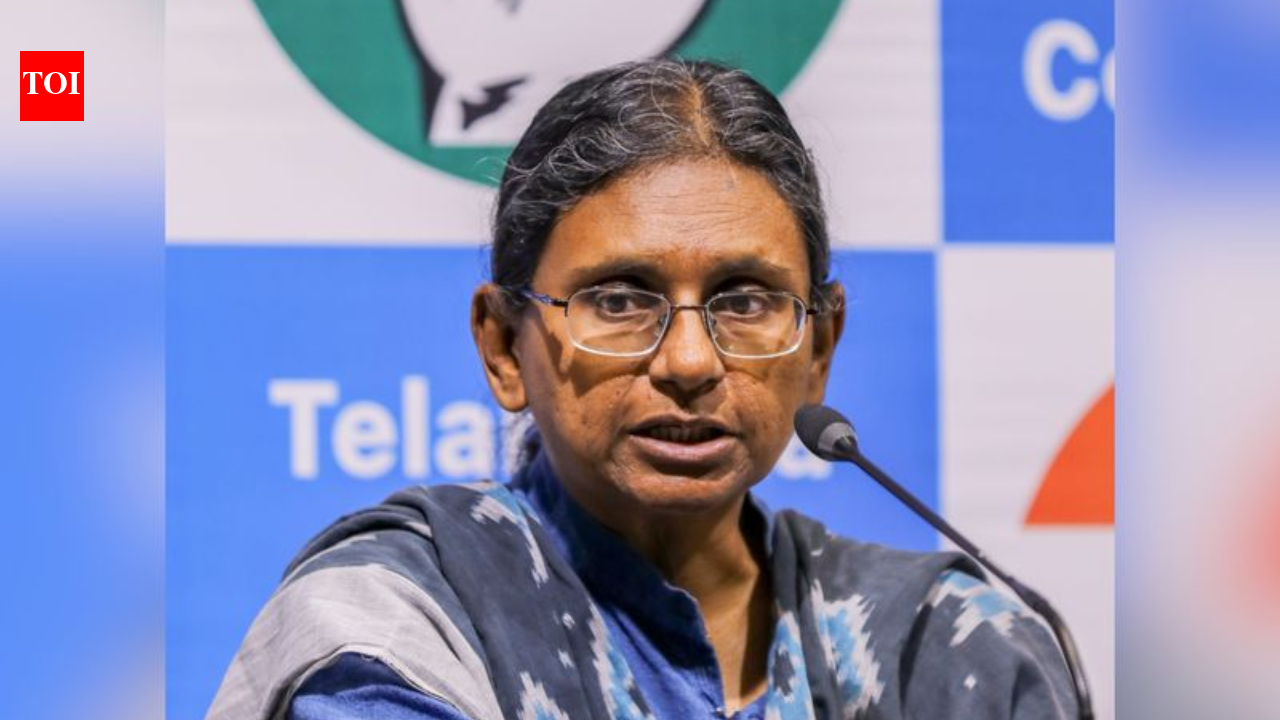
Following the court's decision, Natarajan expressed her belief that a 'seat chori' (seat theft) had occurred and asserted that the party was prepared to fight. She indicated that the party leadership would decide on the next course of action, potentially including approaching the 'people's court'. Natarajan also alleged that the Election Commission of India (ECI) is compromised and complicit, and that MLAs were prevented from meeting President Droupadi Murmu.
Her nomination was rejected by the returning officer for allegedly concealing information about a court complaint filed against her in Telangana in the Form 26 submitted with her nomination papers. The Congress had previously protested the rejection at Jantar Mantar, accusing the ECI of unfair practices. On Thursday, three BJP candidates—Tarun Chugh, Rajneesh Agarwal, and Mahesh Kewat—were declared elected unopposed from Madhya Pradesh.