Key facts
- Shipowners have ordered over twice as many supertankers this year as in all of 2025.
- The buying spree is worth over $20 billion and is the biggest for at least 25 years.
- The US-Iran conflict is redrawing trade routes and boosting demand for long-haul crude shipments.
- Asian and European refiners are replacing supplies lost due to the virtual closure of the Strait of Hormuz.
- US crude exports have hit record highs, with other Atlantic basin suppliers boosting output.
- The cost of shipping oil in the largest tankers has hit record highs, with VLCC spot prices climbing above $500,000 per day.
Shipowners have placed orders for more than twice as many supertankers this year as in all of 2025, a buying spree worth over $20 billion that is the biggest for at least 25 years. This surge is driven by the US-Iran conflict redrawing trade routes and boosting demand for long-haul crude shipments.
Data from Signal Group show 217 Very Large Crude Carriers (VLCCs) ordered so far in 2026, compared to 93 last year. Allied Shipbroking recorded 164 VLCC orders, up from 83. A VLCC can carry about two million barrels of oil.
The trend signals growing acceptance that oil will continue to travel longer distances from the Atlantic basin as buyers diversify away from Middle Eastern sources. Shipowners also anticipate that long-haul oil trade will remain resilient, despite the global transition away from fossil fuels.
"We believe owners betting on increased long-haul shipments from the Atlantic to Asia are playing a large part in the renewed demand for VLCC ordering," said Rebecca Galanopoulos, senior analyst at Veson Nautical.
Asian and European refiners are having to replace supplies lost by the virtual closure of the Strait of Hormuz, through which about one-fifth of global oil and liquefied natural gas supplies passed before the war between the US and Iran. U.S. crude exports have hit record highs, and other Atlantic basin suppliers are boosting output.
Ioannis Papadimitriou, analyst at Vortexa, noted that countries on the east coast of South America, led by Brazil, Guyana, and Argentina, will drive further export growth. "Regional production could grow by around 2.5 million barrels per day through 2030, largely feeding European and Asian markets and favouring longer-haul trades," he said, adding that expectations are growing for longer-haul trades on bigger vessels.
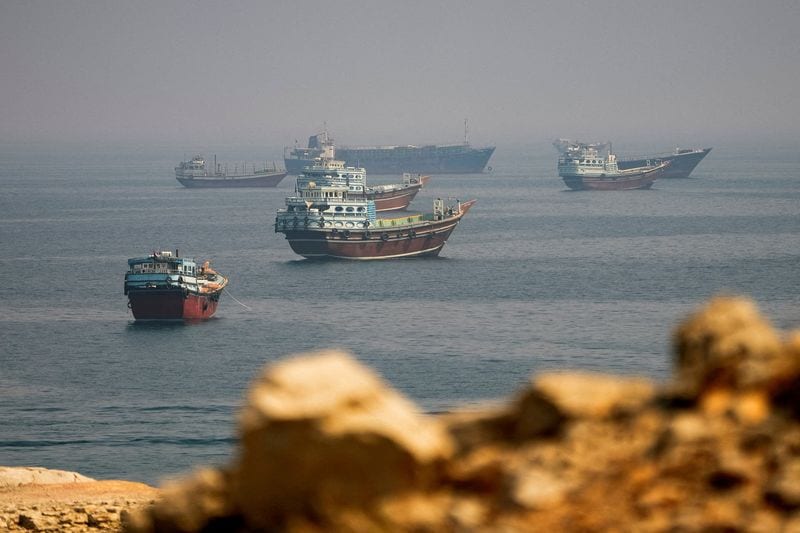
Demand for VLCCs and smaller Suezmax tankers is also being driven by the growing need to shuttle oil out of the Gulf through the Strait of Hormuz to reload onto larger tankers in the Gulf of Oman. Middle Eastern producers find shipowners unwilling to risk Iranian attacks by transiting the strait, leading them to consider owning vessels themselves.
Lars Barstad, CEO of Frontline, stated that with a Saudi pipeline taking oil west to the Red Sea recently damaged by a drone attack, "Saudi (Arabia) will need to participate in this business to a much greater degree ... at least temporarily".
Since the pipeline incident, the cost of shipping oil in the largest tankers has hit record highs. VLCC spot prices recently climbed above $500,000 per day from about $132,000 in February, before the war, according to Allied Shipbroking. Shuttling oil out of the Gulf to transfer onward ties up vessels and adds waiting times, further spurring demand.
Brokers Pareto Securities estimated that it is now more expensive to buy a 10-year-old oil tanker than to order a new one. Each VLCC costs about $130 million to build, according to Allied Shipbroking.
The ordering wave is also driven by the urgent need for fleet renewal, with around 20% of the VLCC fleet more than 20 years old, according to Veson Nautical. Recent contracts include ships for delivery in 2029 and 2030, indicating owners are confident that demand will last into the medium term, said Pavlos Fakinos, freight market analyst at Allied Shipbroking. Data from Kpler shows that even old VLCCs are finding buyers rather than being scrapped, populating the "shadow fleet" used to transport sanctioned oil.