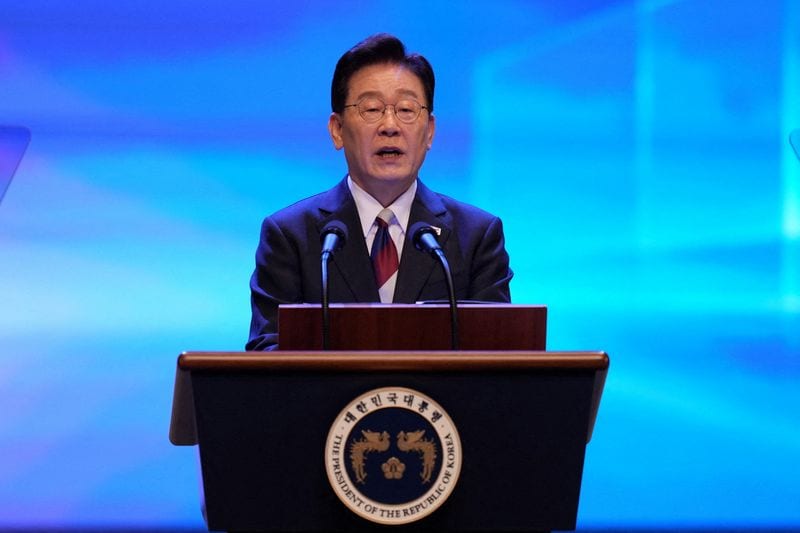
South Korean President Lee Jae-myung stated that an interest rate hike is unavoidable, despite concerns about impacting growth and burdening those with higher borrowing costs. He cited a forecast of the Bank of Korea's benchmark rate potentially reaching 3.5% by early next year.

President Lee's comments signal a potential shift in monetary policy direction, raising concerns about future interest rate hikes that could impact economic growth, increase borrowing costs for consumers and businesses, and affect the bond market.
South Korean President Lee Jae-myung has indicated that an interest rate hike is now unavoidable for the nation's economy, a stance that risks dampening growth potential at a time when vulnerable populations are already struggling with higher borrowing costs. Speaking at a cabinet meeting, Lee directly cited a forecast from Morgan Stanley suggesting the Bank of Korea's benchmark rate could rise to 3.5% by the first quarter of next year.
While Lee clarified that the government does not intervene in interest rate decisions, his framing of the potential for higher rates as a factor for property speculators to consider has revived market expectations of further monetary tightening. This comes shortly after the Bank of Korea's Monetary Policy Board raised the base rate to 3.00% from 2.75% on August 27th, its second consecutive increase, as a preemptive measure against inflation and financial stability risks. Governor Hyun Song Shin had presented a median projection of 3.25% for the base rate over the next six months, implying a gradual tightening path.
The president's remarks have put the bond market on edge, with concerns that treasury yields could face renewed upward pressure. Some market participants interpret Lee's comments as a departure from the typical government stance favoring rate cuts and as a signal that rate increases will not be ruled out in efforts to stabilize the housing market, particularly in light of rising mortgage delinquencies and an increase in properties going to auction.