All NewsEducationTVBrokers
Equities & FundsCrypto & Digital AssetsAI & TechnologyBusiness & CorporateUS Politics & PolicyGeopolitics & Global RiskMacro, Rates & FXCommodities & EnergyEuropean Politics & MarketsAsia-PacificReal Estate & Property
All NewsHome
← Back to US Politics & Policy

South Korea to use chip tax windfall for sustainable growth

Created at 1 Sep · 2:56 AM1 source↑ Market-relevant
IN SHORT

South Korea plans to establish a Future Fund next year, channeling 162.3 trillion won from semiconductor tax revenue into sustainable economic growth. The fund will prioritize investments in youth, growth engines, regional development, and education, while also serving as a reserve for fiscal stability.

Key Numbers

162.3 trillion wonwindfall revenue for Future Fund
US$117.6 billionwindfall revenue for Future Fund
2027projected year for trend line calculation
45.4 trillion woninvestment in four key areas
13.3 trillion wonallocation for youth account
1.4 trillion wonhousing support for young people
3.8 trillion wonsupport for marriage, childbirth, childcare
400 billion wonsupport for young people's first jobs
14.2 trillion wonallocation for growth engine account
250 billion wondevelopment of public-facing AI services
15.3 trillion wonallocation for regional development account
10.1 trillion wonallocation for education and talent account
2.6 trillion won
program spending for education and talent
three to five yearsexpected duration of semiconductor cycle

Who's Involved

Park Hong-geun
South Korean Budget Minister
Yang Jun-sok
Professor of economics at the Catholic University of Korea
Kang Sung-jin
Professor of economics at Korea University
Kim Kwang-seok
Senior researcher at the Institute for Korean Economy and Industry
Cho Yong-beom
South Korean Vice Budget Minister
Joo Won
Senior researcher at Hyundai Research Institute
South Korea to use chip tax windfall for sustainable growth

↳ Why This Matters

This initiative represents a significant fiscal strategy by South Korea to leverage a temporary economic boom for long-term growth, but it also highlights a debate between prioritizing investment in future industries and strengthening fiscal stability through debt reduction.

Key facts

  • South Korea will set aside 162.3 trillion won (US$117.6 billion) in "windfall revenue" for a new Future Fund.
  • The fund aims to channel tax earnings from the semiconductor boom into sustainable economic growth.
  • Key investment areas include youth, growth engines, regional development, and education/talent development.
  • The fund will also serve as a reserve to manage fiscal fluctuations and bolster capacity.
  • Some experts argue the windfall should prioritize debt reduction and fiscal health.

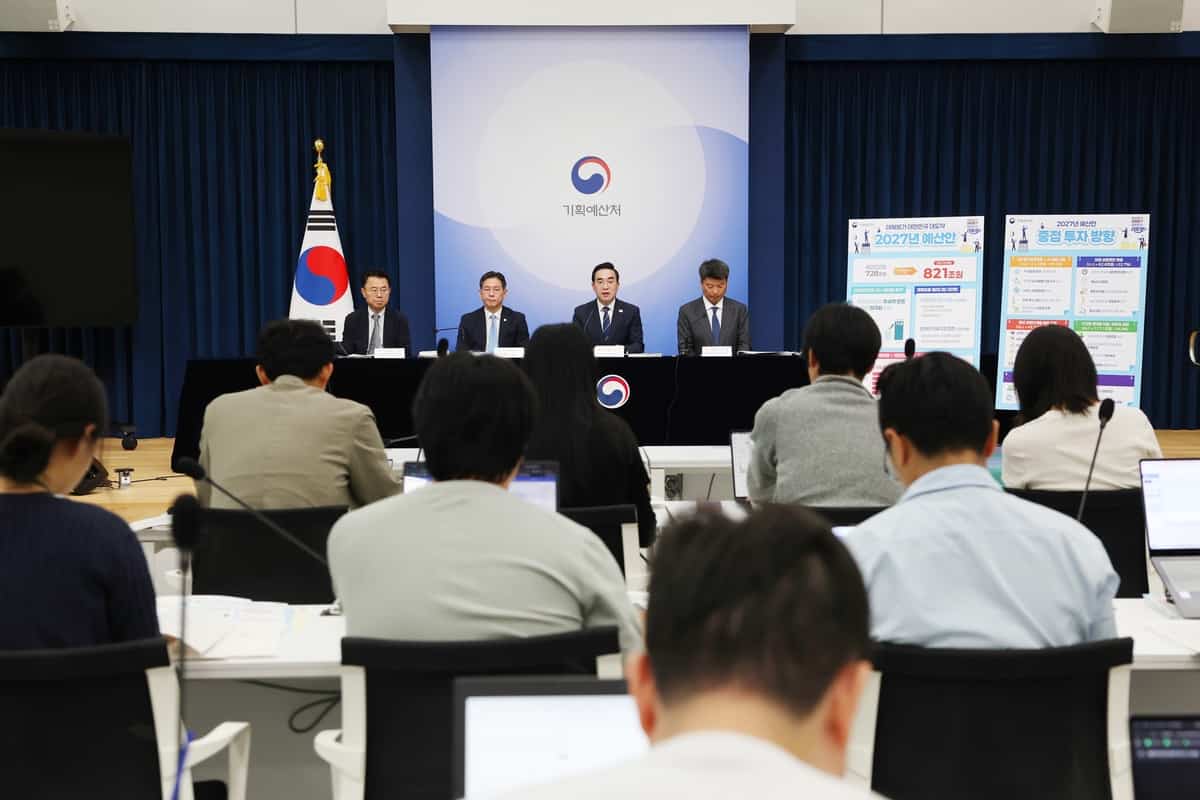
The South Korean government has announced plans to establish a "Future Fund" next year, designed to channel an estimated 162.3 trillion won (US$117.6 billion) in tax revenue, deemed a "windfall" from the semiconductor boom, into sustainable economic growth. This initiative aims to prioritize "productive spending" over one-off expenditures, particularly in light of the global artificial intelligence boom.

Budget Minister Park Hong-geun explained that this windfall revenue is defined as earnings exceeding the long-term trend, calculated from internal tax revenue over the past decade, and differs from excess tax revenue due to short-term fluctuations. Of the total amount, 45.4 trillion won will be invested in four key areas: youth, growth engines, regional development, and education and talent development. The remaining resources will be managed as reserves to cushion against sharp tax revenue fluctuations and bolster fiscal capacity during revenue shortfalls.

The fund's structure includes a general account and four program accounts. The youth account will receive 13.3 trillion won, with allocations for stable housing, marriage, childbirth, childcare, and job placement assistance. The growth engine account will receive 14.2 trillion won, including investments in public-facing AI services and strategic technologies. Regional development and education/talent accounts will receive 15.3 trillion won and 10.1 trillion won, respectively.

However, the plan has drawn criticism from some experts who argue that the windfall revenue should first be used to improve the country's fiscal health by reducing debt and deficits. Concerns have also been raised regarding the transparency of the fund's operations and potential evasion of parliamentary oversight. Professors Yang Jun-sok and Kang Sung-jin emphasized the need to prioritize debt repayment, while researcher Kim Kwang-seok questioned adherence to the principle of specifying tax revenue use at the time of collection.

Vice Budget Minister Cho Yong-beom defended the fund's structure, stating it allows for more agile responses to rapidly changing fiscal needs compared to the general account, which would require supplementary budgets. He dismissed transparency concerns, assuring that parliamentary oversight and evaluation procedures would be followed. Senior researcher Joo Won also noted that expenditures would still be subject to oversight and stressed the urgency of investing in new industries.

Frequently asked questions

It refers to tax earnings exceeding the government's long-term trend, generated by structural economic changes or significant economic fluctuations like an industrial supercycle, distinct from excess tax revenue due to forecasting errors.

The fund will consist of a general account for financial resource management and four program accounts dedicated to youth, growth engines, regional development, and education/talent development.

Critics argue the windfall revenue should be used to reduce national debt and improve fiscal health, and some question the fund's transparency and potential lack of parliamentary oversight.

The government states the fund allows for more timely and flexible responses to rapidly changing fiscal needs compared to the general account, which would require lengthy supplementary budget processes.

What Happens Next

01The Future Fund is planned to be launched next year.
02The government will need to navigate parliamentary oversight and address transparency concerns.
03The success of the fund will depend on South Korea's response to global industry shifts and investments in strategic sectors.

How It Developed

The South Korean government plans to launch the Future Fund next year.
The fund will utilize 162.3 trillion won in "windfall revenue" from the semiconductor boom.
Investments will focus on youth, growth engines, regional development, and education.
A portion of the fund will be managed as reserves to cushion revenue fluctuations.
Experts expressed concerns about prioritizing spending over debt reduction and questioned the fund's transparency.
The government stated the fund allows for more timely responses to fiscal needs than the general account.

Sources

T1
Gov't to set aside 162 tln won in chip-boom tax 'windfall' for sustainable growthYonhap News Agency

Related Stories

South Korea proposes record 821 trillion won budget for 2027
1 Sep · 2:16 AM
7 in 10 S. Koreans support social media restriction for teens
1 Sep · 2:31 AM
Foreign ministry seeks to quadruple cybersecurity budget while cutting ODA spending
1 Sep · 3:06 AM
South Korean President Lee accepts policy chief Kim's resignation
1 Sep · 12:16 AM
President Lee calls for bipartisan cooperation on 2027 budget
1 Sep · 2:31 AM