Key facts
- South Korea is committed to implementing a $350 billion investment plan with the U.S.
- Finance Minister Koo Yun-cheol stated that South Korea is not deliberately delaying the investment process.
- The investment plan includes $150 billion for shipbuilding cooperation.
- The Korea-U.S. Strategic Investment Corporation was launched in June to facilitate the plan.
- South Korea aims to address concerns about alleged discrimination against U.S. companies operating in the country.
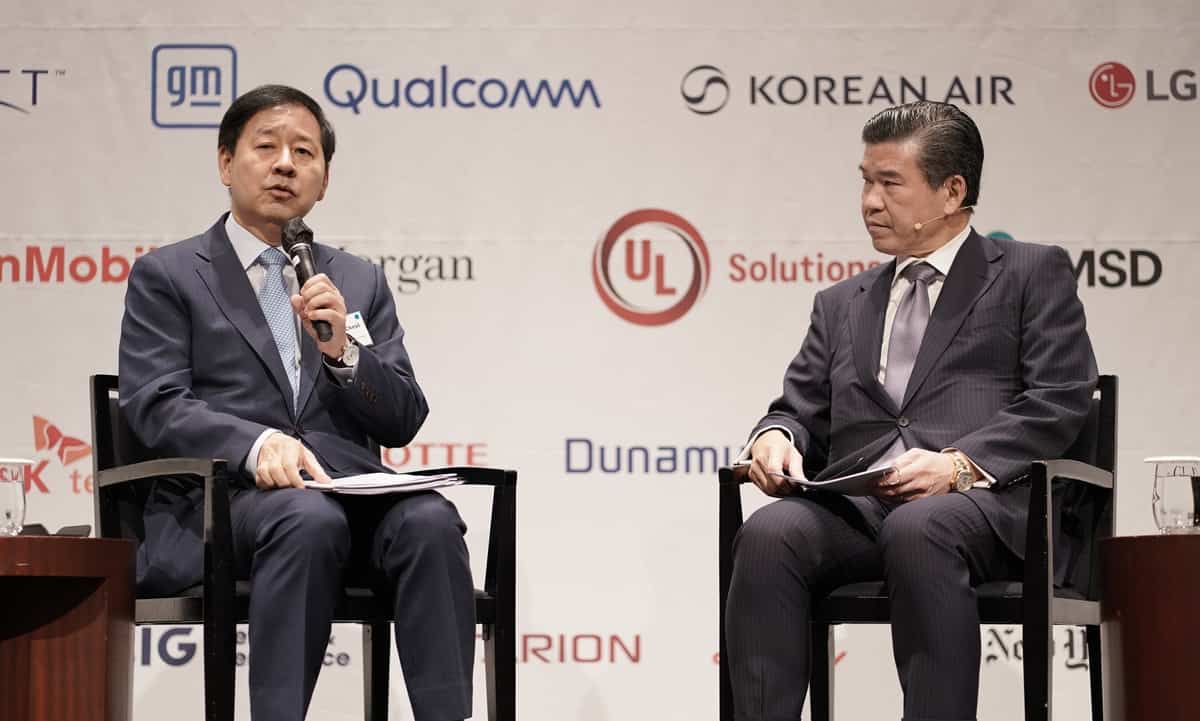
South Korean Finance Minister Koo Yun-cheol has stressed Seoul's active commitment to implementing a $350 billion investment plan agreed upon with the United States, aiming to quell concerns over potential delays and address trade issues. Speaking at a luncheon hosted by the American Chamber of Commerce in Korea (AMCHAM), Koo stated that the process is not being deliberately delayed and that projects are being selected to benefit both nations.
The comprehensive plan, part of bilateral tariff negotiations that lowered U.S. tariffs on South Korean imports to 15 percent, includes $150 billion allocated for cooperation in the shipbuilding sector. The remaining $200 billion is still under negotiation for implementation details. Koo emphasized the importance of private sector collaboration and expressed hope that AMCHAM would serve as a bridge between the governments.
To institutionalize these efforts, the Korea-U.S. Strategic Investment Corporation was launched in June. Koo also addressed allegations of discrimination against U.S. companies operating in South Korea, asserting that "Companies that invest in South Korea are Korean companies" and that the government offers full support without discrimination.
AMCHAM Chairman and CEO James Kim highlighted the need for tangible investment, deeper technology cooperation, and greater regulatory alignment, particularly in the digital economy, to advance the economic partnership. Earlier in the week, South Korean Industry Minister Kim Jung-kwan met with U.S. Commerce Secretary Howard Lutnick to discuss potential investment projects and timelines.