Key facts
- Seoul shares plummeted Thursday, closing down 6.37 percent.
- The decline was led by steep losses in technology stocks.
- Escalating Middle East tensions weighed on investor sentiment.
- The Korea Exchange activated a sell-side sidecar on the KOSPI index.
- The Bank of Korea raised its benchmark interest rate by 0.25 percentage points.
- Institutional and foreign investors were net sellers of South Korean shares.
Seoul shares experienced a significant decline on Thursday, with the benchmark Korea Composite Stock Price Index (KOSPI) falling 6.37 percent to close at 6,820.60. The sell-off was primarily driven by steep losses in technology heavyweights and heightened investor concerns stemming from escalating tensions in the Middle East.
The Korea Exchange, the nation's bourse operator, implemented a sell-side sidecar for the KOSPI for 20 minutes starting around 9:10 a.m. after the index dropped more than 5 percent. This measure temporarily suspended program trading.
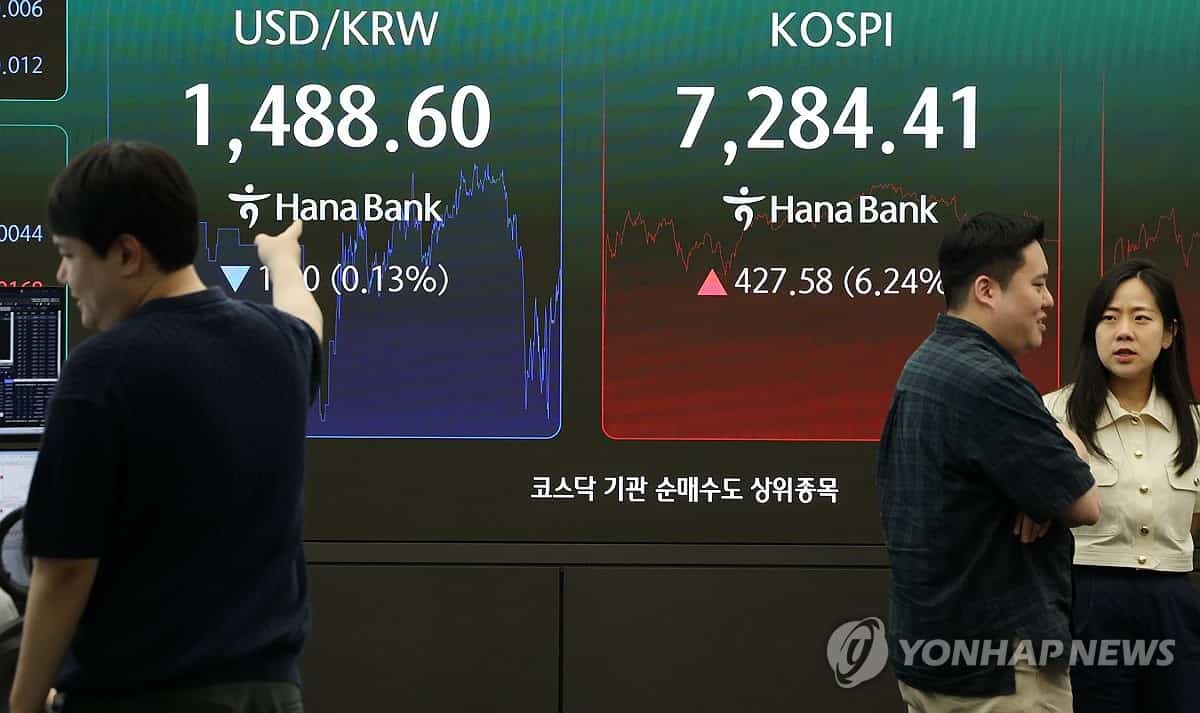
The market's downturn followed a substantial 6.24 percent surge on Wednesday, which was fueled by softer-than-expected U.S. inflation data that eased worries about imminent Federal Reserve interest rate hikes.
Adding to market jitters, the Bank of Korea announced an earlier-than-expected increase in its benchmark interest rate, raising it by a quarter percentage point to 2.75 percent. This marks the first rate hike in three and a half years, aimed at combating inflation amid the geopolitical instability.
The U.S. launched new strikes on Iran, intensifying the conflict in the Middle East and raising fears of potential disruptions to global energy supplies. Consequently, institutional and foreign investors offloaded a net 2.37 trillion won (US$1.6 billion) and 1.38 trillion won worth of shares, respectively. In contrast, retail investors bought a net 3.66 trillion won of shares.