Key facts
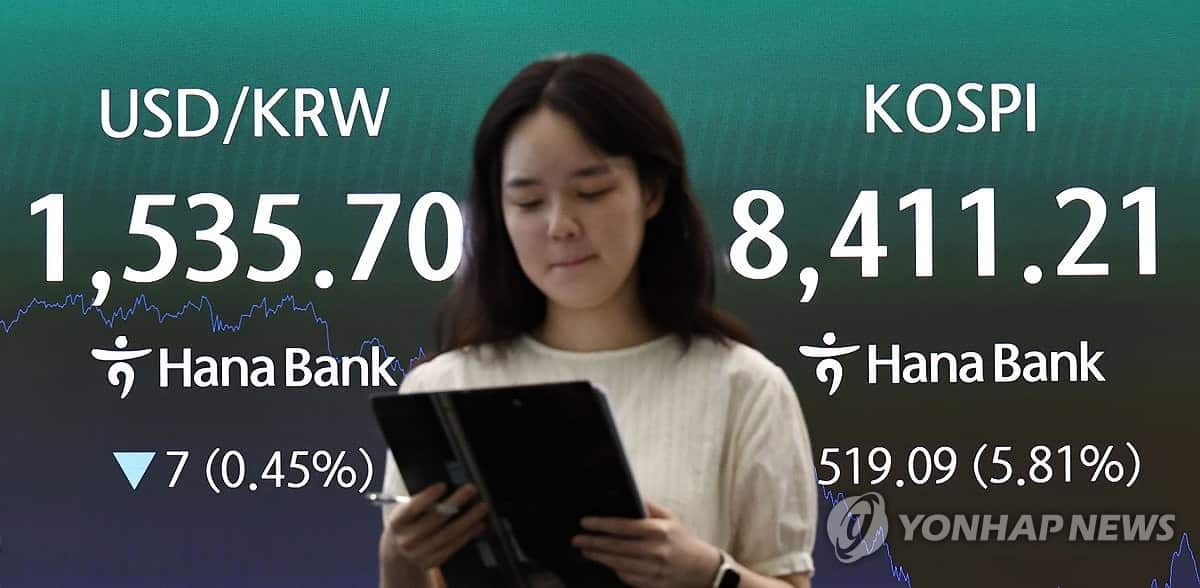
- The Korean won reached a 17-year low against the U.S. dollar on June 29, 2026.
- Foreign investors sold a net 7.7 trillion won (US$4.9 billion) of South Korean stocks.
- Middle East tensions and rising oil prices contributed to the won's decline.
- Seoul shares opened slightly higher on June 30, 2026, following Wall Street gains.
- The KOSPI index rose 0.26 percent to 8,416.7 at the opening bell.
The South Korean won depreciated to a 17-year low against the U.S. dollar on June 29, 2026, as foreign investors divested from local stocks amid escalating Middle East tensions and concerns over rising oil prices. The currency's decline was exacerbated by analysts predicting further weakness.
Seoul's stock market also experienced downward pressure, with the benchmark Korea Composite Stock Price Index (KOSPI) closing slightly lower. Technology stocks, in particular, led the losses, despite significant investment plans announced by major chip manufacturers.
However, on June 30, 2026, the KOSPI opened marginally higher, mirroring a rebound on Wall Street. Easing tensions between the United States and Iran, following reports of impending talks in Qatar aimed at de-escalating conflict in the Strait of Hormuz, improved investor sentiment. This development boosted appetite for technology shares, which had been previously impacted by broader market caution.
The Dow Jones Industrial Average closed at a record high, the Nasdaq composite jumped 2.07 percent, and the S&P 500 advanced 1.18 percent overnight. Crude oil prices saw a modest increase as markets monitored the implementation of the U.S.-Iran peace framework.