Key facts
- Asian share indices are largely set for weekly declines due to persistent stress in global bond markets.
- U.S. Treasury yields have resumed their climb, with the 30-year yield reaching 5.25% and the 10-year hitting 4.71%.
- Oil prices rose to one-month highs amid diplomatic deadlock in the Gulf and U.S. threats of 'toughest sanctions in history' on Iran.
- The dollar has weakened against major currencies, with the dollar index down for the week.
- Japan's core consumer inflation accelerated in July, increasing expectations for a Bank of Japan rate hike.
Most Asian share indices were heading for weekly falls on Friday as stress in global bond markets persisted, while rising oil prices and U.S. Treasury yields kept inflation risks to the fore. Seoul shares opened lower, tracking Wall Street losses.
Yields on U.S. Treasuries resumed their climb after Wednesday's intervention by Treasury brought barely a day of relief from selling. The rise came even as U.S. Treasury Secretary Scott Bessent said he could further increase the government's repurchases of Treasuries and floated the idea of fiscal consolidation. Analysts were skeptical he could find enough spending cuts to seriously curb a budget deficit of more than 6% of gross domestic product, with interest charges alone this year running at $1.2 trillion.
Investors showed their skepticism by nudging 30-year bond yields back up to 5.25%, while the 10-year hit 4.71%. Higher yields lift debt costs globally, just as tech giants are borrowing heavily to fund AI capex, while raising the discount on corporate earnings and challenging stock valuations.
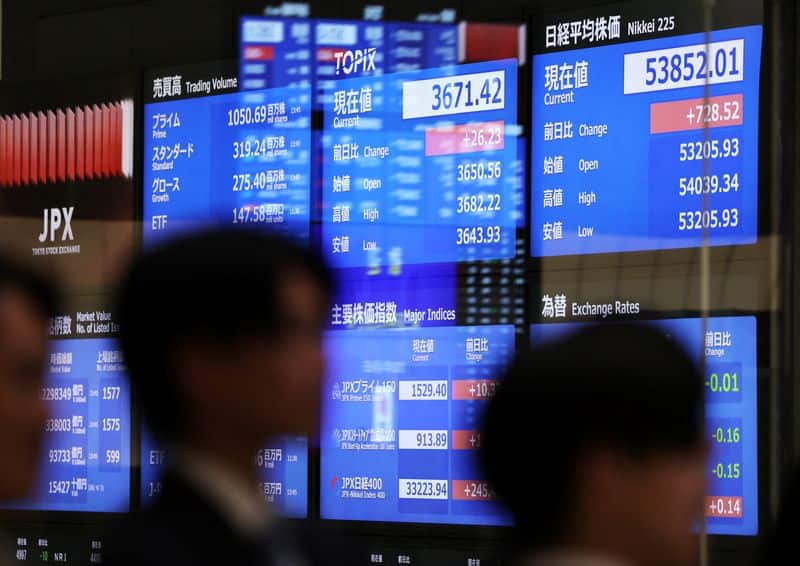
The strain was evident in the Nikkei, which slipped 0.8%, bringing losses for the week so far to 4.4%. MSCI's broadest index of Asia-Pacific shares outside Japan added 0.5%. In Europe, EUROSTOXX 50 futures and DAX futures were a fraction lower, while FTSE futures dipped 0.1%. On Wall Street, S&P 500 futures were up 0.1%, while Nasdaq futures gained 0.2%. Walmart slid 9% on a sales miss.
Bessent also made news by expanding on President Donald Trump's pledge of economic warfare against Iran, saying the U.S. would impose 'the toughest sanctions in history' on the country. The threats further dimmed hopes for a deal that would fully open the vital Strait of Hormuz and pushed Brent to a one-month top of $94.71, before profit-taking set in. Brent futures were last off 0.7% at $93.12 a barrel, but still up more than 5% for the week.
In currency markets, the dollar was nursing broad losses for the week amid worries ever-growing U.S. debt and policy uncertainties will erode the purchasing power of the currency, driving investors to scarce assets including gold. The dollar index was off almost 0.9% for the week at 98.802. The euro was up 1.0% on the week at $1.1686. The dollar fared better on the yen, holding at 159.07.
Data showed Japan's core consumer inflation accelerated in July as firms passed on rising import costs, adding to the case for a September rate hike from the Bank of Japan. Markets, however, are already priced for a quarter-point rise to 1.25% and would really like a commitment to faster and more aggressive tightening from policy makers.
