Key facts
- Samsung Electronics and SK Hynix have fallen out of the $1 trillion market capitalization club.
- South Korea's Kospi index has tumbled approximately 40% from its late-June peak.
- Regulators have implemented measures to curb volatility, including capping leveraged ETF investments.
- Retail investors have protested the government's handling of the market downturn.
- Samsung Electronics and SK Hynix reported substantial quarterly profits despite stock declines.
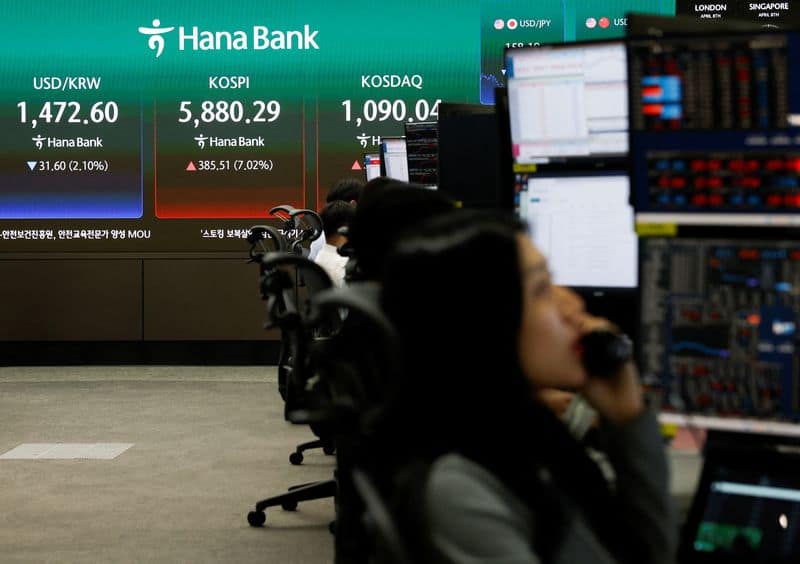
South Korea's stock market has experienced a significant rout, with the benchmark Kospi index falling approximately 40% from its late-June peak. This downturn has led major technology companies Samsung Electronics and SK Hynix, which had previously reached a combined market capitalization exceeding $1 trillion fueled by artificial intelligence demand, to drop out of that valuation tier. Despite reporting substantial quarterly profits, Samsung Electronics' stock is down significantly from its peak, and SK Hynix shares have seen an even steeper decline.
The market's volatility has been exacerbated by a surge in single-stock leveraged exchange-traded funds, with retail investors heavily involved. In response, South Korean regulators have announced measures to stabilize the market, including capping individual investment in single-stock leveraged funds and increasing trading costs for related ETFs. However, analysts question the effectiveness of these measures, suggesting they may not sufficiently dampen leverage or volatility, especially compared to regulatory actions in Hong Kong.
Retail investors, who had borrowed money to invest in these products, are bearing the brunt of the losses, leading to protests outside the National Assembly building. Finance Minister Koo Yun-cheol has apologized for the hasty introduction of leveraged products. While the market showed signs of stabilization, the overall downtrend has erased trillions of won in value.