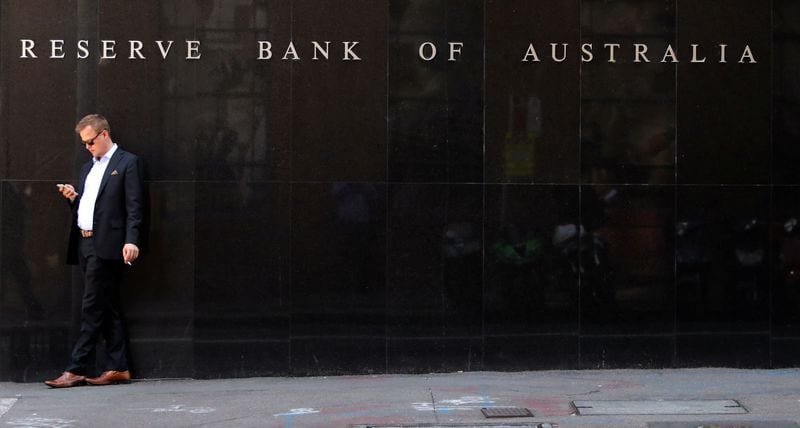
The Reserve Bank of Australia held its cash rate steady at 4.35% for a second consecutive meeting. The central bank indicated that while inflation is expected to cool faster than previously thought, it may need to raise rates again if upside risks materialize.

The RBA's decision to hold rates steady signals a cautious approach to managing inflation while acknowledging economic slowdown. The possibility of future rate hikes keeps pressure on borrowers and businesses, while the forecast for easing inflation offers some relief.
The Reserve Bank of Australia (RBA) held its benchmark cash rate steady at 4.35% for a second consecutive meeting, a decision widely anticipated by markets. The central bank indicated that the economy was slowing as expected, but warned that it might need to raise rates again if necessary to control inflation.
The RBA stated it would do whatever is necessary to bring inflation back within its 2% to 3% target band, including further increasing the cash rate target if upside risks materialize. Markets had largely priced in a steady outcome, influenced by inflation data coming in below forecasts for the second quarter and a weakening housing market.
Policymakers emphasized their focus on ensuring high inflation does not become embedded, requiring subdued growth in aggregate demand to reduce capacity pressures. The RBA has previously raised rates by 75 basis points this year to counteract policy easing from 2025, struggling with persistent inflation amid surging energy costs. While the current cash rate is considered slightly restrictive, further tightening has not been ruled out.
The housing market has seen a significant slowdown due to higher borrowing costs, with falling auction clearance rates, reduced loan applications, and declining sales. Despite this, consumer spending has remained solid, and the labor market continues to generate jobs. The RBA now expects inflation to return to its target band in the second half of next year, with consumer price inflation projected to ease to 3.6% by year-end and 2.6% by the end of 2027. Economic growth is forecast to slow to a below-trend rate of 1.4% by year-end, with the unemployment rate projected to peak at 4.8% by mid-2028.