Key facts
- Nearly 2,000 businesses went into insolvency in August due to economic pressures and geopolitical tensions.
- Bathla Group, an Australian property developer, entered voluntary administration citing a 'perfect storm' of soaring material costs, labor shortages, fixed-price contracts, softening sales, and falling confidence.
- In the U.S., housing inventory has increased for 21 consecutive months, while sales have reached their lowest levels in decades.
- Buyers face affordability challenges due to elevated home prices and interest rates, with monthly payments significantly higher than in 2019.
- Sellers are resisting price drops despite longer market times, and builders are pulling back, exacerbating a housing shortage.
The global property sector is experiencing a period of significant strain, with businesses facing insolvencies and sales declining across key markets. In the UK, nearly 2,000 businesses entered insolvency in August, attributed to economic pressures and ongoing geopolitical tensions.
In Australia, the Bathla Group, a family-owned residential builder and property developer established in 1997, has been placed into voluntary administration. Founder Bhart Bhushan described the situation as a "perfect storm" of circumstances, including a significant softening in sales, impacts from the federal government's May budget, falling market confidence, and substantial increases in construction costs. The company's collapse leaves customers in limbo and adds to a list of 1,522 construction firms that have collapsed in New South Wales in the 2025/26 financial year.
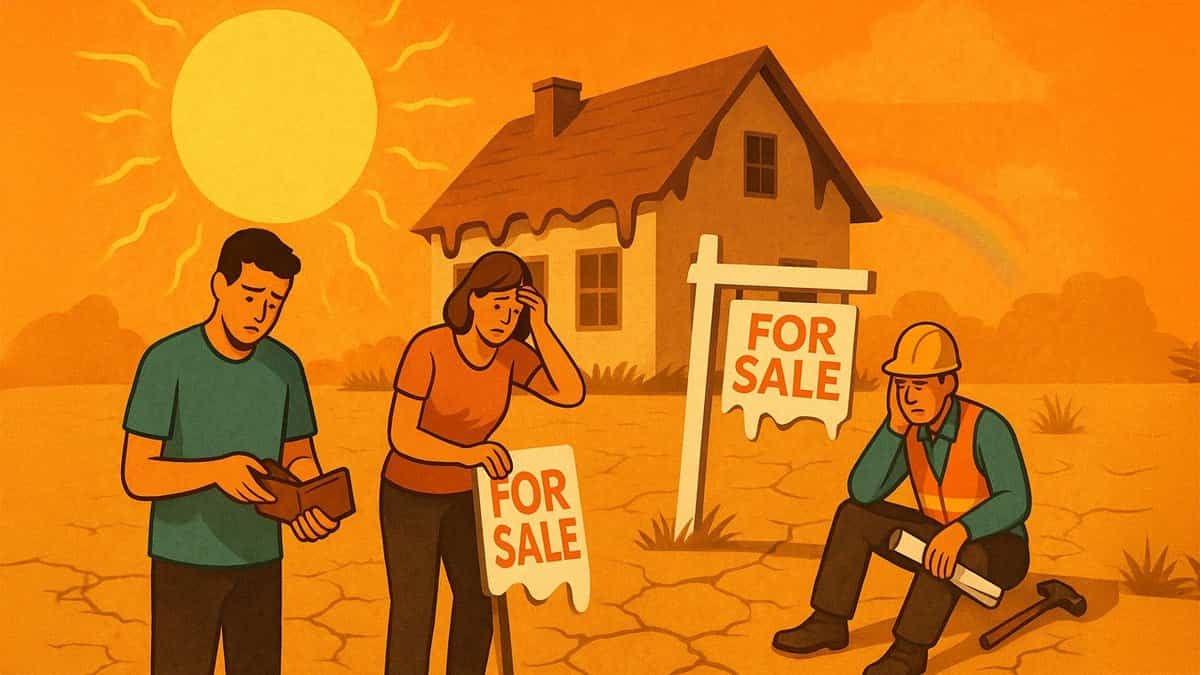
The U.S. housing market is also navigating a "cruel summer," characterized by a stalemate between buyers and sellers. Nationwide housing inventory has risen for 21 consecutive months, reaching its highest level in years, while sales have fallen to their lowest in decades. Buyers are deterred by a "double whammy" of high prices and interest rates, making homeownership significantly more expensive than in 2019. Despite stable income growth, elevated housing costs have eroded purchasing power. Sellers, while losing market power, are resisting price reductions, and builders are scaling back operations due to waning demand, further deepening the nation's housing shortage of nearly 4 million homes.