Key facts
- Brent crude prices are nearing $100 per barrel due to escalating attacks on ships in the Strait of Hormuz.
- US-Iran tensions have intensified, with conflicting claims over control of the vital shipping lane.
- Tanker traffic through the Strait of Hormuz has significantly decreased.
- Bank of America warns of potential winter diesel and gasoline shortages and further price increases if the strait remains closed.
- OPEC has lowered its global oil demand growth forecast for 2026, while the IEA predicts a deepening supply deficit.
- US crude inventories saw a significant build of 17 million barrels, partially offsetting bullish sentiment.
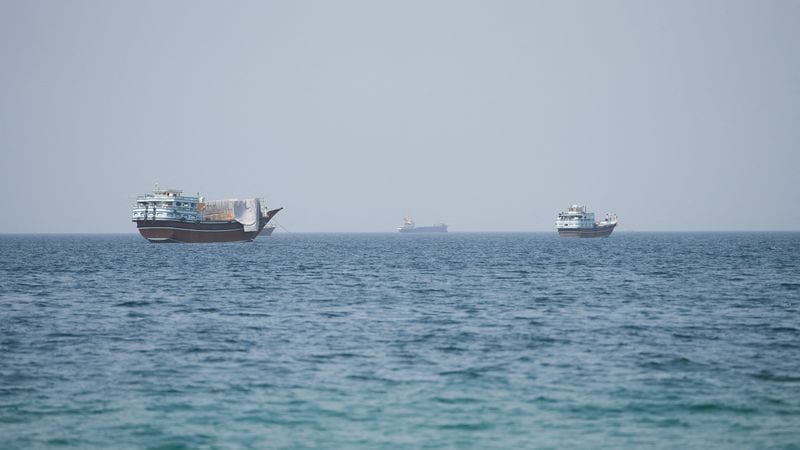
Brent crude is poised for a significant weekly gain, approaching the $100 per barrel mark as escalating attacks in the Strait of Hormuz and stalled US-Iran negotiations heighten supply concerns. The White House has reiterated its commitment to an indefinite naval blockade of Iranian crude, while Tehran asserts control over the vital waterway, demanding political concessions.
Tanker traffic through the Strait of Hormuz has seen a substantial decrease. Bank of America has cautioned that if the strait remains closed, oil prices could surge further into winter, potentially leading to severe diesel and gasoline shortages. This situation unfolds despite a notable 17-million-barrel build in US crude inventories, which has only partially tempered the overall bullish sentiment in the market.
In its latest outlook, OPEC revised down its forecast for global oil demand growth in 2026 to 580,000 barrels per day. This contrasts sharply with the International Energy Agency's prediction of a 1.6 million b/d decline in demand, while the IEA anticipates a deepening global supply deficit of 4.3 million b/d in 2026, with a projected Q3 deficit of 1.8 million b/d.
Saudi Aramco is reportedly negotiating September crude allocations individually with Asian buyers as shipowners avoid the Strait of Hormuz and the Red Sea. Meanwhile, Ukraine has reportedly proposed a truce on attacks against civilian vessels and ports, as its agricultural exports have been severely impacted. In Russia, seaborne refined product exports have fallen significantly, and the Orsk refinery has shut down for up to six months following a drone strike. A slick from the sanctioned tanker Caroline Bezengi has also washed ashore in Oman.
Other developments include Argentina doubling its estimate for recoverable shale oil in the Vaca Muerta play, and QatarEnergy extending its force majeure to India for LNG shipments. In Nigeria, President Bola Tinubu approved new tax incentives for deepwater oil projects. Separately, a blast at Gunvor's Rotterdam terminal resulted in fatalities and injuries, and an unrelated power failure halted an ExxonMobil refinery.