Key facts
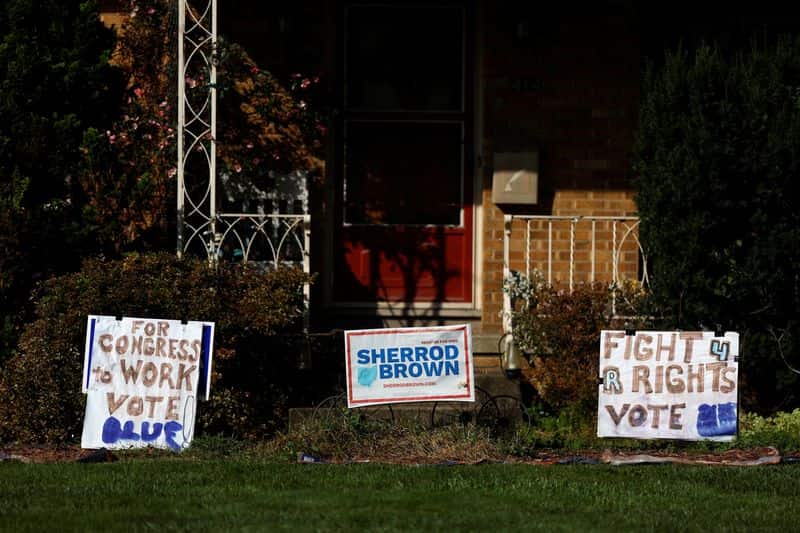
- Democrats and labor leaders in Ohio believe they have an opportunity to win back working-class and union voters.
- Rising prices and concerns about Donald Trump's rhetoric are causing some voters to reconsider their support for him and the Republican Party.
- Ohio has become a reliably Republican state since Trump's 2016 victory, breaking a long-standing trend of voting for the eventual presidential winner.
- Early voting data from Trumbull County shows higher Democratic turnout compared to Republican turnout.
- Some voters express dissatisfaction with inflation and Trump's 'in-your-face' persona.
- Other voters credit Trump with reducing illegal immigration and boosting retirement investments, and express concern about Democratic social policies.
Democrats and labor leaders in Ohio see a potential opening to win back working-class and union voters who have increasingly supported Republican Donald Trump. A decade ago, Trump successfully appealed to these voters, transforming Ohio into a reliably Republican state. However, midway through his second term, some voters are reconsidering their support due to rising prices, concerns about the Iran war, and Trump's rhetoric.
Ohio's swing state reputation faded after Trump's 2016 victory, with the state voting Republican in the last 14 presidential elections, including in 2020 when Biden won nationally. The potential shift of Ohio voters toward Democrats could impact control of Congress and the agenda of the president.
In the upcoming elections, Republicans are defending a US Senate seat and the governor's office in Ohio. Two House races are considered toss-ups. While Trump is not on the ballot, he has urged supporters to act as if he is. Senator Jon Husted faces former Senator Sherrod Brown, and Amy Acton is challenging Vivek Ramaswamy for governor.
Interviews with voters reveal a mix of sentiments. Paul Ringold, a steel hauler, voted for Trump in 2016 and 2024 but is undecided for other races, citing inflation and Trump's combative style. "God knows we didn't vote for this," he said of inflation. He also expressed a desire for Trump to tone down his rhetoric.
Early voting data from Trumbull County, a blue-collar hub, shows higher turnout among Democrats than Republicans. Paul Sracic, a fellow at the Hudson Institute, suggested that working-class voters moving away from Trump might find a safe haven with Sherrod Brown due to his populist record.
Jose Arroyo of the United Steelworkers noted Trump's success in appealing to working men by addressing issues like disappearing pensions and plant closures. However, Arroyo criticized the focus on social issues over policies that would directly improve working people's lives. Manufacturing jobs in the Youngstown-Warren area have significantly declined since 1990.
Ohio AFL-CIO President Tim Burga criticized Trump's actions at the National Labor Relations Board, stating it hindered union organizing. He contrasted this with the Biden administration's efforts to establish a national industrial policy.
Other voters remain firm in their support for Trump. Bill Callahan, a Democrat, said some relatives are returning to the Democratic party due to concerns about politicians taking money from their pockets. Joe Scarabino, a small business owner, stated that his Christian values are more important than gas prices. Chuck Burns, a retired power plant worker, credited Trump with reducing illegal immigration and boosting his retirement investments, expressing concern about Democratic social policies, particularly regarding transgender issues and children.