Key facts
- The National Assembly passed a bill to shorten the review period for fast-track legislation.
- The new law reduces the maximum deliberation period for fast-track bills to 90 days from the current 330 days.
- The revision passed with a 153-81 vote.
- The opposition People Power Party objected to the bill, citing insufficient deliberation.
- A separate motion recommended three candidates for a special inspector general position.
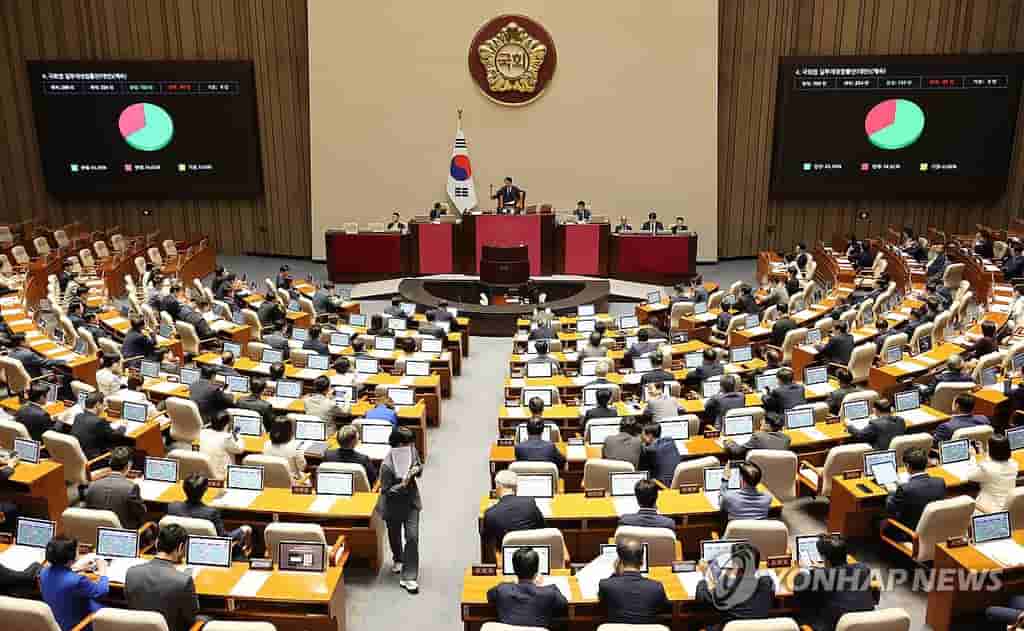
The National Assembly passed a bill on Thursday to significantly shorten the deliberation period for fast-track bills to a maximum of 90 days, a substantial reduction from the current 330 days. The revision to the National Assembly Act passed with a 153-81 vote in a plenary session. The main opposition People Power Party (PPP) objected to the bill, arguing that the ruling party was pushing it through unilaterally without adequate discussion. Under the revised law, fast-track bills will have a 60-day review period in a standing committee and a 30-day period in the legislation and judiciary committee. Previously, a fast-track bill could take up to 180 days in a standing committee and 90 days in the judiciary committee, with automatic progression to a plenary vote if not completed within those times. The bill also mandates that a fast-tracked bill cleared by the judiciary committee must be proposed at the first parliamentary plenary session following its approval. Fast-track designation requires approval from at least three-fifths of lawmakers, enabling passage even without bipartisan consensus to prevent legislative stagnation. Separately, the Assembly also approved a motion to recommend three candidates for a special inspector general position, tasked with investigating corruption within the president's family. The president will now select one of these candidates for the role, which has been vacant since 2016.