Key facts
- Nasdaq 100 futures led Wall Street higher on Friday, indicating a strong start for the tech-heavy index.
- A drop in oil prices helped temper inflation concerns among investors.
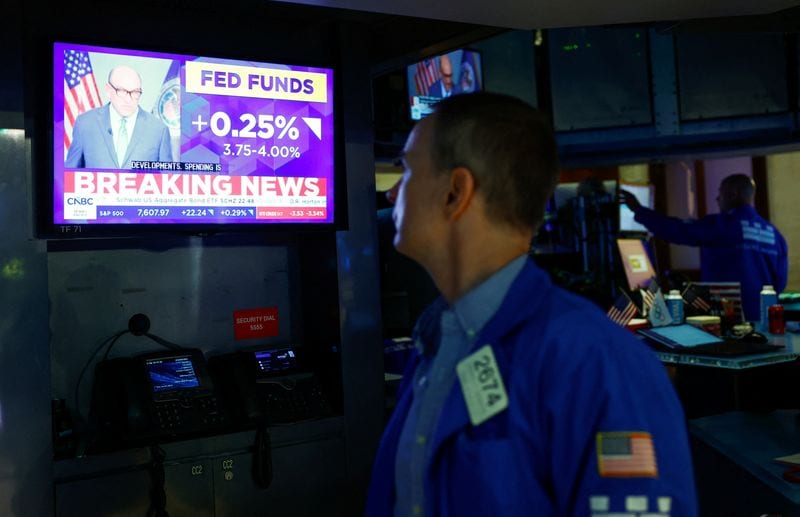
- The Federal Reserve recently raised interest rates, and investors are awaiting further clues on future borrowing costs.
- Commentary from industry executives at conferences this week provided insights into corporate health.
- Goldman Sachs strategists expect S&P 500 earnings growth to decelerate rather than collapse.
- Friday marks the simultaneous expiry of stock, index options, and futures contracts, known as 'triple witching'.
Futures tracking the Nasdaq 100 led Wall Street higher on Friday, putting the tech-heavy index on course for weekly gains as a drop in oil prices tempered inflation concerns. Investors also reassessed their outlook for AI demand after top industry executives urged a slowdown in the development of the technology, though clarity on such a slowdown remains elusive.
Crude prices fell for a third straight day on Friday, as markets shrugged off supply concerns even as Saudi Arabia and Yemen's Iran-backed Houthis exchanged fresh strikes across their border. Brent crude futures and US West Texas Intermediate futures slipped nearly 2% each. The declines have helped ease concerns surrounding price pressures, as the Middle East supply shock remains one of investors' biggest worries on the inflation front.
Friday also marks the once-in-a-quarter simultaneous expiry of derivatives contracts tied to stocks, index options and futures, also known as "triple witching," which can boost trading volume and exacerbate volatility. Meanwhile, Xenon Pharmaceuticals tumbled nearly 28% premarket after it temporarily paused enrolment in tests for its experimental drug for major and bipolar depression following reports of side effects. Big Tech shares were mixed, with Alphabet and Nvidia up about 2% and 1%, respectively. Apple dipped 0.2% and was the only decliner among the Magnificent 7 group of stocks.
Goldman Sachs' chief US equity strategist Ben Snider wrote that while recent strength in S&P 500 earnings growth has raised investor concerns about an 'earnings bubble,' the firm's base case is for S&P 500 earnings growth to decelerate, not collapse, in coming years.