Key facts
- China and Namibia signed eight cooperation agreements during Namibian President Netumbo Nandi-Ndaitwah's visit to Beijing.
- The agreements cover energy, critical minerals, infrastructure, agriculture, and economic development.
- Cooperation will be strengthened in uranium, lithium, and rare earth elements.
- The deals emphasize local processing, technological transfer, and local skills development.
- Namibia is projected to become Africa's fourth-largest oil producer by 2030, with estimated reserves of 2.6 billion barrels.
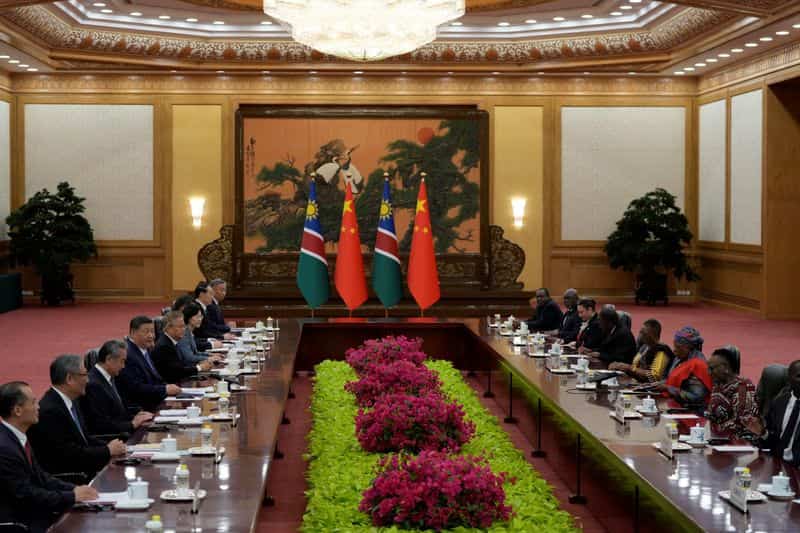
Namibia and China have agreed to enhance cooperation across several key sectors, including energy, agriculture, infrastructure, and minerals, during a state visit by Namibian President Netumbo Nandi-Ndaitwah to Beijing. The two nations signed eight documents, signaling a deepening of their long-standing relationship.
During the talks, Chinese leader Xi Jinping and President Nandi-Ndaitwah affirmed their commitment to the bilateral friendship. The agreements specifically aim to bolster collaboration in green minerals and establish a framework for economic partnership. Both sides recognized the strategic importance of critical minerals like uranium, lithium, and rare earths, and committed to strengthening cooperation in their development.
A key theme emphasized in the joint statement is the promotion of local processing, technological transfer, and the development of local skills within Namibia. This aligns with recent calls from several African commodity producers for greater value addition from their natural resources.
Namibia is poised to become a significant oil producer by 2030, with Shell and TotalEnergies estimating 2.6 billion barrels of crude oil reserves. China is a crucial export market for Namibia, absorbing approximately a quarter of its total shipments, with uranium accounting for 85% of the goods China purchased last year.
Chinese firms have already made substantial investments totaling $4.2 billion in Namibia's metals sector. President Nandi-Ndaitwah's agenda also includes a "green revolution" focused on monetizing the country's agricultural and water resources, supported by the IMF's recommendations for structural reforms in agriculture, fisheries, oil and gas, and green hydrogen sectors.