Key facts
- Mexico's antitrust authority is expected to approve the merger of Volaris and Viva Aerobus before the end of 2026.
- The combined airline group will be named Grupo Mas Vuelos.
- The merger is expected to create Mexico's largest airline group.
- Conditions for approval include maintaining low fares and current routes.
- Volaris and Viva Aerobus account for approximately three-quarters of domestic flights in Mexico.
- The deal has already received antitrust approval in Colombia and the US.
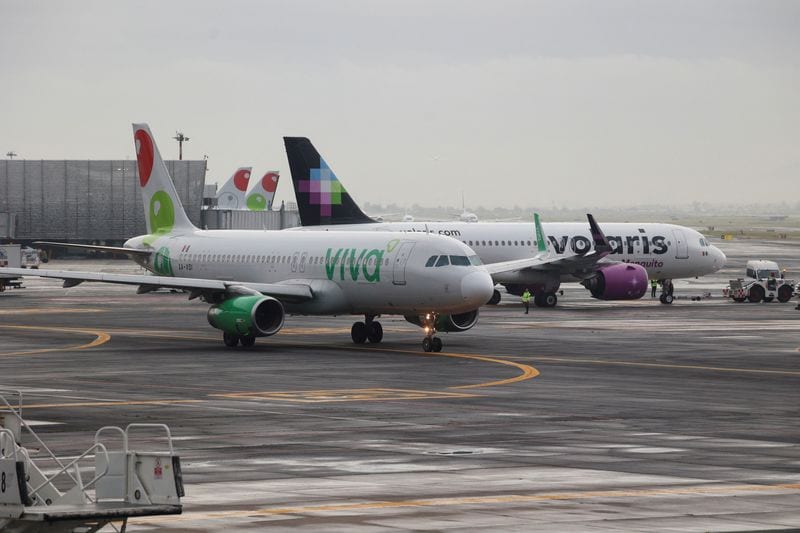
Mexico's antitrust authority is expected to approve the planned merger between low-cost carriers Volaris and Viva Aerobus before the end of 2026, according to six sources familiar with the matter. The deal is likely to create the nation's largest airline group, to be named Grupo Mas Vuelos, with minimal operational limitations.
The antitrust body, CNA, is anticipated to require the new company to maintain low fares and avoid significant layoffs, as reported by three of the sources. Additionally, Mas Vuelos will be obligated to largely preserve the current routes of both airlines due to a scarcity of competitive alternatives, despite ongoing concerns about the merged entity's market dominance.
Viva Aerobus stated it is attentive to the evaluation process and cooperating with authorities, while Volaris also affirmed its cooperation and confidence in the transaction's strategic merits. The CNA did not immediately respond to a request for comment.
The merger, announced late last year, is described as a merger of equals, with both airlines intending to retain their distinct brand identities. Together, Volaris and Viva Aerobus currently account for approximately three-quarters of Mexico's domestic flights and under a fifth of its international flights. Both carriers have faced financial challenges post-COVID-19, exacerbated by required engine inspections and high jet fuel prices, and did not receive government support during the pandemic.
One source close to Volaris indicated the carrier's need for the merger, highlighting CEO Enrique Beltranena's role in its progression. The leadership of Mas Vuelos will be drawn from both airlines, with Viva Chairman Roberto Alcantara set to lead the new group.
Volaris and Viva Aerobus have increased their domestic market share in recent years, surpassing Aeromexico, which still holds a slight lead in international routes among Mexican carriers. Reuters analysis shows the two low-cost airlines share 85 routes, and Mas Vuelos will become the sole operator on 55 of these post-merger, with a high overlap in flights to and from Guadalajara and Monterrey. Some sources indicated that the airlines have been reducing flight frequencies ahead of the antitrust approval.
Competition expert Javier Nunez suggested that a realistic condition would be to free up space for a third party on highly concentrated routes at major airports. While regulators considered modifying the group's flight allocations at key airports, they ultimately plan to leave them unchanged, according to two sources. The CNA is still finalizing details on enforcing route maintenance requirements.
To mitigate market concentration, Mas Vuelos will be required to uphold its low-cost model, with a certain percentage of fares needing to stay within a range comparable to similar operators in the region. The CNA also considered imposing restrictions on IAMSA, Viva's parent company and operator of its bus services, but this is unlikely to occur.
Nunez views the case as a significant early test for the CNA, which replaced a previous antitrust body last year, given the transaction's scale and the aviation sector's prominence. A similar merger attempt between Mexicana and Aeromexico in 2007 was blocked on antitrust grounds. Two sources cited government pressure to expedite the deal, as Volaris and Viva Aerobus are major operators out of the government-run Felipe Angeles International Airport, which has struggled to attract significant traffic. The airlines have reportedly committed to increasing flights at Felipe Angeles and the Tulum airport despite low traffic.
The deal has already received antitrust clearance in Colombia and the US. Aeromexico has voiced opposition, concerned about the effectiveness of regulatory concessions in limiting Mas Vuelos' market share.