Key facts
- Luxembourg's PM defended delisting oligarch Fridman on Oct. 12, citing national interest.
- The EU delisted Fridman and Alisher Usmanov after threats from France, Luxembourg, and Slovakia.
- Friden cited a $16 billion arbitration case initiated by Fridman as the reason for delisting.
- Lawmakers stated Luxembourg's government had no contact with Fridman or his legal team.
- The European Commission confirmed a 'no-claims clause' in EU sanctions regulations.
- Ukraine's foreign minister called the delisting a wrong decision and proposed more sanctions.
Luxembourg's Prime Minister Luc Frieden defended his government's September decision to delist Russian oligarch Mikhail Fridman from EU sanctions, stating in parliament on Oct. 12 that the move was primarily driven by a lack of awareness of EU rules. The EU had controversially decided to delist Fridman and Alisher Usmanov after France, Luxembourg, and Slovakia threatened to allow all 3,000 of the bloc's Russia sanctions to expire if unanimity was not reached for their renewal.
In a meeting of Luxembourg's foreign affairs committee, Frieden justified the action as being in the national interest to potentially resolve a $16 billion arbitration case initiated by Fridman. Lawmakers Franz Fayot and Sam Tanson told the Kyiv Independent that Frieden calculated that delisting Fridman might lead him to drop the arbitration, thereby benefiting Luxembourg in the long run.
However, both Fayot and Tanson, along with the Luxemburger Wort newspaper, reported that the Luxembourgish government had no contact with Fridman or his legal team, and the arbitration proceeding has not been withdrawn. Tanson stated that Luxembourg appeared willing to weaken the EU sanctions regime in response to a potentially enormous financial liability without ensuring its elimination.
Fayot suggested the move might have weakened Luxembourg's arbitration case by implying the government had a say in the matter, contrary to previous pretenses. The European Commission clarified that EU sanctions regulations include a "no-claims clause" to prevent compensation for sanctioned individuals or companies when sanctions are the cause of contract non-fulfillment. Additional safeguards in recent sanctions packages also allow for damage recovery. Despite this, Frieden reportedly expressed concern about a lack of EU solidarity for any damages Luxembourg might incur.
The Luxemburger Wort also noted that Luxembourg's Bilateral Investment Treaty (BIT) with Russia was cited as a basis for respecting an arbitration ruling in Fridman's favor. Tanson inquired about terminating the treaty, but Foreign Minister Xavier Bettel reportedly opposes it. While some EU discussions have occurred about ending BITs with Russia, the EU's stance on not complying with rulings undermining sanctions extends to these treaties.
Fayot expressed concern that Luxembourg has set a dangerous precedent, potentially encouraging other oligarchs to seek similar treatment and undermining the EU sanctions system. Tanson added that the delistings send the "wrong signal" to Russia, indicating fragile EU unity, and to Ukraine, raising questions about the reliability of European support.
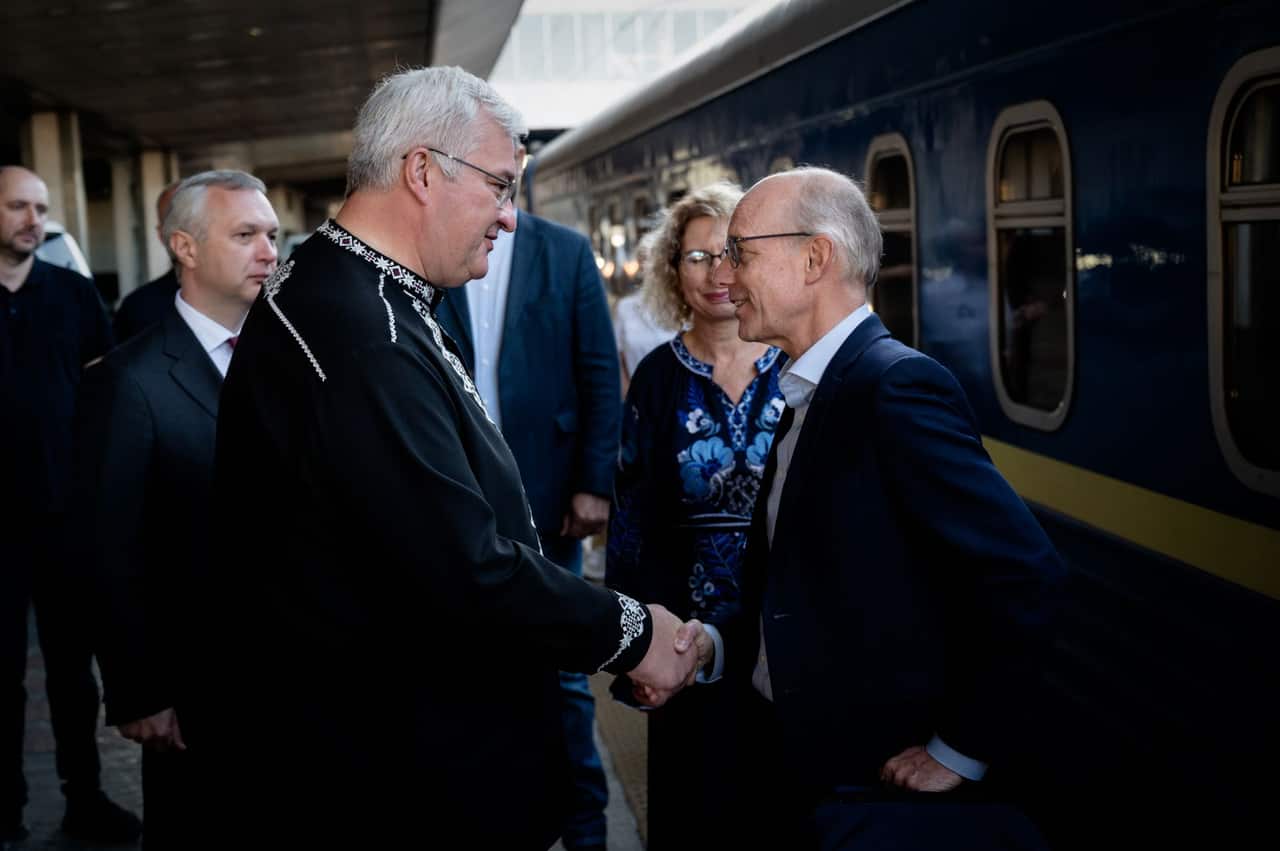
Shortly after the committee meeting, Ukraine's Foreign Minister Andrii Sybiha met with Prime Minister Frieden. Sybiha subsequently told journalists that the delisting was a "wrong step" and a "wrong decision," and that Ukraine would propose sanctioning an additional 10 Russian oligarchs.