Key facts
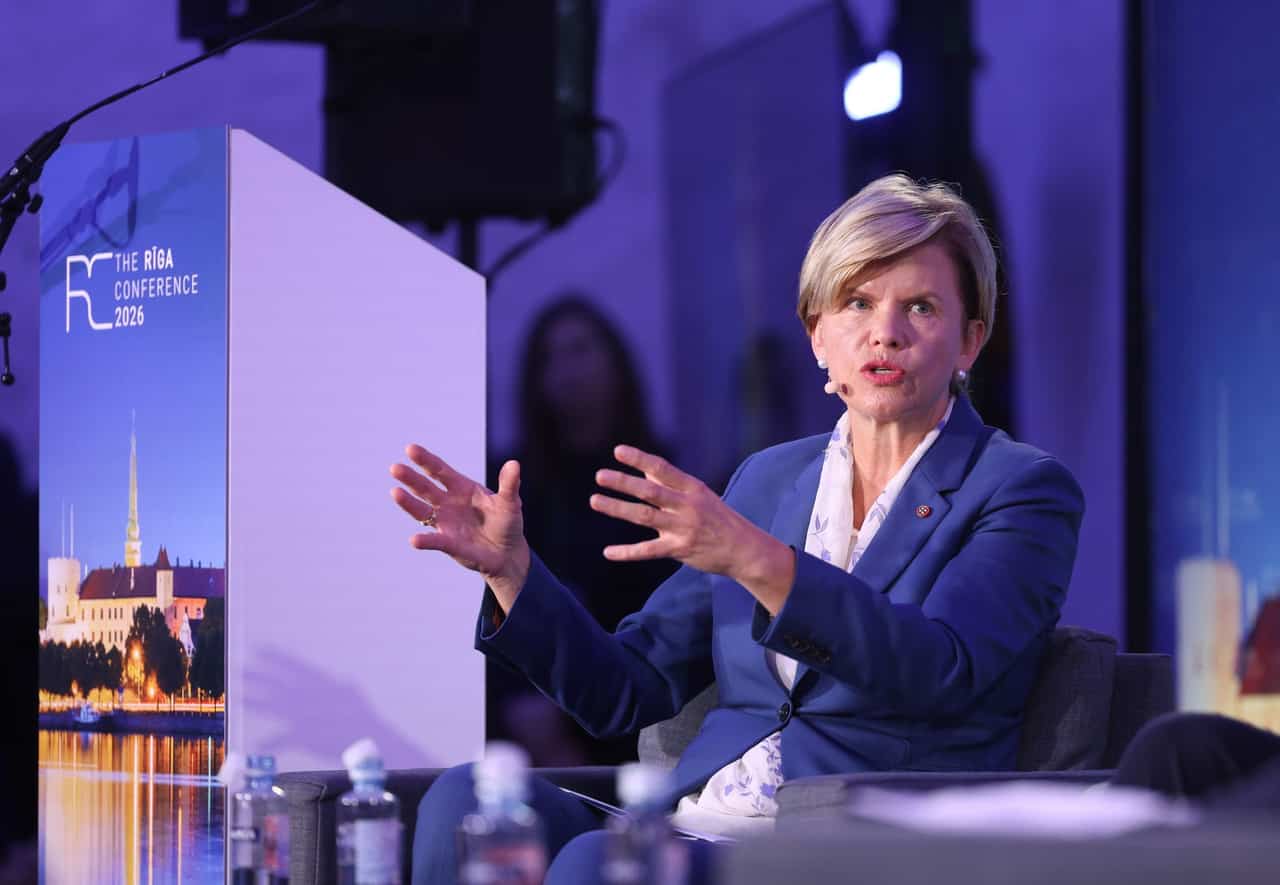
- Latvia's Foreign Minister Baiba Braze said the EU should examine its own sanctions record before criticizing others.
- Braze referenced the EU's decision to delist Russian oligarchs Alisher Usmanov and Mikhail Fridman.
- EU ministers were set to vote on new sanctions against individuals involved in Russian elections in occupied Ukraine and against Moscow's military-industrial complex.
- Lithuania's Foreign Minister Kestutis Budrys criticized the delisting of oligarchs as a sign of weakness that Russia responded to with escalation.
- Estonia's Foreign Minister Margus Tsahkna suggested a U.S. diesel deal with Russia was linked to U.S. domestic politics.
- Germany's European Affairs Minister Gunther Krichbaum warned that energy purchases from Russia fund its weapons production.
The European Union should first scrutinize its own sanctions policies before criticizing other nations, Latvia's Foreign Minister Baiba Braze stated on Oct. 12. Braze's remarks came as she was asked to comment on a U.S. deal to purchase Russian diesel.
"Let's look at ourselves. The EU first took out two big Russian oligarchs, the biggest ever supporters of (Russian President Vladimir) Putin's regime, from the sanctions," Braze said ahead of a meeting of EU foreign ministers in Luxembourg. She was referring to a Sept. 21 decision, pushed by Slovakia, Luxembourg, and France, to remove Alisher Usmanov and Mikhail Fridman from EU sanctions.
"Before we criticize the others, obviously we should hold a mirror to the EU itself," Braze added. The Latvian minister and representatives from the other 26 EU countries were expected to vote on two new sanctions packages: one targeting individuals who participated in Russia's September election in illegally occupied Ukrainian territory, and another imposing 1,600 listings against Moscow's military-industrial complex.
"Obviously, our position has not changed. Pressure on Russia, sanctions, support to Ukraine. Russia's isolation is the way to peace. We all want peace," Braze reiterated.
Her Lithuanian counterpart, Kestutis Budrys, echoed criticism of the EU's previous decision to delist the two oligarchs. "When we projected our weakness by delisting two prominent oligarchs from our sanctions, we saw how Russia reacted to it. They escalated, both in Ukraine and now in Europe, in our countries," Budrys said.
Estonia's Foreign Minister, Margus Tsahkna, downplayed the significance of a U.S. diesel deal involving President Donald Trump. "I don't think that in real life this diesel deal is actually going to change anything... it is much more connected to the domestic situation in the U.S., with the midterms coming," Tsahkna said. He added, "We have had this kind of turbulence from President Trump's side to Ukraine before. We need to focus on what we can do, and it is obvious that Europe must do more to support Ukraine."
Germany's European Affairs Minister Gunther Krichbaum described the Trump deal with Russia as "not our way." He warned, "I would wish that everyone contributes to putting further pressure on Russia... every euro, every dollar that flows from energy purchases here into Putin's cash register helps Russia produce and use new weapons against Ukraine."
The EU's top diplomat, Kaja Kallas, urged the U.S. to "put sanctions in place so that we can actually finish this war." She concluded, "Then, all these effects of attacks on refineries would not be there, would not be necessary if the war is over."