Key facts
- Europe risks being cut off from AI technology due to its reliance on imports, primarily from the US or China.
- ECB President Christine Lagarde warned of this risk in a speech in Vienna.
- Lagarde stated that AI could lift productivity by up to 4% over a decade if adopted quickly.
- Europe's data center capacity gap is projected to grow more than sixfold within a decade.
- Lagarde urged Europe to build more computing capacity and develop 'good enough' AI models on European infrastructure.
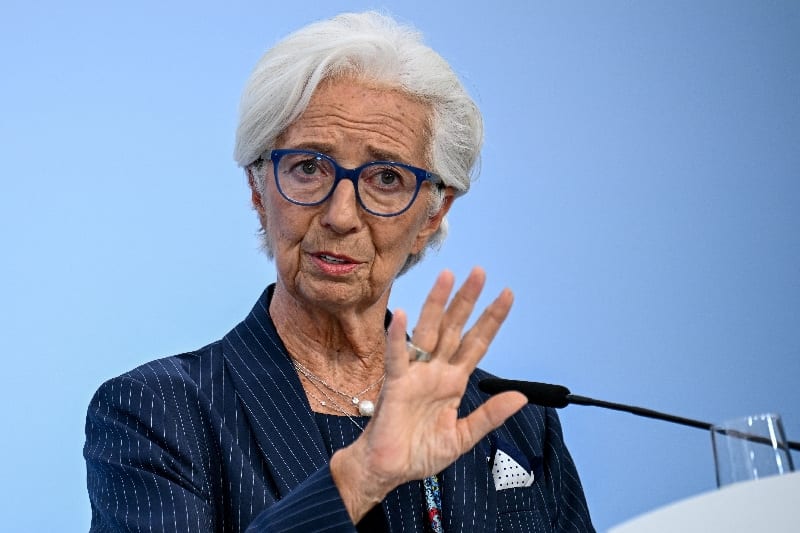
European Central Bank President Christine Lagarde warned on Monday that Europe faces an unprecedented risk of being cut off from artificial intelligence technology, urging the region to become a producer of AI rather than solely an importer. Speaking in Vienna, Lagarde emphasized that reliance on foreign AI, particularly from the United States, leaves European sectors vulnerable to access restrictions or changes in terms, granting trade partners leverage in negotiations. Lagarde highlighted that AI, if quickly adapted, could boost productivity by up to 4% over a decade, offering significant benefits for public finances. However, she noted that Europe already has insufficient data center capacity, a gap projected to widen sixfold within ten years. To mitigate the risk of dependency, she called for building more European computing capacity and developing AI models suitable for most tasks that can run on European infrastructure. She also pointed out that the US produced 59 notable AI models last year, China 35, while France and the UK produced one each. The US hosts 75% of the world's AI computing capacity, compared to Europe's 5%. Lagarde added that the large investment needs of U.S. tech firms are driving up borrowing costs in Europe by crowding out others in the debt market, and that European pension funds' investments in U.S. tech stocks expose European savings to market corrections.