Key facts
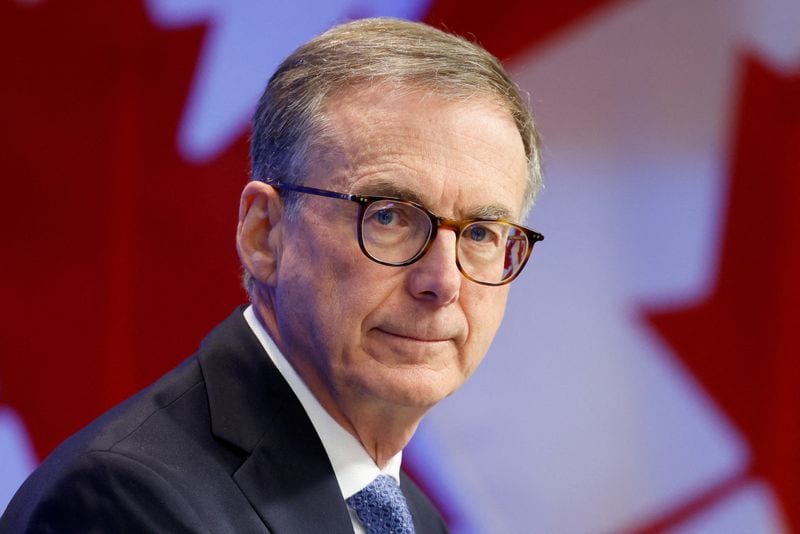
- Bank of Canada Governor Tiff Macklem stated that global financial imbalances are widening.
- Macklem warned that excessive capital flows can lead to asset bubbles and financial stability risks.
- He noted that non-bank financial intermediaries face less oversight than traditional banks.
- Macklem suggested deepening trade and diversifying investment locations to reduce imbalances.
Bank of Canada Governor Tiff Macklem warned that widening global imbalances in financial flows, driven by China's export surplus and the United States' reliance on foreign capital, are fueling financial stability risks. Speaking in Paris, Macklem noted that after easing post-global financial crisis, these imbalances are growing again as some countries maintain large surpluses while others depend on borrowing.
Macklem cautioned that while cross-border finance is beneficial, excessive flows can widen trade gaps, encourage protectionism, and distort asset prices, leading to misallocation of capital and increased financial stability risks. He drew parallels to the lead-up to the global financial crisis, suggesting that massive investments, such as in Artificial Intelligence, could create asset bubbles if capital is misallocated.
The governor also pointed out that increased bank regulations have shifted capital funding needs to non-bank financial intermediaries like hedge funds and private finance companies, which generally face less stringent monitoring. To address these imbalances, Macklem suggested that countries should deepen trade and encourage investment beyond the U.S.
This comes after ECB President Christine Lagarde called for discussions on the undervaluation of the Chinese yuan, citing IMF research that suggests it is 15-16% undervalued. Lagarde identified currency undervaluation, alongside China's trade surpluses and Europe's underinvestment, as significant contributors to global economic imbalances.