Key facts
- Retail investors sold 5.5902 trillion won in KOSPI shares in Q3, reversing earlier buying trends.
- Korean retail investors bought $7.63 billion in U.S. stocks in the second half of 2026.
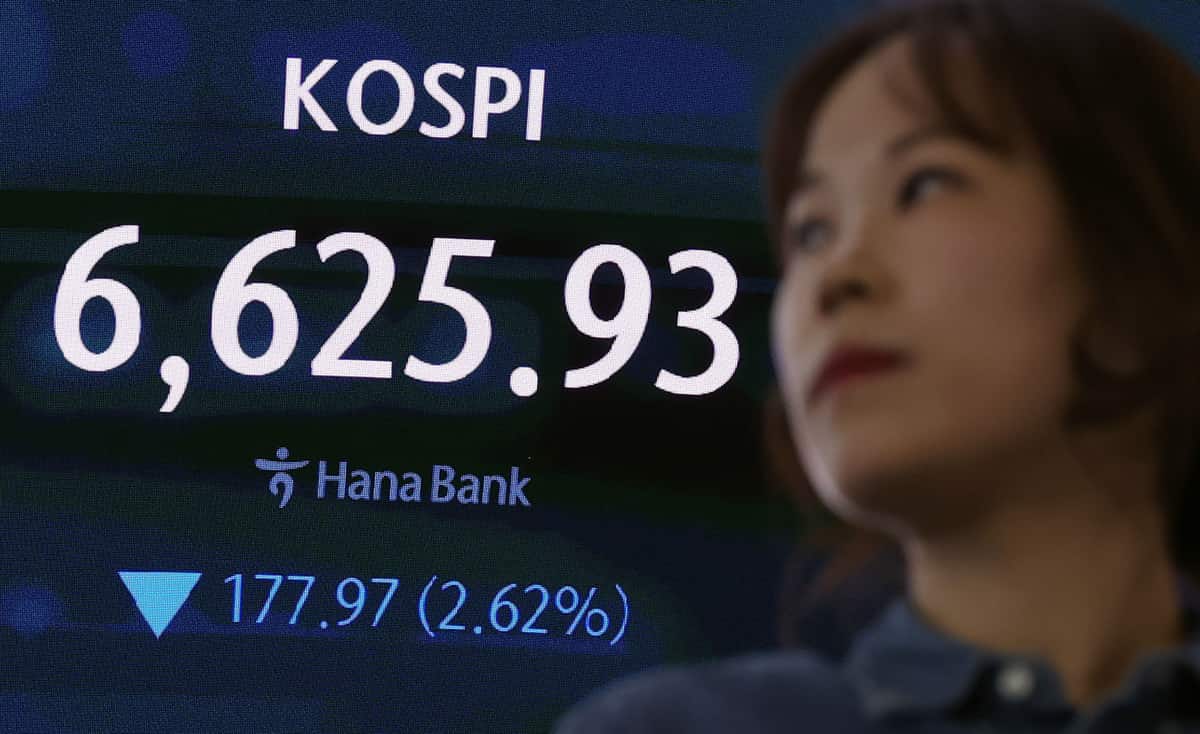
- The Kospi index closed at 6,625.93 on December 8, down 2.62%.
- Foreign funds have withdrawn $131 billion from Korean stocks this year.
- Samsung Electronics and SK Hynix, key AI-linked companies, account for over half of the Kospi's weighting.
South Korean stocks are facing a significant downturn as both domestic retail investors and foreign funds shift their focus to U.S. equities, particularly those benefiting from the artificial intelligence boom. The Kospi index experienced a sharp decline of 2.62% on December 8, closing at 6,625.93, as foreign and institutional investors sold shares in tandem.
Retail investors, who had been net buyers of KOSPI-listed shares in the first half of the year, have reversed their stance. They sold a net 5.5902 trillion won in the third quarter, a stark contrast to their earlier purchases. This shift is attributed to the stagnant performance of the domestic market and a prolonged correction, prompting a broad move away from Korean equities. Concurrently, these investors poured over $7.6 billion into U.S. stocks in the second half of 2026, with significant buying in July alone.
Analysts point to the dull, range-bound nature of the Korean market compared to the record highs achieved by U.S. Big Tech companies, fueled by AI infrastructure expansion, as a primary driver of this sentiment change. The won-dollar exchange rate, which has eased to the mid-1,300 range from above 1,500 in the first half, has also made U.S. shares more attractive by lowering conversion costs.
South Korea's AI trade fortunes were heavily reliant on memory-chip giants Samsung Electronics and SK Hynix, which together account for over half of the Kospi's weighting. However, skepticism over the durability of the memory chip boom cycle and concerns about the concentration of risk in these two companies are now liabilities. Foreign funds have been retreating at the fastest pace in Asia, with total outflows of $131 billion from Korean stocks this year, the most among major Asian markets.
While some investors see buying opportunities in Korean AI stocks due to ongoing AI spending and corporate value initiatives, others prefer Taiwan's more diversified AI supply chain linkages and upbeat earnings outlook. The Kospi, despite its recent struggles, remains among the best performers for 2026 overall due to earlier gains.