Key facts
- Kazakhstan seeks to expand economic cooperation with South Korea into AI, critical minerals, and advanced sectors.
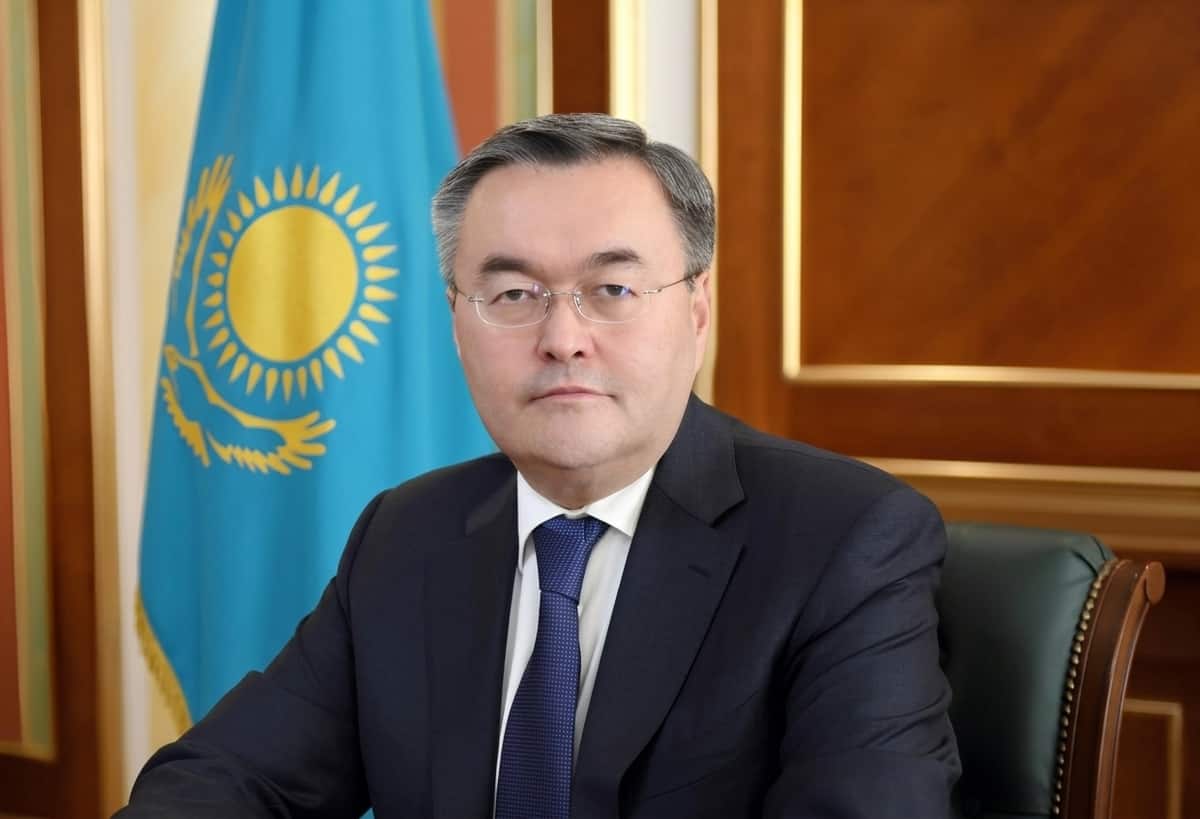
- Kazakhstan's Foreign Minister Mukhtar Tileuberdi made the remarks in a written interview with Yonhap News Agency.
- President Kassym-Jomart Tokayev will visit South Korea for the first South Korea-Central Asia Summit.
- The summit will focus on cooperation in critical minerals, energy, and supply chain diversification.
- Bilateral trade between Kazakhstan and South Korea reached $3.17 billion in 2025.
- Kazakhstan is interested in processing critical minerals for higher value-added production and integration into Korean industrial supply chains.
Kazakhstan is actively seeking to broaden its economic partnership with South Korea beyond the established automotive sector, aiming to foster collaboration in high-technology fields such as artificial intelligence (AI) and critical minerals. This strategic initiative is highlighted by Kazakhstan's Foreign Minister Mukhtar Tileuberdi ahead of President Kassym-Jomart Tokayev's visit to Seoul for the inaugural South Korea-Central Asia Summit.
Tileuberdi emphasized that the upcoming summit is crucial for elevating bilateral relations, which are already built on a strong economic and investment foundation. He noted the complementary strengths of Korea and Central Asia, with Korea possessing advanced technologies, industrial expertise, and capital, while Central Asia offers significant natural resources, energy capacity, growing markets, and a strategic geographic position. Bilateral trade reached $3.17 billion in 2025, with numerous South Korean companies like Hyundai, Kia, Samsung Electronics, and Doosan already operating in Kazakhstan.
While the automotive industry, exemplified by Hyundai and Kia's manufacturing facilities, has served as a successful model, Kazakhstan desires to replicate this success in other sectors. Currently, 46 industrial cooperation projects valued at approximately $4 billion are underway, spanning automobile production, engineering, metallurgy, and electronics. Tileuberdi sees AI and data infrastructure as key growth areas, suggesting Kazakhstan's expanding data center capacity could create opportunities for Korean firms in data centers, power infrastructure, and cooling technologies.
Critical minerals are another priority, with Kazakhstan possessing substantial reserves of uranium, copper, and zinc. However, the nation's interest lies not just in raw material export but in higher value-added processing and integration into Korean industrial supply chains for batteries and electronics. Kazakhstan's strategic location, linking Asia and Europe via rail and the Trans-Caspian transport corridor, is also presented as a significant advantage for South Korean companies seeking supply chain diversification.
Tileuberdi stressed the need for concrete outcomes from the summit, focusing on specific projects, identified partners, financing mechanisms, and realistic timelines. He also underscored the strong human foundation of the relationship, noting the long-standing presence of Koreans in Kazakhstan and historical figures like Hong Beom-do, who spent his later years there, as symbols connecting the two peoples. Tileuberdi himself has personal ties to South Korea, having studied at Yonsei University and served as a diplomat in Seoul.