Key facts
- JPMorgan Private Bank suggests the US economy can withstand current oil price surges.
- Americans spend about 2.5% of their disposable income on gasoline, down from over 6% in the 1970s and 1980s.
- Households have deleveraged to multi-decade lows, creating a larger buffer against higher prices.
- Investors are less concerned about worst-case supply disruption scenarios.
- The S&P 500 is down about 3% from its all-time highs reached in late August.
Surging oil prices, which have historically signaled energy market stress and economic pressure, may not have the same impact this time around, according to JPMorgan Private Bank. Brent crude, the international benchmark, surpassed $100 a barrel last week for the first time since July and has continued to rise, trading around $107 on Tuesday. West Texas Intermediate crude also rose, hovering around $103 a barrel.
Kriti Gupta, a global investment strategist at JPMorgan, noted that the cost of gasoline as a percentage of total disposable income is near historic lows. Americans currently spend an average of 2.5% of their income on gas, a significant decrease from over 6% during the oil price shocks of the 1970s and 1980s. The bank estimates that an inflationary shock equivalent to the early 1980s would require gas prices to exceed $10 a gallon today.
Gupta attributed this resilience to households having deleveraged to multi-decade lows through fiscal stimulus, tariff refunds, and tax cuts, creating a larger buffer against higher prices. She stated that a gasoline price increase that would have significantly squeezed household budgets two decades ago or even four years ago now represents a materially smaller drag on spending power.
The bank also indicated that US markets appear more resilient. While the S&P 500 has shown increasing sensitivity to crude prices, investors are now more aware of potential Middle East supply disruptions than when the Iran war initially unfolded. Gupta added that investors are not pricing in a worst-case disruption scenario that would severely impact the economy and stock market. The market's tolerance for $100 oil has been evident, with the S&P 500 only down about 3% from its late August all-time highs.
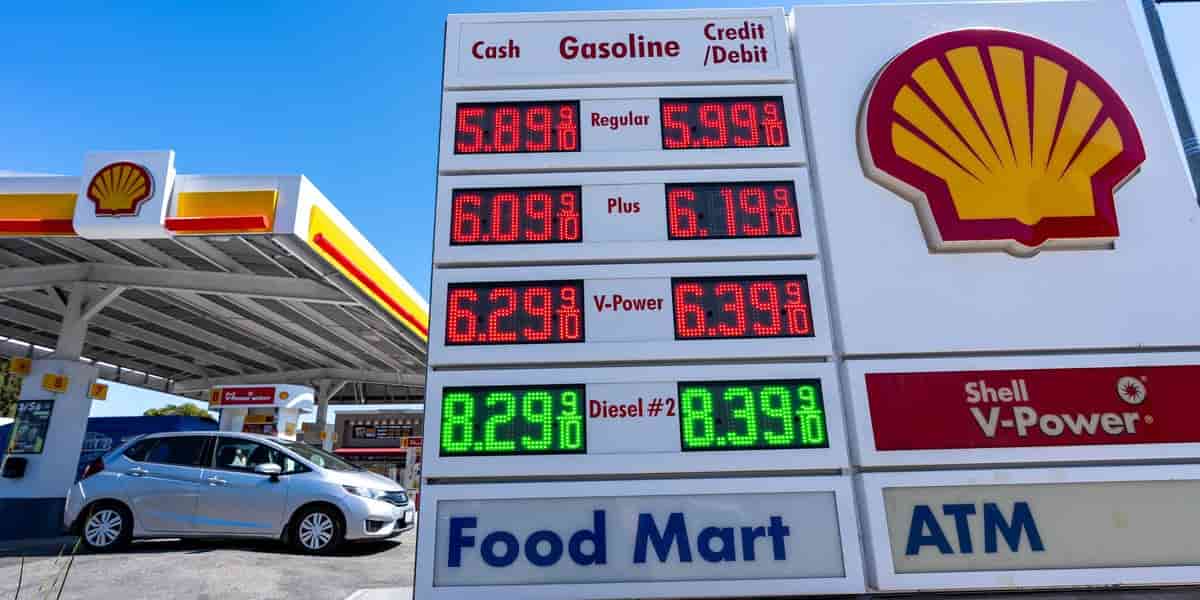
Despite this resilience, anxiety over inflation is rising, particularly as consumers experience higher prices at the pump. The average price for a gallon of regular gas increased to $4.32 on Tuesday, up from $3.17 a year ago, according to AAA. Diesel prices also reached a new record of $6.26 per gallon.