Key facts
- TEPCO is introducing new rules to combat 'capacity squatting' by data center operators.
- Data center power connection wait times in Tokyo now range from 5-10 years.
- International hyperscalers committed $28 billion to Japanese AI infrastructure between late 2024 and early 2025.
- AWS, Microsoft, and Oracle are expanding their AI infrastructure in Japan.
- Japan's data center power demand is projected to triple over the next decade.
- Plans for AI data centers could quadruple Japan's capacity by 2033.
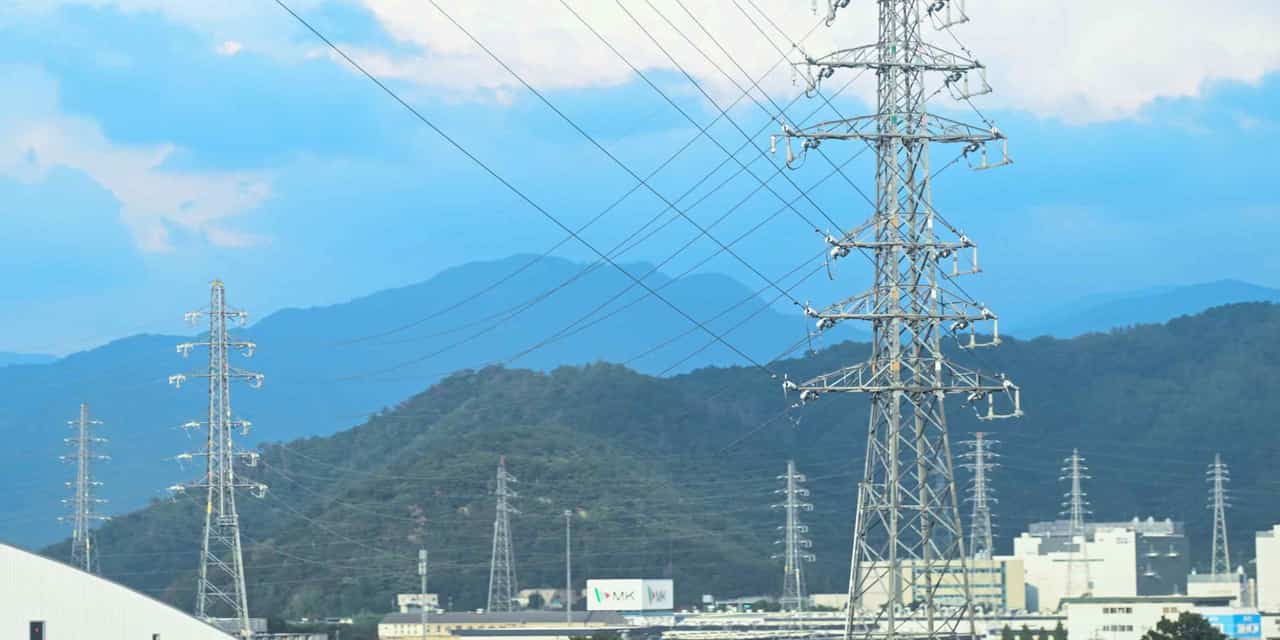
Tokyo Electric Power Co. Holdings (TEPCO) is among Japanese utilities implementing stricter rules for data centers to combat 'capacity squatting,' a practice where operators reserve power capacity that is then underutilized. This measure comes as Japan faces immense power demand from AI infrastructure projects, which are often subject to significant delays or shifts in location.
International hyperscalers have committed substantial investments to Japan's AI infrastructure, with $28 billion pledged between late 2024 and early 2025. However, this investment wave has collided with the reality of power grid constraints. In the Tokyo metropolitan area, power connection wait times have stretched to an extraordinary 5-10 years, creating a significant bottleneck for Japan's AI ambitions. Companies like AWS, Microsoft, and Oracle are adopting multi-region strategies to circumvent these limitations.
AWS launched its Japan expansion in November 2024 with three AI availability zones. Oracle followed in December 2024 with an $8 billion expansion for GPU zones, and Microsoft committed $2.9 billion in January 2025 for liquid-cooled Azure OpenAI regions. Despite these investments, the power grid infrastructure is struggling to keep pace with demand. Projections indicate that Japanese data center power demand could triple over the next decade, reaching 57-66 TWh by 2034, equivalent to the consumption of 15-18 million households. Meeting this demand requires unprecedented grid expansion.
To manage these constraints, hyperscalers are distributing capacity across Japan, utilizing triple-region architectures that include primary core, secondary core, and satellite locations. This approach offers redundancy, disaster resilience, and access to power in less constrained regions. The AI-optimized data center segment is expected to grow at a compound annual growth rate of 26.14%, though hyperscale facilities will continue to dominate absolute investment. Demand drivers include accelerating enterprise AI adoption, financial services modernization, government digitization, and the automotive industry's AI requirements.
Beyond power, Japan faces other infrastructure challenges, including land scarcity, particularly in Tokyo, leading to explorations of options like floating data centers.