Key facts
- Prime Minister Sanae Takaichi is set to reshuffle her cabinet on Thursday.
- Key ministers, including Finance Minister Satsuki Katayama, are expected to be retained.
- Katayama's reappointment signals continuity in Japan's exchange-rate policy.
- Minoru Kiuchi is expected to remain economic revitalization minister.
- Takaichi plans to keep government bond issuance around 40 trillion yen for fiscal 2027.
- The new cabinet will debate legislation for a two-year cut in sales tax on food items.
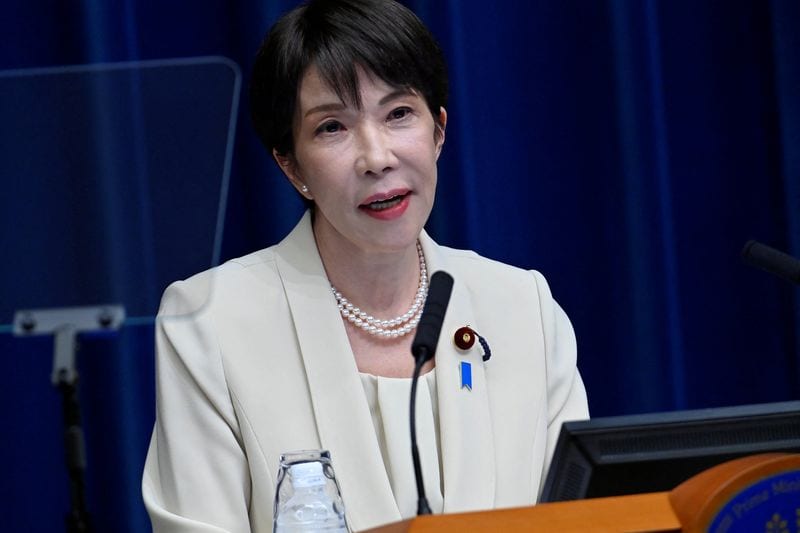
Japanese Prime Minister Sanae Takaichi is poised to maintain key ministers, including Finance Minister Satsuki Katayama, in a cabinet reshuffle scheduled for Thursday. This move is intended to ensure policy continuity and stability as Takaichi seeks to advance her significant spending plans amidst market concerns over Japan's fiscal health.
Katayama, a former finance ministry bureaucrat with a conservative fiscal outlook, played a crucial role in a joint US-Japan yen intervention in late July. Her reappointment is expected to be welcomed by bond markets, which have shown wariness towards Takaichi's expansionary fiscal policies that could increase debt issuance. The benchmark 10-year Japanese government bond yield has reached three-decade highs this week, reflecting concerns over Japan's public debt, which is twice the size of its economy.
Despite market calls for fiscal discipline, Takaichi shows no intention of scaling back her ambitious spending plans. She is also likely to retain Minoru Kiuchi, an ally in her reflationary policies, as economic revitalization minister. This balancing act comes as Takaichi faces pressure to address household cost-of-living concerns while also heeding market demands for fiscal prudence, especially after her proposed two-year tax cut on food items drew criticism.
Domestic media reports suggest other key ministers, including Foreign Minister Toshimitsu Motegi and Defence Minister Shinjiro Koizumi, will also be kept in their posts. Takaichi also maintained the lineup of party executives on Wednesday, signaling a focus on political continuity within the ruling Liberal Democratic Party (LDP). The LDP's coalition partner, the Japan Innovation Party, is also expected to receive a cabinet post, reinforcing policy cooperation.
The new cabinet will confront parliamentary debates on critical fiscal issues, such as legislation for a two-year sales tax cut on food. Opposition parties are expected to question the administration on how these measures will be funded. Takaichi's pledge to cap new government bond issuance at around 40 trillion yen for fiscal year 2027 is already under scrutiny, with expenditure projected to rise. Japan also anticipates increased defense spending in a strategy review this year. The cost of funding Japan's debt is rising as the central bank tightens monetary policy and reduces bond purchases.