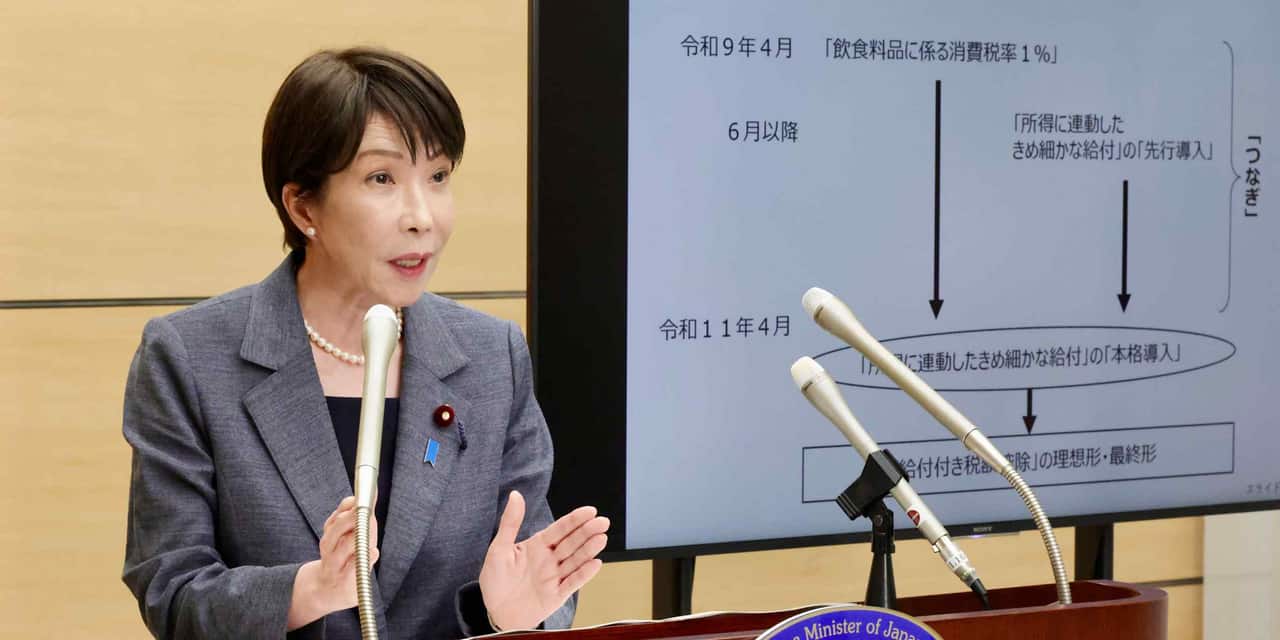
Japanese Prime Minister Sanae Takaichi has announced plans to temporarily reduce the nation's consumption tax on food from the current 8% to 1%, effective next April. This marks the first reduction in the consumption tax since its introduction in 1989.
Critics contend that the decision is shortsighted and will undermine fiscal discipline, reduce funding for the social security system, and potentially increase reliance on deficit-covering government bonds. The government asserts the measure aims to alleviate the burden on low- and middle-income individuals struggling with high prices and to stimulate economic growth.
However, concerns have been raised that manufacturers and retailers might exploit the tax reduction by increasing prices, a phenomenon observed in other countries that have implemented similar cuts. The estimated annual loss in tax revenue is approximately 4.3 trillion yen ($26.74 billion). While Takaichi maintains the government will not resort to deficit-financing bonds, the source of funding remains unclear. There is also apprehension that the tax cut, initially planned for a two-year period, could become politically difficult to reverse, potentially leading to a permanent reduction in revenue.
Lawmakers from the ruling Liberal Democratic Party (LDP) have postponed the approval of the plan, citing concerns over funding and the potential need to raise taxes again in the future. Prime Minister Takaichi's decision to announce the plan before seeking party consensus has also rankled some members.