All NewsEducationTV
Equities & FundsCrypto & Digital AssetsAI & TechnologyBusiness & CorporateUS Politics & PolicyGeopolitics & Global RiskMacro, Rates & FXCommodities & EnergyEuropean Politics & MarketsAsia-PacificReal Estate & Property
All NewsHome
← Back to Macro, Rates & FX

Japan's long-term rates near 3% on inflation, tax cut fears

Created at 26 Aug · 7:36 PM1 source↑ Market-relevant
IN SHORT

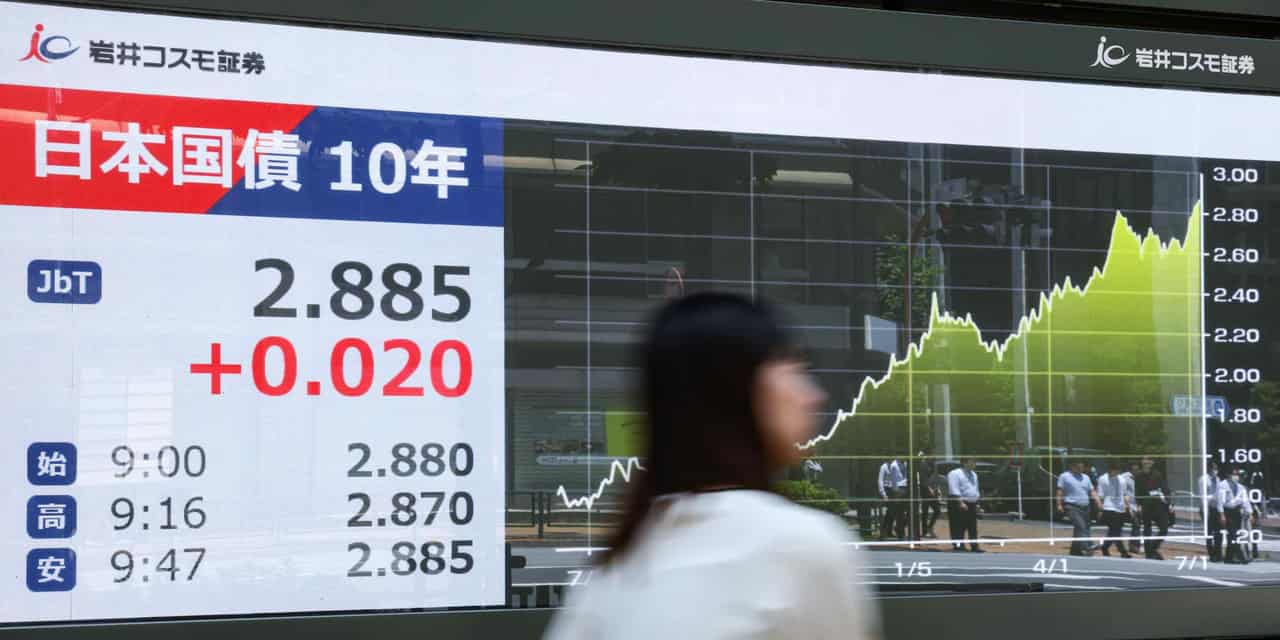
Japan's long-term interest rates are approaching 3% for the first time in three decades, driven by persistent inflation and concerns over fiscal shortfalls from proposed consumption tax cuts. This rise in rates is impacting bond holdings of financial institutions.

Key Numbers

3%long-term interest rate target
30 yearstime since rates were this high
2.930%10-year JGB yield on August 17
¥5 trillionannual funding shortfall from tax cuts
8%current consumption tax rate on food
1%proposed consumption tax rate on food
2029year tax rate is scheduled to return to 8%
5% to 7%year-on-year corporate goods price index increase

Who's Involved

Takaichi Sanae
Prime Minister of Japan proposing consumption tax cuts
Kumano Hideo
Chief economist at the ABC Economic Research Institute
Ueno Tsuyoshi
Senior economist at the NLI Research Institute
Kuroda Haruhiko
Former BOJ Governor who implemented monetary easing
Bank of Japan
Central bank leaving policy rate unchanged
Japan's shinkin banks
Community-focused lenders facing bond losses
Japan's long-term rates near 3% on inflation, tax cut fears

↳ Why This Matters

The surge in Japan's long-term interest rates signals a potential shift away from decades of ultra-low rates, impacting borrowing costs for businesses and consumers. It also highlights fiscal challenges and inflationary pressures facing the Japanese economy, with implications for global financial markets.

Key facts

  • Japan's long-term interest rates, specifically 10-year Japanese government bond yields, are nearing 3%.
  • This level has not been seen since 1996.
  • Prime Minister Takaichi Sanae's government plans to cut the consumption tax on food from 8% to 1% starting April 2027.
  • This tax cut is expected to create a significant fiscal shortfall.
  • Persistent inflation, exacerbated by a weakening yen and volatile crude oil prices, is also driving up rates.
  • Rising rates are causing bond losses for Japan's credit unions (shinkin banks).

Japan's long-term interest rates are approaching 3% for the first time in three decades, a development driven by a combination of persistent inflation and market concerns over fiscal shortfalls stemming from Prime Minister Takaichi Sanae's proposed consumption tax cuts. The yields on 10-year Japanese government bonds (JGBs) hit a 30-year high of 2.930% on August 17, with some analysts predicting a breach of the 3% threshold by the end of August.

The government's plan to reduce the consumption tax on food from 8% to 1% starting in April 2027 is a primary driver of anxiety, as it is projected to create an annual funding gap of up to ¥5 trillion. While the government has stated it will review expenditures and revenue, market participants are closely monitoring how the fiscal shortfall will be addressed. The tax rate is slated to return to 8% in 2029, but political considerations surrounding an upcoming upper house election in 2028 could make a tax hike difficult, raising doubts about Japan's long-term fiscal health.

Inflation is another significant factor contributing to the rise in long-term rates. The yen's depreciation has helped push the corporate goods price index into the 5% to 7% range year-on-year since April. Should companies pass these increased costs to consumers, inflation is expected to accelerate. The Bank of Japan's cautious approach to rate hikes, including its decision to maintain its policy rate in July, has fueled concerns that it may not be effectively curbing inflation, thereby adding further upward pressure on long-term yields.

These rising interest rates are impacting Japan's financial institutions, particularly its credit unions, known as shinkin banks. The increased yields erode the value of their existing bond holdings, potentially affecting their lending capacity.

Frequently asked questions

Japan's long-term interest rates are nearing 3%, a level not seen in 30 years.

The rise is driven by persistent inflation and market anxiety over fiscal shortfalls from proposed consumption tax cuts.

Rising interest rates are eroding the value of their bond holdings, leading to mounting losses.

Prime Minister Takaichi Sanae's government plans to cut the consumption tax on food from 8% to 1% starting April 2027.

What Happens Next

01Market participants will closely watch how the government plans to fill the fiscal shortfall from tax cuts.
02Further inflation data will influence the Bank of Japan's future monetary policy decisions.
03The government's ability to balance its books will be a key focus for investors.
CME Headlines
  • Euro FX futures slide as inflation data supports dollar.
    26 Aug · 7:59 PM
  • Euro FX futures slide as inflation data supports dollar.
    26 Aug · 7:59 PM
  • Euro futures held near 1.1675 ahead of key economic data.
    25 Aug · 9:18 PM

How It Developed

Japan's long-term interest rates are nearing 3% for the first time in 30 years.
The rise is driven by persistent inflation and market anxiety over fiscal shortfalls from proposed consumption tax cuts.
Prime Minister Takaichi Sanae announced plans to cut the consumption tax on food.
Concerns exist about filling the fiscal shortfall from the tax cuts.
Inflation is also contributing to the rise in rates.
The yen's slide has pushed up the corporate goods price index.
The Bank of Japan's slow pace of rate hikes may fail to rein in inflation.
Losses are mounting at Japan's shinkin banks due to bond holdings' declining value.

Sources

T1
Japan credit unions burned by bond losses as long rates riseNikkei Asia
T2
Japan's Biggest Insurers Post $96 Billion in Bond Paper ...bloomberg.com
T2
Japan's Long-Term Interest Rates Surge Amid Tax Cut ...nippon.com

Related Stories

Japan's $1.9tn pension fund faces political pressure to buy domestic bonds
26 Aug · 4:56 PM
BOJ to speed up tightening, raise key rate to 1.25% in September: Reuters poll
25 Aug · 10:06 PM
Warsh Faces Pressure on Fed Rate Hike as Inflation Risks Resurface
26 Aug · 9:16 AM
Top US banks’ secured funding outflows grow to record $1.6trn
26 Aug · 3:41 AM
Economists urge Bank of England to halt bond sales as borrowing costs climb
26 Aug · 5:11 AM