Key facts
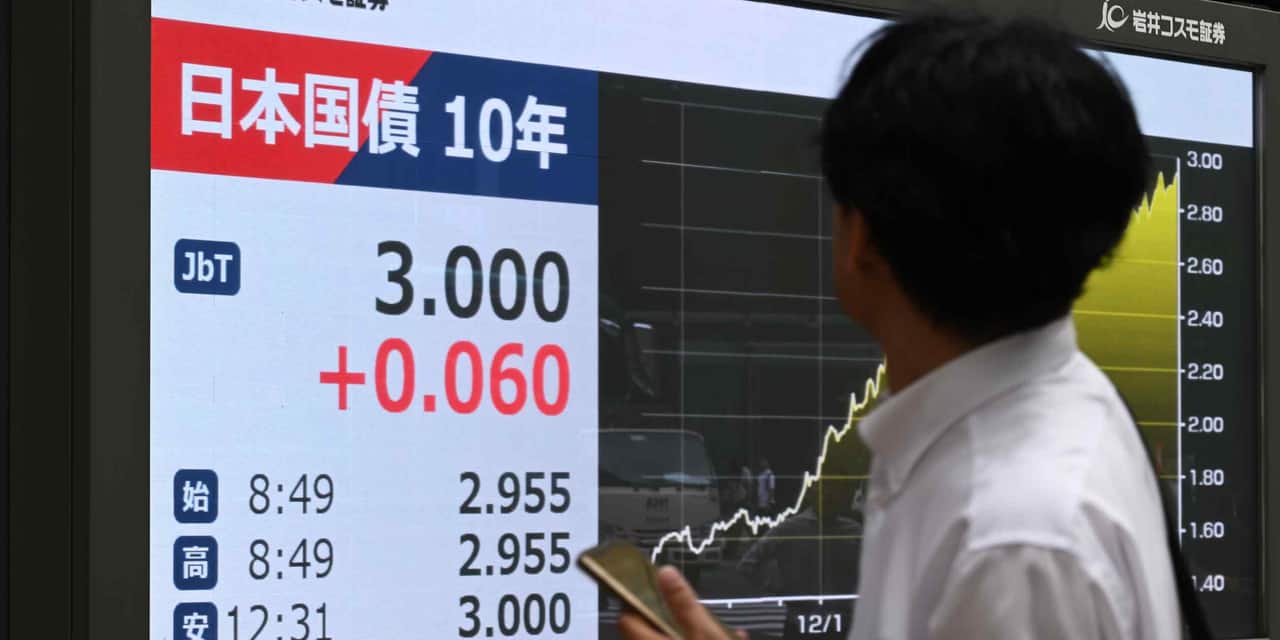
- Japan's 10-year government bond yield reached 3%, the highest in three decades.
- Prime Minister Sanae Takaichi's proposed consumption tax suspension is a key factor.
- The tax cut could create a 5 trillion yen annual revenue shortfall.
- Japan's debt-to-GDP ratio is over 230%, the highest among advanced economies.
- The Bank of Japan is reducing its bond purchases.
Japan's benchmark 10-year government bond yield has surged to 3%, a level not seen in 30 years, signaling rising borrowing costs for the nation. This development is largely driven by uncertainty surrounding Prime Minister Sanae Takaichi's fiscal policies, particularly her proposal to suspend the consumption tax on food and non-alcoholic beverages for two years if her Liberal Democratic Party wins the upcoming snap elections. This pledge alone could create an annual revenue shortfall of 5 trillion yen.
Markets are also concerned about how Tokyo's fiscal stance will be viewed internationally, especially given Japan's already high debt-to-GDP ratio, which exceeds 230%. The volatility has extended beyond Japanese government bonds, with yields on 40-year bonds reaching a record high above 4%. Investors are seeking higher compensation for holding Japanese debt due to perceived risks to fiscal sustainability. This situation is compounded by the Bank of Japan's ongoing reduction of its bond purchases as it shifts away from decades of ultra-low interest rates.
In addition to the tax pledge, Takaichi's Cabinet previously approved a 21.3 trillion yen stimulus package in November, which included cash handouts, utility subsidies, and food coupons. The market turmoil reflects broader concerns about fiscal sustainability in an era where many major economies are also running significant deficits. Anastassia Fedyk, a finance professor at UC Berkeley, noted that the planned reduction in consumption taxes made existing bondholders uneasy, leading to a drop in bond prices and a rise in yields.