Key facts
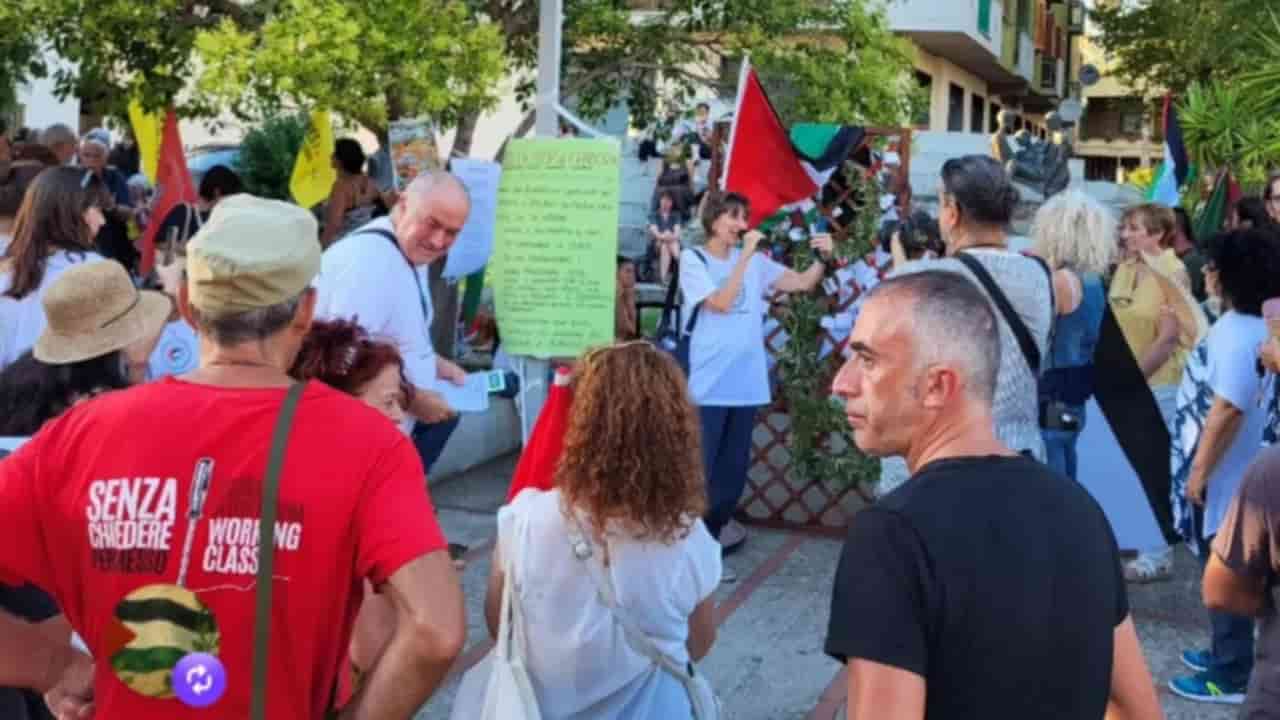
- Italian activists are protesting against planned agrivoltaics parks in Tuscany.
- The projects are linked to Israeli company Shikun & Binui.
- Shikun & Binui has been blacklisted by the UN High Commissioner for Human Rights.
- Activists argue the projects violate international law and humanitarian principles.
- The project requires Single Energy Authorization from the regional government to proceed.
Italian activists are protesting against the development of agrivoltaics parks in Tuscany, tracing ownership of the projects to the Israeli company Shikun & Binui. The campaign, led by the group Diritti In Palestina, began in early September after activists discovered the company's ties to Israel's military and its operations in occupied territories.
Shikun & Binui Energy plans to build five solar power plants in Tuscany through special-purpose vehicle (SPV) companies established in Milan, which activists say are designed to obscure ultimate ownership. One such company, SPV Energy 3, reportedly has no employees and minimal share capital, raising suspicions among activists.
Alessandra Bertero, a co-founder of Diritti in Palestina, stated that recent Israeli investments in the renewable energy sector in the region prompted their investigation. The company was added to the UN High Commissioner for Human Rights' blacklist in September 2025 for its activities in the occupied West Bank and Golan Heights. Shikun & Binui's origins trace back to Solel Boneh, a construction firm that collaborated with the Israeli army during the 1948 Nakba.
The solar park project faces opposition due to concerns about the area's strategic importance, particularly its proximity to the port of Livorno, a transit point for arms trade to Israel. The project requires a Single Energy Authorization from the regional government to proceed.
Michela Arricale, a jurist supporting the activists, believes that investments linked to the Israeli occupation and violations of international law could contravene the principle of non-recognition established by the International Court of Justice. Activists hope to halt the project and set a precedent for other regions facing similar developments.
Critics also question the effectiveness of agrivoltaics, with Fabrizio Garbarino of the Rural Association noting that experiments have not benefited farmers or produced edible crops. He argues that such projects can be a form of greenwashing, exploiting rural areas for multinational corporations. The Italian government's support for Israel is also noted amid growing civil support for Palestine in Italy.