Key facts
- The Philippines is seeing a significant increase in rooftop solar installations due to rising electricity costs linked to the Iran war.
- Residential electricity prices in the Philippines rose 17% year-on-year by May 2026, shortening solar payback periods.
- Rooftop solar capacity in the Philippines nearly doubled in the year to April 2026, adding approximately 600 MW.
- Electric vehicle sales in the Philippines more than doubled in the first five months of 2026.
- President Ferdinand Marcos Jr. has accelerated the development of 1.4 GW of renewable energy projects.
The Philippines is experiencing a significant surge in rooftop solar installations and electric vehicle adoption, driven by escalating electricity costs and fuel prices resulting from the Iran war. This geopolitical event has highlighted the vulnerability of the Philippines' heavy reliance on imported fossil fuels, prompting a faster transition to clean energy solutions.
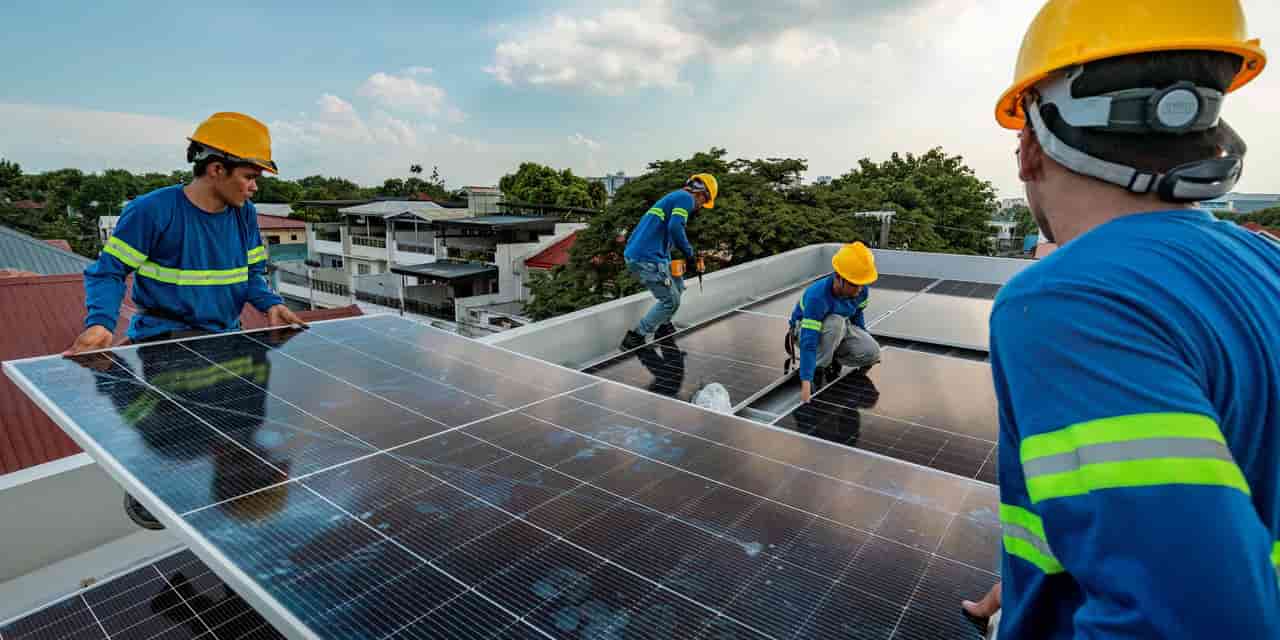
Residential and commercial customers are increasingly investing in solar power to hedge against volatile energy prices. The payback period for home solar systems has notably decreased, making solar a more economically attractive option. This trend is supported by increased solar panel exports from China to the Philippines, indicating a build-up of inventory for future installations.
Similarly, electric vehicle sales have more than doubled in the first five months of 2026, capturing a larger share of the overall vehicle market. This shift is partly attributed to the availability of discounts and the prospect of lower running costs, especially when charged using self-generated solar power.
In response to the energy crisis, Philippine President Ferdinand Marcos Jr. has fast-tracked renewable energy projects, aiming to increase the country's reliance on clean energy sources. The government has set a target for half of the nation's power to come from renewables by 2040. Analysts predict a substantial increase in solar installations in the coming year, further accelerating the clean energy transition.