Key facts
- China has warned the U.S. it will retaliate if Washington expands sanctions against Iran to target Chinese companies.
- Beijing opposes unilateral sanctions and will take necessary measures to protect its interests.
- The U.S. Treasury announced new sanctions targeting Iran and its trade partners.
- Iraq has been used as an effective sanctions-evasion route for Iran.
- Iraq pays Iran $4 billion to $5 billion annually for natural gas.
China has issued a strong warning to the United States, stating it will retaliate if Washington expands its sanctions campaign against Iran to include Chinese companies. Beijing's opposition to unilateral sanctions, particularly those imposed without UN Security Council authorization, is firm. A Chinese foreign ministry spokesperson indicated that 'all necessary measures' would be taken to protect national interests.
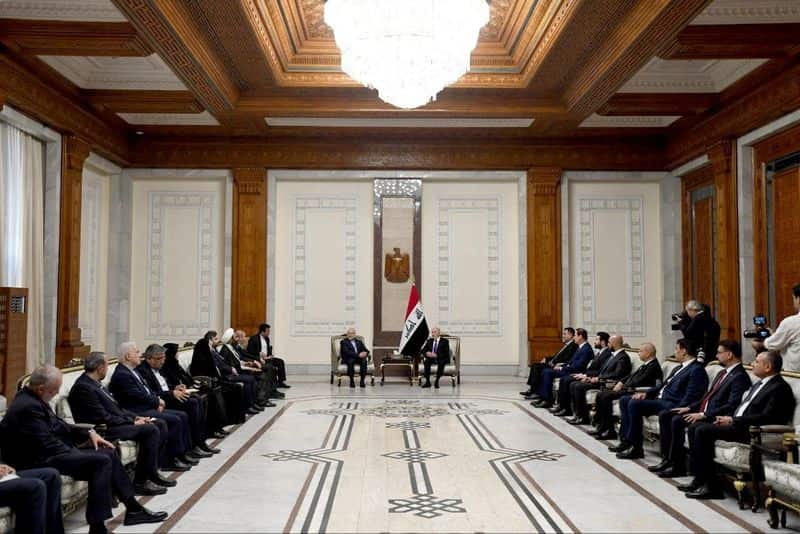
The U.S. Treasury announced 'an economic onslaught' against Iran, with Secretary Scott Bessent stating that trading partners would be targeted. While specific countries were not named, the U.S. has already sanctioned numerous Iraqi banks accused of doing business with Tehran. Iraq, a strategic ally to both the U.S. and Iran, serves as a key example of how Washington can exert pressure on Iran's trade partners. The U.S. holds significant leverage over Iraq's economy, primarily through control of its oil revenue dollars held at the Federal Reserve Bank of New York.
Iraq's trade with Iran exceeded $10 billion in 2025, largely driven by Iranian exports of food and consumer goods. The energy sector is also central, with Iraq paying Iran $4 billion to $5 billion annually for natural gas. Despite U.S. pressure, which has raised the costs and risks of financial dealings with Iran, Iraq's economic ties with Tehran remain. Experts note that while countries like China and Turkey have larger economies and more resilience to pressure, Iraq's dependence on the U.S.-led financial architecture makes it particularly vulnerable.