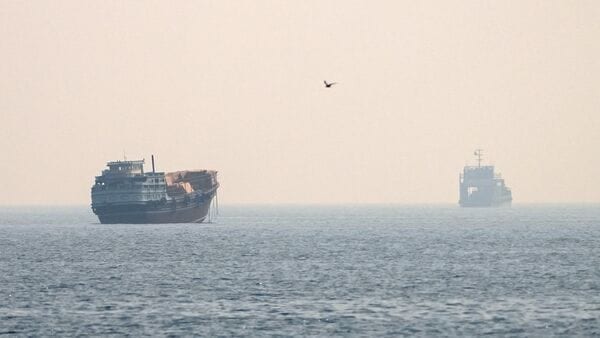
Key facts
- An Iranian adviser stated the Strait of Hormuz is more critical than nuclear weapons.
- Iran asserted it will defend the Strait of Hormuz using its defense capabilities.
- Iran warned that US interference in the Strait of Hormuz will affect global energy.
- India condemned recent attacks on commercial shipping in the Strait of Hormuz.
- The US Central Command completed a third round of strikes against Iran for attacking a commercial ship.
- Iran's state media reported the Strait of Hormuz was closed until further notice.
An adviser to Iran's supreme leader, Mohsen Rezaee, stated that the Strait of Hormuz is more critical than nuclear weapons and that Iran will defend it. Rezaee asserted that the strategic passage is more important than dozens of atomic bombs and that Iran will safeguard its interests and security through its defense capabilities and national strength. These remarks come amid escalating tensions and recent incidents involving commercial shipping in the vital waterway. India's Ministry of External Affairs condemned the attacks, calling for de-escalation and a diplomatic solution, noting that 10 out of 11 Indian nationals on a recently attacked vessel had been rescued. The US Central Command announced it had completed a third round of strikes against Iran, holding the country accountable for attacking another commercial ship in the Strait of Hormuz. Iran's state media announced that Tehran had closed the Strait of Hormuz "until further notice" after the Islamic Revolutionary Guard Corps fired warning shots at a vessel attempting to transit an "unauthorised route." Iranian officials reportedly informed advisers to US President Donald Trump privately that the recent attacks on commercial vessels were an error, attributing them to a faction seeking to undermine US-Iran negotiations. Iran's Foreign Minister Abbas Araghchi held talks with his Omani counterpart, Seyyed Badr Al-Busaidi, discussing bilateral relations, regional developments, and maritime security in the Strait of Hormuz.