Key facts
- Tens of thousands of youth protesters have taken to the streets in India.
- Protesters are demanding the resignation of the Election Commission chief over alleged voter roll manipulation.
- Unemployment among Indian youth aged 15-29 was 9.9% in 2025.
- Unemployment among graduates aged 15-25 was nearly 40%.
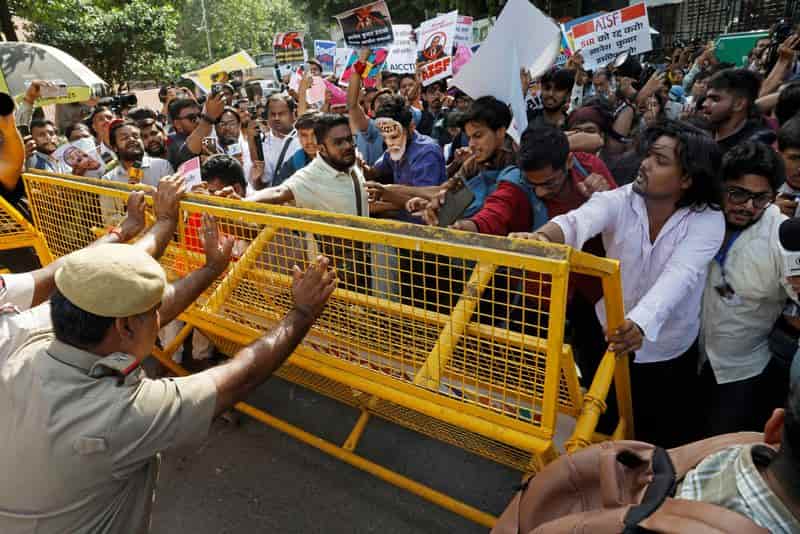
Tens of thousands of youth protesters have taken to the streets in India, scaling barricades and chanting anti-government slogans in demonstrations that are likely to be higher than at any time in the past decade. The protests, fueled by unfulfilled promises of jobs and concerns over election integrity, represent a significant challenge for Prime Minister Narendra Modi's government.
Activists and opposition parties accuse the government and the ruling Bharatiya Janata Party (BJP) of manipulating voter rolls to favor the BJP in recent state elections, demands that the BJP denies. Beyond election concerns, the demonstrations reflect growing anger over Modi's failure to deliver jobs to millions of unemployed youth despite strong economic growth, as well as issues like leaked examination papers and crimes against women.
The emergence of the Cockroach Janta Party, a youth-led movement that grew from online satire, has energized the protests. Mainstream media coverage has been limited, but social media and independent news channels have amplified the unrest. Opposition parties, including the Congress Party, have also been re-energized, with leader Rahul Gandhi participating in street demonstrations.
Many young protesters feel their aspirations for jobs, opportunity, and cleaner governance remain unfulfilled, with the government appearing more focused on religious issues and divisive politics. While national elections are not due for three years, the upcoming state elections in Uttar Pradesh could serve as a test of Modi's popularity.